
Decade of Nanotec R&D set to pay off


Play
'SMART SOIL' AND OTHER PROJECTS EXPECTED TO BENEFIT AGRICUTLURE, HEALTH AND ENERGY SECTORS
THE NATIONAL Nanotechnology Centre is preparing to make a big impact in Thailand.
Its research is being translated into big-scale solutions for the country’s industries ranging from agriculture to health and energy.
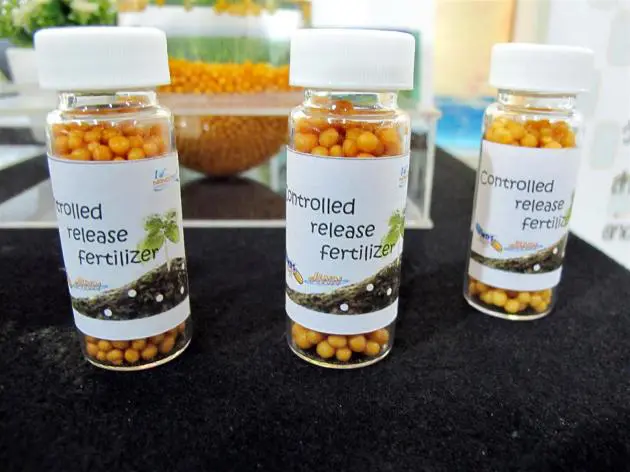
Smart Soil and Fertiliser from Nanotec, for example, will be |available for farmers by early next year.
“I can tell you that it’s highly efficient for commercial crops like sugarcane, oil palm, para rubber and cassava,” executive director Sirirurg Songsivilai said last week.
“Farmers who use it will enjoy lower fertiliser cost and thus lower production cost.”
Thailand spends up to Bt100 billion a year on fertiliser.
Smart Soil is made from water hyacinth. This plant was chosen as a key raw material because it is not only water absorbent but also nutrient absorbent.
“When seedlings get the Smart Soil around their roots, they will grow well,” the professor said.
The production of Smart Soil would also solve the problem of clogged waterways in many parts of the country.
“We will dispatch our mobile production machines to the clogged spots and clear the waterways,” he said.
The unwanted aquatic weed could be turned into something very useful to the country’s agricultural sector.
Each mobile production unit can churn out eight tonnes of Smart Soil a day.
Established in 2003, Nanotec is now stepping into its second decade.
“We have spent the last 10 years on preparing our resources including scientists and expertise. The next decade is for turning our preparations into big projects with big impacts,” Sirirurg said with much confidence.
The health solutions from Nanotec are going to address the risks of cervical cancer, a major health threat to Thai women, dengue fever and malaria.
In the energy sector, nano-|technology will be used to provide green energy and clean air for Thailand.
“We will raise the quality of Thais’ lives,” he said.
Nirut Kunnawat, an adviser to the science minister, said Nanotec was also instructed to boost Thai products’ competitiveness via nanotech research.
Sirirurg said many univer-|sities, vocational colleges and |companies had now joined forces with Nanotec to explore solutions that the nanotechnology could provide.
Opportunities abound. For example, nanotechnology can be used to manufacture mosquito-control curtains or mosquito wire screens.
“We may make these items emit an odour that keeps the mosquitoes away,” he said.
“Mosquitoes are the carrier of many diseases.”
Another project would develop sensor-equipped packaging to tell consumers whether the fruits inside were still fresh enough for consumption.
“With the integration of technologies, we can make customers well informed. Packaging can tell all about the source of the fruits and what fertiliser has been used,” he said.
Nirut said the Science Ministry would provide support for Nanotec in its mission to drive the country ahead with new technologies.
“The government will ensure that Nanotec delivers tangible results and becomes relevant to people’s lives,” he said.
Sirirurg said his organisation had adopted a new approach by dispatching its scientists to villages to listen to the needs of the community.
“I believe the prospects look promising. Our scientists come back with excitement. By reaching out to villagers, they can see the real situation and know where the problems lie,” he said.
“They become even more determined to find solutions after they see what problems the villagers have faced.”
The new approach by Nanotec was going to sweep away the public perception that scientists cannot communicate with others.
“This is also an approach that will lead to many opportunities,” he said.
Nanotec is conducting 10 research-based flagship programmes, each with more than 20 researchers from various fields.
“Some work for Nanotec and some for the universities,” he said.
The implementation period is three years but some results will become evident within one year.
Nanotec now focuses on research that can serve a large number of people.
The organisation was also striving to boost the supply of scientists for the country.
“In fact, every industry needs more scientists. We are going to recruit them and develop their expertise,” he said.
“Every scientist can make a huge contribution to the country,” he said.
