
International tests 'aim to strengthen'


Play
Four assessments to be conducted next year to help identify weak points in Thai education system
THAI STUDENTS, teachers and adults will face a series of international assessments next year aimed at improving Thai teaching methods and the quality of education.
For the first time, Thailand will take part in four world-class international assessments that will assist in identifying weaknesses in the Thai educational system.
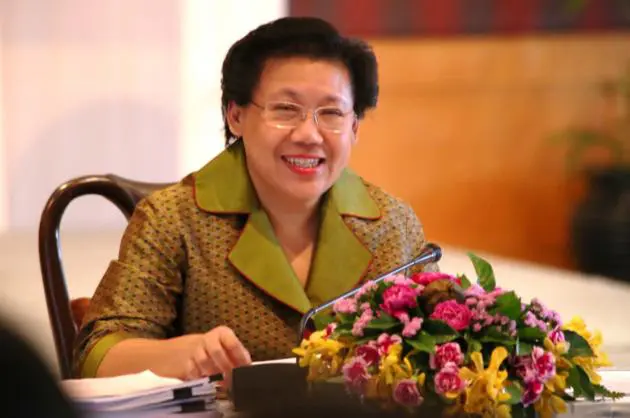
“The results will be like reflections in a mirror,” Office of the Education Council’s secretary general Sasithara Pichaichannarong said during an exclusive interview with The Nation.
Thai students have been long-subjected to the Programme for Inter-national Student Assessment (PISA) and the Trends in International Mathematics and Science Study (TIMSS). Thailand, however, is now convinced it needs to do more about the evaluation of people in Thai society.
“By participating in these assessments, we will acquire world-class tools,” Sasithara said, “With these tools, we will be able to create our own tools and make improvements.”
In 2014, Thai students in Mathayom 3 and Mathayom 4 will join the civic-education international evaluation survey. The results will determine whether these teenagers know about their rights and duties as citizens.
“For example, children may be asked if it’s okay for farmers to stage a protest when the government’s land expropriation affects them,” Sasithara said. “We want children to know the scope of their rights and to be aware of what they should do.”
Also, in 2014, Thais from birth to six years of age will take part in the Early Childhood Education Study (ECES).
“This study will let us know Thai children’s development prior to their entry into primary schools,” Sasithara said.
The Education Ministry’s focus will not be on children and students alone.
According to Sasithara, teachers and principals – including those at private schools – will also be evaluated in the Teaching and Learning International Survey (Talis) next year.
“Talis will identify the weaknesses of teachers, but without ranking them on any world listing,” she said.
She believed the findings would be useful because relevant authorities would be able to plan teacher development more effectively.
She said the Organisation for Economic Co-operation and Development (OECD), which conducts Talis, would also work with Thailand in tailoring questionnaires that best matched the Thai context.
“About 10 per cent of Talis questionnaires can be adjusted,” she said, “OECD intends to respond to the needs of every evaluated country”.
With regard to the Talis process, Sasithara said the Education Ministry’s interactions with the OECD would benefit Thailand.
The fourth international assessment referred to by Sasithara is the Programme for the International Assessment of Adult Competencies (PIACC). Next year, it will evaluate Thais aged between 16 and 65 years old to determine whether Thai adults are well equipped with important competencies and basic skills.
“Singapore and Malaysia will take part in the PIACC next year too,” Sasithara said.
The assessment focuses on cognitive and workplace skills needed for successful participation in 21st-century society and the global economy.
Sasithara said the findings from the PIACC could be crucial in developing Thailand’s human resources. The efforts are in line with the move to lay down a national qualifications framework.
She added that Education Minister Chaturon Chaisang had paid much attention to the findings of international assessments for Thailand’s education.
“We need to know where Thailand’s education stands in the world,” Sasithara pointed out. “Then we can look at number one countries like Finland and see how its education can provide quality human resources.”
Sasithara said she believed with proper preparation, Thailand would be able to do better in international education rankings.
“If we want our performance in PISA to improve, we have to brief and prepare all the 400 schools that may be covered by PISA,” she said.
Sasithara said if teachers were well prepared, they would be able to guide their students on the best way to tackle PISA tests.
“We can even produce manuals for the purpose,” Sasithara said.
She believed active preparation and interaction between the relevant agencies would deliver satisfactory results for PISA by 2015.
“Our goals are to not just to improve Thailand’s PISA ranking but also to raise Thai children’s PISA scores,” she said.
Sasithara said she also believed Thailand’s educational reforms should focus on the performance of teachers. By transforming teaching methods, things would change for the better, she said.
“We have talked to the OECD and it has assured us that there is no problem with our curriculum. It’s just that our teachers do not know yet how to teach effectively,” Sasithara said.
