
Opposition grills Prayuth on bill


Play
Wants to know whether amnesty would apply to cases investigated by both the Election Commission, NACC
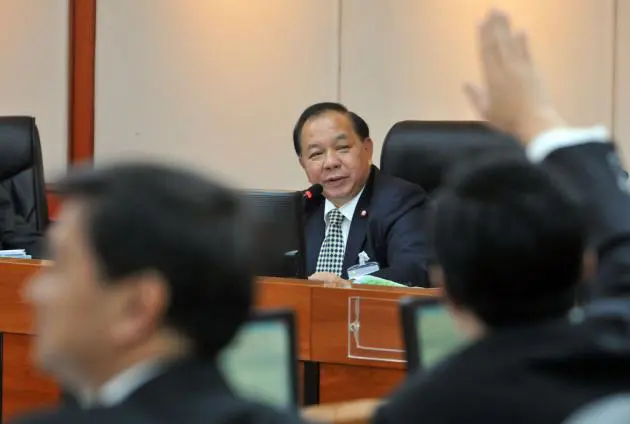
PHEU THAI MEMBER Prayuth Siripanich yesterday found himself in the hot seat, as he was grilled by the opposition over the proposed blanket amnesty.
Prayuth was confronted by the opposition lawmakers during a meeting of the House committee in charge of vetting the amnesty bill.
Committee member Kaewsan Atibodhi cited Prayuth’s interview as the basis for questioning whether the amnesty would apply to cases investigated by the Election Commission (EC) and the National Anti-Corruption Commission (NACC).
The queries were raised because Prayuth had used vague wording about absolving those accused by coup-related agencies.
Following the 2006 coup, the EC and the NACC had their mandate renewed by the junta.
In his reply, Prayuth said the amnesty would not undo the work of the independent organisations.
Committee member Niphon Hakimi said the Council of State had ruled that coup-related agencies would include the Assets Examination Commission and not the NACC.
Democrat MP Thaworn Senneam said that in his view, the EC and the NACC were not formed by the junta.
Thaworn said although the amnesty would cover the period from September 19, 2006 to August 2013, this would have no bearing on graft cases related to the rice-pledging scheme and the spending on flood control.
He voiced suspicion that Prayuth appeared ambiguous about amnesty in order to leave wiggle room for former prime minister Thaksin Shinawatra and his cohorts.
In a related development, Democrat Party leader Abhisit Vejjajiva said Thaksin might have erred in assessing there were only 10,000 opponents of the amnesty bill.
Thaksin was underestimating the anti-amnesty sentiment, he said.
He reminded the former prime minister that his bullying tactics to invoke majority rule had led to his downfall.
NACC chairman Panthep Klanarongran said he needed to study the amnesty law, if enacted, before commenting on its impact on anti-corruption work.
At this juncture, the NACC would carry on working on the incomplete cases of the AEC, he said.
Thaksin’s legal adviser Noppadon Pattama said the former prime minister did not comment or exert influence over how the ruling party should vote for the passage of amnesty.
News reports that said Thaksin had allowed a free vote on amnesty and that he estimated only some 10,000 red shirts were opposed to the blanket amnesty were false, Noppadon said.
Thaksin had no role in the issue and only the Pheu Thai Party would decide on the passage of amnesty, he said.
“Thaksin has listened to and heeded opinions of relevant parties,” he said, denying about the influence over the amnesty vote.
“Thaksin’s bottom line remains unchanged – he wishes to see the country advance forward.”
