
Children to get free JE vaccine within 2 years


Play
NHSO says all Thai babies should be protected from Japanese Encephalitis; plans to switch to attenuated vaccine
IN TWO YEARS, the National Health Security Office will start offering free Japanese Encephalitis (JE) vaccines to Thai children nationwide.
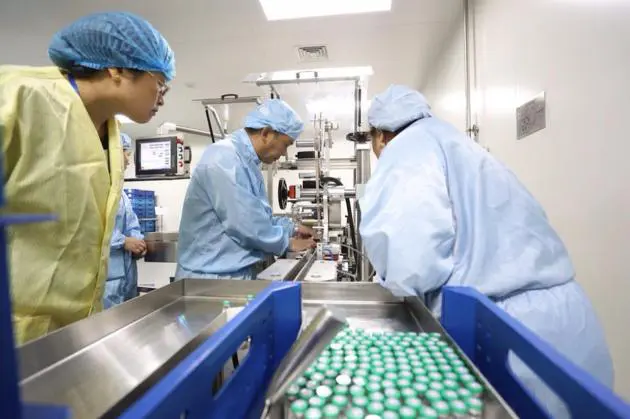
“About 800,000 babies are born in Thailand each year and they should get inoculated,” Prateep Dhanakijcharoen, deputy secretary-general of the NHSO, said during a recent trip to this Chinese city to inspect a vaccine factory.
Run by the Chengdu Institute of Biological Products, the facility has produced the attenuated JE vaccine called CD.JEVAX for more than 10 years. This vaccine is the first live JE vaccine to be pre-qualified for use in children by the World Health Organisation.
Institute director Yonghong Ge said his firm had the capacity to churn out 100 million doses of attenuated vaccines each year.
Prateep said Thailand plans to switch to the live or attenuated vaccine from the inactivated vaccine because it was more effective, caused fewer side-effects and needed only two doses as opposed to the three doses of the inactivated vaccine.
Thai authorities started giving JE shots to children in 1989 and went nationwide in 2000, relying on the inactivated vaccine.
“In 2012, we started using the attenuated vaccine in some provinces as a pilot project,” he said.
NHSO has found the attenuated vaccine a better choice and is now determined to use it for all Thai new-borns.
Dr Vichai Chokevivat, who sits on the NHSO board, said JE infects about 68,000 people around the world, mostly in Asia.
The JE virus is transmitted to humans through the bites of infected mosquitoes, primarily the Culex species.
“Of the patients, 20-30 per cent succumb,” he said.
From 30-50 per cent would be left disabled because this disease attacks the brain.
“There is no medicine to guarantee 100-per-cent recovery, so vaccines are very important,” he said.
Statistics show that JE in Thailand has declined sharply from 1976-2006, very likely because of the free vaccination programme.
Thailand saw three to four JE cases per 100,000 people from 1977-87, but after 1995, there has been less than one JE case per 100,000.
Charung Muangchana, director of the National Vaccine Institute, said Thailand imports about 80 per cent of vaccines used in the country.
“We have checked the quality of all imported vaccines,” he said.
China and India were the main providers, but the Government Pharmaceutical Organisation, a Thai state enterprise, holds more than half of a JE-producing joint venture (JV) with a big drug firm.
“This JV is the Government Pharmaceutical Organisation-Merieux Biological Products Company Limited, or GPO-MBP,” he said.
Whether the vaccine from GPO-MBP would be used depended on procurement committees, he said.
Prateep said NHSO would likely need two million doses of attenuated vaccine each year after it was used nationwide.
The pilot project has given the attenuated JE vaccine to children in only 10 provinces.
“Next year, we plan to cover more provinces. The provinces to get the attenuated vaccine should increase to about 20-30,” he said.
Although the attenuated version costs the NHSO more, its price can come down substantially when purchased in large quantities.
“If we use it for nationwide vaccination, we may get the attenuated vaccine at a price very close to the inactivated one,” he said.
The NHSO expects to spend about Bt220 million on the procurement of the attenuated JE vaccine.
A supplier has not yet been selected but the Chinese manufacturer is in the running.
“We are looking for qualified suppliers and we will call for a bid,” he said.
The government accounts for about 40 per cent of the Bt5 billion domestic vaccine market.
