
New internships boost skills, job prospects


Play
LONGER internship periods for vocational students with industrial businesses will boost student skills and provide skilled labour for an expanding market in the Asean Economic Community.
Instead of a three-month internship that is too short for students to adjust to a new environment and learn about work, the upgraded bilateral programme will allow students have a one-year internship so they can get real working experience and culture.
“Demands on highly skilled workers from industrial businesses are high, so they are likely to hire these students once they’re graduated,” said Chaiyapruek Serirak, secretary-general of the Office of the Vocational Education Commission (Ovec).
The agency is collaborating with businesses in the Amata Nakorn Industrial Estate in Chon Buri to teach skills to vocational students in real work environment.
A total of 291 students from 10 vocational colleges will gain an internship with eight companies such as Sony Technology and Monde Nissin. Students will also get their grades from the internship and won’t have to attend classes at school in that year.
The programme is supported by GEAR Foundation, which connects companies and vocational colleges in recruiting interested students for the programmes. The foundation also provides students with free accommodation near their company.
GEAR Foundation director Pol Lt General Rapipat Palawong said the foundation, acting like a parent to students, would ensure they had a decent living away from home. “Some students get their money and use it extravagantly. Some spend it all in the first week. We have to teach them to spend money economically,” he said. Under this programme, students will receive at least a minimum wage of Bt300 a day and insurance.
Srivan Orataiwattanakul, human resources director at Monde Nissin Thailand, said the company could not hire some students immediately because their curriculum required them to study another semester at school.
That meant the company had to train them all over again, leading some students to lose interest. The general manager of Sony Technology Thailand, Winai Jaimun, pointed out the early days of their internship often meant culture shock for some students. He said they had a hard time adapting themselves to the working culture that required responsibility and discipline. Some could not get to work on time and took days off without asking for permission.
After hearing feedback from businesses, Ovec’s secretary said the office would consider adjusting courses for vocational students to have the internship in the final year so it would guarantee them a job, adding some subjects also needed to be changed to match demanding skills.
Colleges would have to provide information about the work and describe the working culture of professional businesses. That would make it easier for students to adapt to the workplace and reduce the culture shock issue.
Sukda Prachanok, a graduate currently working with a company of the Monde Nissin group in Amata Nakorn Industrial estate, said the programme gave him a lot of work experience. It also forced him to improve his discipline.
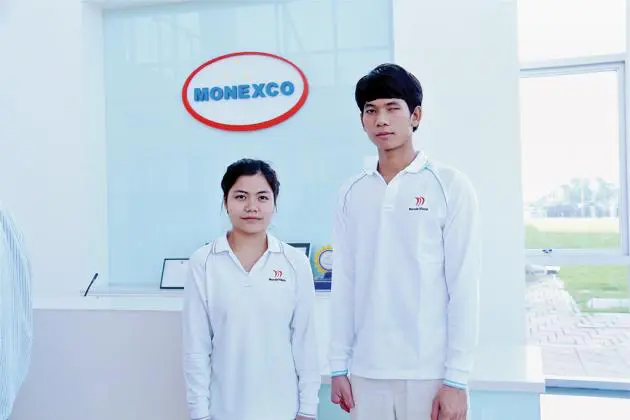
Chayakorn Bunyanuson and Tanyares Thipa, vocational students who have a 10-month internship at the same company, said they were trained to use high-tech machinery and GEAR Foundation had helped them a lot – such as renting a house and giving advice on certain problems.
Both said they would graduate at the end of their internship and continue to work at the company.
