
'Key to new charter is a strong informed citizenry'


Play
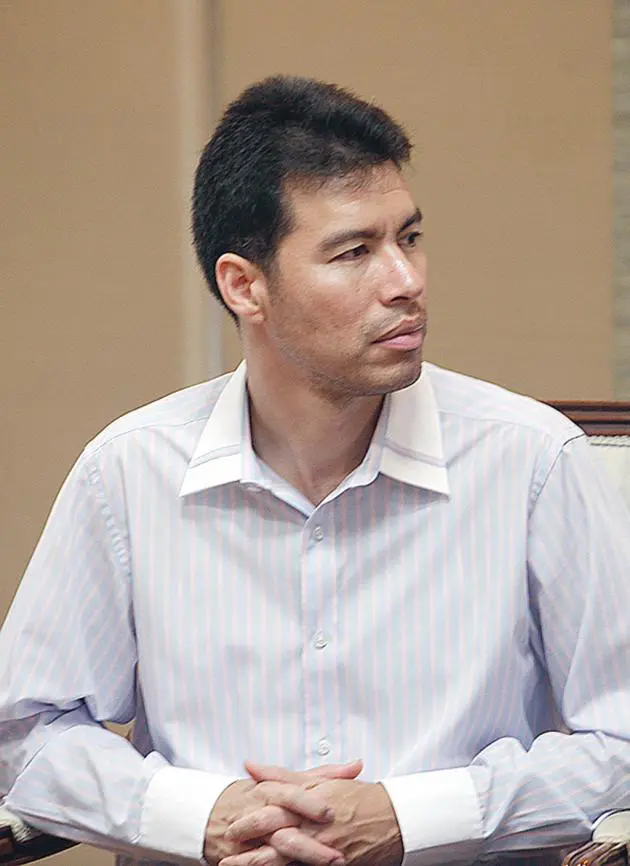
Constitution Drafting Committee (CDC) member Jade Donavanik, who is also a law expert and the youngest drafter on the committee, tells The Nation's Nitipol Kiravanich that empowerment of the people is the key issue in a new charter.
What is the most important content of this new Constitution?
The key to this Constitution is that it needs to “arm” our citizens. Moreover, corruption issues must be eradicated by strengthening the law to punish corrupt politicians to a higher degree.
One of my purposes is to make this charter ideological, rather than idealistic. Its content should project people’s ideas and ensure they will be a part of the draft as well, which [means] after the charter actually comes out it will have to be accepted by the people.
The CDC also has to scrutinise all 19 previous constitutions on what articles are good enough, [what articles] should be inserted in the charter, and for those articles that are issues to society, should [they] be amended, fixed or eliminated.
What should be the most powerful weapon for people in this charter?
Voting is the key factor for electing politicians. We should consider voting “no” seriously. If the “vote no” ballots are higher than yes votes then a new round of an election is needed. And political parties would have to put up new candidates in the second round for the people to elect.
The “vote no” ballots would be interpreted as voters not wanting to choose those candidates from the parties. It would eliminate unwanted politicians in the Parliament because the parties would need to send only good politicians to run in the election.
What are your expectations for this charter, and how do you imagine it will turn out?
This new charter should set the standard for its further usage in legal areas. And what matters are also organic laws that can be added later to meet the [ideals] of Thai society – and the CDC will have to create new “innovations” to the law.
The constitution is a mother law, but we can draft organic laws’ sub-articles inserted in the charter to strengthen its efficiency.
I would like see this as the last Constitution drafted from scratch; because if similar circumstances [a junta seizing power] happen again, tearing up the previous charter would mean it was all for nothing and the Constitution was just a scrap of paper.
How would you eradicate corruption in the political system?
Corruption is a very broad term. Corrupt actions by politicians are always dictated by their financiers and a monopoly system that must be eradicated. A “monopoly” has been intervening in government agencies, political parties and politicians, with the financiers always dictating to these involved agencies for their own benefit.
A problem of the political system in Thailand is that the financier system must be eliminated, politicians should first consider working for their people, rather than themselves, or for personal gain. The fact is that politicians must comply with their parties. Moreover political parties must obey financiers who support them from behind, making the system corrupt.
These issues also affect other government officials because every time the new government is formed, it means that government officials have to be transferred, [so] there must also be a law to protect those officials.
To solve [counter] these corrupt actions people must be strengthened with the fundamental problem going back to politicians. Therefore, I personally think the power to eliminate those corrupt systems are in people’ hands and within their rights, along with absolute punishment for wrongdoers.
What is your view on independent bodies? Should their power be reduced?
Recently there were many issues regarding independent organisations - that they were not independent after all. [The term] “independent bodies” has its own comprehensive meaning and is mostly referred to in a negative way, according to political observers.
I would propose to eliminate the word “independent” from independent bodies, because if they are independent they do not have to use the word to specify their meaning or their jurisdictions of being independent from related agencies or political powers. By this means, the independent bodies would work independently without saying they were independent for the public to judge [they way they operate].
How would you explain that the public believes the CDC already has blueprints and a framework according to Interim Charter Article 35?
I realise the concerns from political observers that 2014 Provisional Constitution Article 35 stipulates a blueprint for this new coming up charter – saying everyone has their own blueprint. Of course everyone has their own blueprint, including the NCPO, the NRC, CDC and even the public. The problem is how to use these blueprints in summarising this charter. Making the law effective and a voice for people’s ideas is [the CDC’s] job to ensure, and also for the public to accept this charter.
