
HIV-positive battling to live normal lives


Play
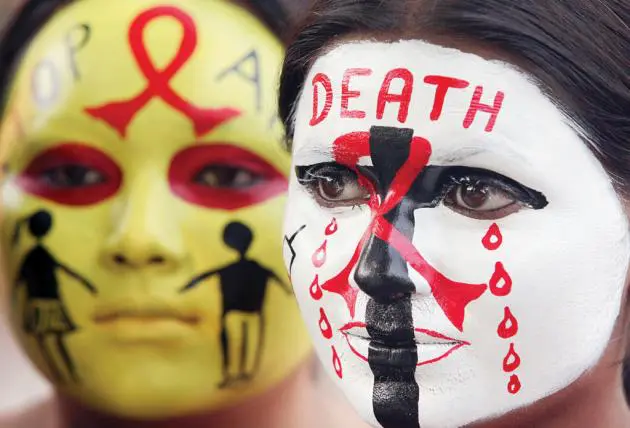
Aids activists vow to fight discrimination and stigmatisation
It’s time to empower all of the more than 400,000 people living with HIV, making them aware that they have the right to live in and win acceptance from society just like anyone else.
“Empowerment efforts must go on, while stigmatisation and discrimination must end,” Sopon Mekthon, director-general of the Disease Control Department, said last week.
Just as World Aids Day is observed across the globe today, organisations in Thailand have highlighted the need to empower the HIV-positive.
“People living with HIV are not patients. They are still healthy enough to work. They can stand up and support themselves as well as their families if they get opportunities from society,” said Nimit Tien-udom, director of the Aids Access Foundation.
Sopon has vowed to change hostile rules and regulations. “If we find any firm or government agency still enforcing rules that discriminate against people living with HIV, we will push for changes,” he said.
Three decades after the first HIV infection was found in Thailand, Sopon still acutely recognises that discrimination exists.
Recent efforts by residents in Chon Buri to drive out a charity after it started taking in Aids patients shows clearly that the public still lacks adequate understanding of the disease and the people who live with it.
Campaigns are needed to promote proper understanding, he said.
The National Committee on Aids Prevention and Solutions resolved that all government agencies should have the duty to prevent both stigmatisation and discrimination.
Sopon believes that empowerment of the HIV-positive is necessary because it was a way to let them live a normal life in society.
Authorities have also promised to lower HIV-transmission risks and ease the threat of getting the disease.
“We will campaign for safe sex and try to deliver condoms to risky groups,” he said.
The highest risk groups are men who have sex with men, sex workers, drug abusers and youths.
Public Health Minister Rajata Rajatanavin has also recently said his ministry is now working hard towards achieving the goal of ending Aids in 16 years.
In October, Thailand made free anti-retroviral drugs available to all people living with HIV, regardless of their CD4 blood count (which is an indicator of how efficient their immune system is).
“The free drugs are now available to Thais as well as migrant workers,” he said. Thailand is among the first countries in the world to offer free anti-retroviral drugs on a national scale. “The anti-retroviral drugs can reduce HIV in the body and can reduce the transmission risk by up to 96 per cent,” he said.
The ministry would also strive to ensure that there are no more HIV transmissions from mother to baby and to minimise new infections in the population, lowering the incidence by about 90 per cent to no more than 1,000 cases each year.
According to official estimates, 438,629 people now live with HIV in Thailand. New infections are at about 7,695 this year.
Records show 246,049 got anti-retroviral drugs last year when the CD4-blood-count requirement was still in place. The number of people with HIV to get access to the much-needed drugs looks set to jump now the CD4-count requirement is gone.
Nimit Tienudom of the Aids Access Foundation believes that if the Public Health Ministry worked harder to promote campaigns related to Aids, problems would drop sharply.
“For example, although the ministry offers blood-test results within 24 hours, such services are available in some areas only and relatively few people know about it,” he said.
When results of blood tests are made known within one day, there is a greater chance that the HIV-positive will immediately enter treatment programmes and get necessary medication. The government has also skimped in the distribution of free prophylactics.
“As far as I know, the government offers just 50 million condoms a year while the health organisations’ assessments suggest that the country needs about one billion condoms for the effective prevention of Aids,” he said.
Society also needs to adjust its attitude toward the condom hand-out approach. “The availability of free condoms does not mean we’re promoting sex. It’s just that people need to have safe sex.”he said.
