
Group wants kiss of life for struggling hospitals


Play
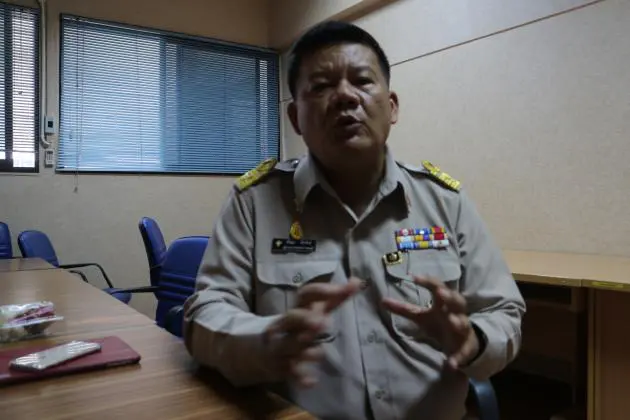
AFTER LOUD public quarrels over how to manage funds for the universal healthcare scheme, the Thailand Regional and General Hospital Society (Thaihos) has insisted that it is not fighting for power or money.
“We speak up for the sake of the country’s healthcare system,” Chon Buri Hospital director Dr Assada Teeyapant said in his capacity as a Thaihos member. He said that if fund management was not improved now, the healthcare system could crumble.
To many, Thaihos is standing on the side of the Public Health Ministry, which has clashed with the National Health Security Office over the issue.
For over a decade, the NHSO has managed the universal healthcare scheme through services at state hospitals, which are paid via a flat rate of Bt2,895 in a subsidy each year for treatments and medical services they give.
Over the years, complaints from hospitals have grown. Thaihos says the universal healthcare scheme is the only one of the country’s three main healthcare programmes that has caused financial losses to state hospitals. This year, more than 105 state hospitals are already in deep financial crisis.
“It should have become clear by now that service providers should have a say on budget management too,” Thaihos president Dr Sutas Sriwilai said.
Thaihos and the ministry have supported the idea of the NHSO transferring the per-head subsidy to 12 healthcare service area offices so resources can be shared among medical facilities in the same area. They believe the ministry should have the right to decide the scope of coverage under the scheme.
According to Sutas, if this idea is implemented, hospitals in the same area can form a network and work together in health promotion, disease prevention and effective medical services. “But if our pleas continue to fall on deaf ears, people will likely bear the brunt. That’s because many medical workers will leave state hospitals and join private medical facilities for better pay and much less workload.”
Workers had tried to be patient but the situation had reached point where “we can’t bear it any longer.”
Sutas said the NHSO’s centralised approach had made state hospitals uneasy and they had reeled under the weight of the financial burden.
Given that ministry’s permanent secretary Dr Narong Sahametapat has been seriously quarrelling with the NHSO over the universal scheme, many observers suspect Thaihos has come forward now just to help Narong.
“He’s the permanent secretary for Public Health. He has overseen public-health units as well as staff. So, when he has noticed that regional and general hospitals are suffering, he has taken action,” Sutas said.
Thaihos members considered Narong their boss, not the NHSO.
“So when we do reports, we will submit them to our boss. We have nothing to with the NHSO,” he said.
In a bid to pressure the NHSO into accepting their revamp of the universal scheme’s fund and medical-coverage management, Thaihos members have stopped submitting treatment reports under the universal healthcare scheme to the NHSO.
The ministry, meanwhile, has unveiled a plan to stop providing registrar services for the scheme from April 30. According to available records, the registrar has handled no fewer than 100,000 change items for the scheme’s database each month.
“That’s the right move. The NHSO has treated us as just a provider of services. So, it should handle the registrar services itself,” Sutas said.
Despite his criticism of the NHSO, Sutas expressed a hope for mutual talks to pursue efficient solutions. He expected fruitful talks too, something that would be different from all the previous rounds of discussions. “We have aired our concerns for four or five years already. But the solution has not come yet. That’s why we have decided to speak up now publicly.”
The hospital director said he made this move because he cared about patients in remote areas who would suffer the most if small hospitals in their neighbourhoods close down.
“Doctors can easily get jobs at private hospitals or open their own clinic when they have had enough of working in the government sector. Their income will be even higher. But we have to stay put because we care.”
The bottom line, he said, was the scheme should be “service-oriented” not “money-oriented”. “What the NHSO has done is to design the scheme’s services and operations based on money. But we want to do it from the perspective of services first, and our proposal provides a greater possibility of this idea materialising.”
