
Car-bomb has left a psychological impact


Play
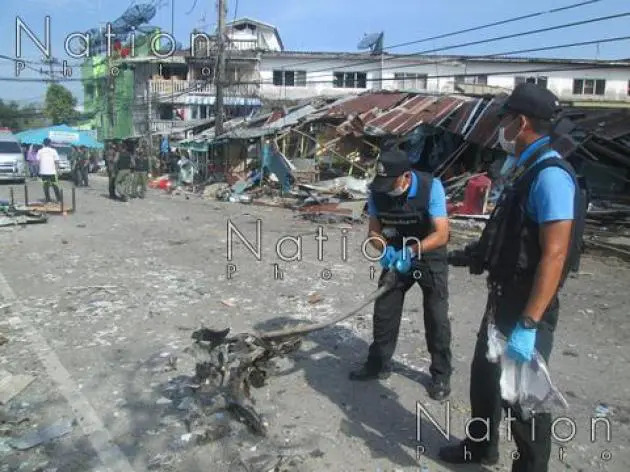
The first car-bomb attack of the year in the deep South on Friday caused much structural damage in Narathiwat town and left 13 people wounded. It has also taken a psychological toll on locals, and sabotaged the government's attempt to restore peace in th
The psychological impact relates to the following:
- The location. The karaoke bar hub in Muang district near the main road will undoubtedly resulted in people deeming the downtown area to be unsafe;
- The bomb type. The use of a car-bomb, which is rare in the area, highlighted the severity of the unrest because a car bomb is particularly destructive;
- The timing. The daytime attack during the Chinese New Year holiday has surely caused even more angst. The public knows security is beefed up during festivals, and the nature of this attack will surely make people think the insurgents can strike anytime they want, which is not necessarily true;
- The attack coincided with the 200-kilometre march led by Mahidol University’s Centre for Peacebuilding director Gothom Arya, as it headed for the province’s Tak Bai district, where it concluded yesterday. The participants called for the restoration of peace in the region. So the car-bomb may dim the atmosphere surrounding those united in their call for peace;
- The attack took place after national security agencies searched a pondok school in Pattani’s Yarang district and found serious weapons and ammunition. That prompted the decision to extend the operation to other pondok schools. It is thought Friday’s attack could have been a response to that;
- The attack took place as the government is preparing for peace talks to resume and after it said it had a “certain level of control over the area”. So this attack could aversely affect the government’s credibility.
Southern Border Province Police Bureau commander Pol Lt-General Anurut Krissanakaraket told the Isara News Agency that he did not think the aim of the insurgents was to hurt the province’s economy because the area where the blast occurred was not key economically.
He said it was most likely a retaliation to two state operations – social development initiatives and the government’s related push to win the hearts and minds of locals, which had reportedly led to more people watching out for insurgents, as well as recent searches that led to arrests and weapon seizures.
“The bombing doesn’t aim to ruin the peace-building atmosphere and isn’t linked to the Thai government’s ongoing peace dialogue with separatists,” he said.
The attack should prompt security forces to have a balanced deployment of day and night patrols because they had thought any attack would take place at night, he said.
