
Science, technology, innovation 'vital'
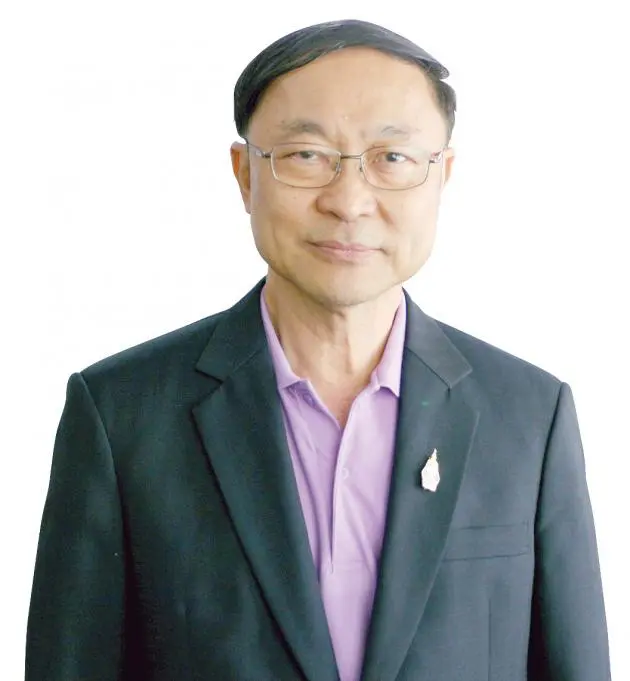


STI minister pichet says a clear strategy will help propel the economy for many years
Because science, technology and innovation (STI) has become an increasingly important part of our lives and also the country’s economy, Thailand will need to establish an STI board so it lays down the development direction and integrates efforts from all relevant fields.
So says Science and Technology Minister Pichet Durongkaveroj, who is a former secretary-general of the National Science Technology and Innovation Policy Office.
“Many foreign countries have already done this and the results are good,” he said in an exclusive interview with The Nation recently.
He said that prime ministers of some countries even served as the head of the STI board and the private sector had a presence too.
“With the STI board in place, there will be clear-cut policies and work plans,” he said.
Pichet believed that once the STI board was established and develops the framework, over 20 countries would move in the same direction for the benefit of Thai people and various sectors in Thailand.
“When the country has an STI development plan working like the national social and development plans, we should see clear integrated efforts within the next 10 years. All relevant agencies will learn to move in line with the declared STI plan by then,” he pointed out.
According to Pichet, the Science and Technology Ministry must develop a one-stop service in STI fields to encourage private sector investment, which will help the country achieve greater development.
“For example, we should provide industrial technology assistance programmes for interested entrepreneurs,” he said.
He added that in pursuit of the goals to ensure that Thailand rose beyond middle-income-country status and catered to private sector demands, Thailand would also need to increase the number of STI researchers by up to 20 times over the next decade.
Pichet said human resource development was one of the government’s policies and was part of the ministry’s plan for reform by increasing the number of STI experts. In the past, the ministry had many good projects such as the “Little Scientist’s House” project (www.littlescientistshouse.com) to boost pre-schoolers’ science learning, the Science Classrooms in University-Affiliated School Project, the Junior Science Talent Project and the ministry’s scholarship programme.
However, they were not enough to support the private sector increased expansion of R&D (research and development work and lacked integration and linkage, Pichet said. Hence the ministry organised a stage for related parties to discuss guidelines for human resource development reform, he said, adding that they would view this issue as a national project and clearly identify the number of required PhD graduates and collaboration with the public and private sectors.
“Manpower is the most important resource, so we need to make it a national project and ensure opportunities are distributed to all corners of the country. We should also speedily create more PhD graduates in STI, possibly by 10-20 fold, so the country can rise beyond the middle-income-country level,” Pichet said.
The key was to inspire youths to pursue science programmes by letting them see more clearly the possible career paths, which would need private sector help, he said.
The government was working on promoting more private sector investment in R&D, he said. The goal was to make Thailand’s R&D expenditure 1 per cent of the country’s Bt12.2 trillion GDP by 2016. Currently it is 0.47 per cent – and the ratio of investment by the public sector and private sector needs to rise from the current level of 53:47 to 30:70.
He said the measures included hiking the income tax incentive for R&D from 200 per cent to 300 per cent; increasing the income tax deduction for juristic people and natural people who donate to a R&D-related fund; and amending the PM’s Office’s procurement regulation to accommodate procurement of goods and services that apply to Thai innovations.
Pichet said that at present the private sector
had increased R&D and needs more manpower. Hence the ministry had to speedily implement various projects.
They included the Science Technology Engineering and Mathematics Education programme; the master plan for STI manpower; the Work-Integrated Learning programme that allows students to learn in a real working environment; and the STI human resource development project by state-run universities and research institutes that aimed to boost the private sector’s talent mobility.
Pichet said fields which the ministry planned to send scholarship recipients includes big data management; the model to support the agricultural zoning policy; agro-processing to support the country’s policy to process and export farm products; and automation engineering.
He said there were also various fields that would propel Thailand forward including biomedical engineering, bioinformatics, biopharmacy, biostatistics, agro informatics and space technology.
Pichet also said the ministry would team with the Education Ministry in creating inspiration for youths to study STI fields, create clear career paths with appropriate income and continuously support the learning and teaching of STI-talented persons.
