
Compulsory licensing sought for hepatitis C medication


Play
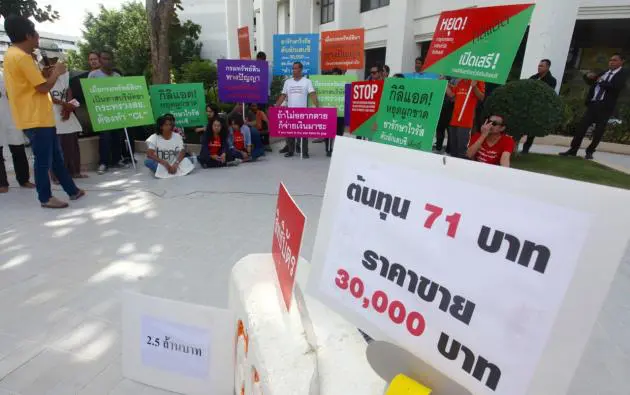
ACTIVISTS yesterday called on the Public Health Ministry to use compulsory licensing to ensure wide access of the medicine for hepatitis C and to control its price.
The Aids Access Foundation, together with the Ozone Foundation, the Foundation for Aids Rights, the Thai Aids Treatment Action Group and the Rural Pharmacists Association expressed their concern in writing to the ministry about the excessively expensive hepatitis C medicine sofosbuvir, and urged it to take action.
“Up to 1.3 million hepatitis C patients will be affected by the overly expensive cost of a US firm’s hepatitis C medicine, which costs US$1,000 (around Bt32,000) per pill. An overall treatment course requires a patient to use 90 pills of this medicine, which would cost more than Bt2.5 million,” said Nimit Tien-udom, director of the Aids Access Foundation.
According to his investigation, a pharmaceutical company in India manufactures sofosbuvir at just Bt71 per pill.
Nimit said his objective was to ask the Public Health Ministry to implement compulsory licensing for sofosbuvir in case Gilead Sciences Inc successfully registers a patent for this drug in Thailand.
“This drug is very important to hepatitis C patients, so the government should use its power over patents to ensure all patients can access the hepatitis C medicine,” he said.
Late last December, his group asked the Intellectual Property Department to reconsider letting Gilead Sciences register a patent for sofosbuvir in Thailand, as the chemical ingredients of the drug were already known and the medicine is very important for hepatitis C patients.
However, there was no reaction from the department.
“I suggest that there should be many firms competing in selling this medicine, not only one firm monopolising the market,” Nimit said.
Explaining the importance of |sofosbuvir, he said the current medicine used for hepatitis C was less effective and had too many side effects compared with the new medicine, which can cure the disease within three months.
Dr Surachet Satitramai, deputy permanent secretary of the Public Health Ministry, said it had accepted the group’s plea to take up the issue with the Commerce Ministry and the Food and Drug Administration.
Surachet later said there would be a careful consideration of this matter, as this is a new drug.
He also assured fairness to the people and the pharmaceutical company, as per the law.
