
Rain-making strategy to be fine-tuned
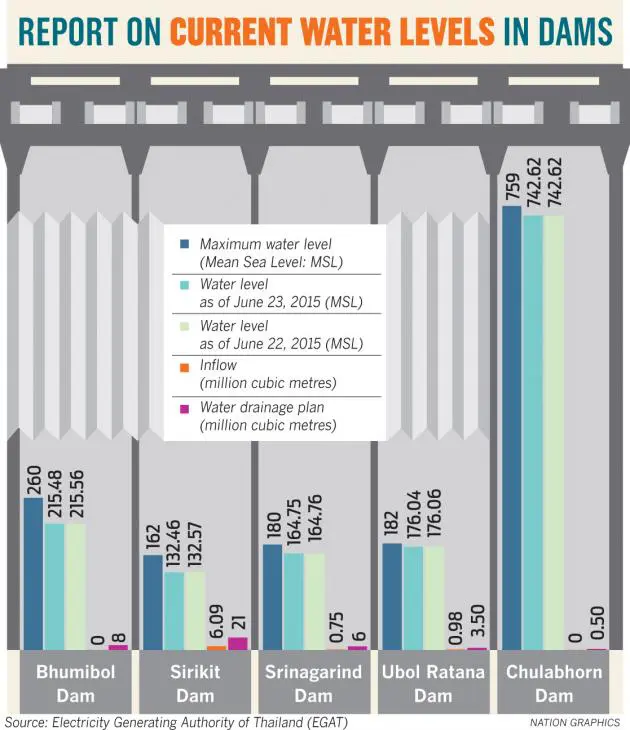


MORE rain-making operations have been ordered to tackle the severe drought in the North with water in major dams at some of the lowest levels in many years. A Tak-based rain-making operation's mission to refill water to Bhumipol Dam was expected to comme
Yesterday, permanent secretary of Agriculture and Cooperatives Ministry Chawalit Chukachon inspected the progress of efforts to tackle the drought at Chiang Mai Artificial Rain Operation Office. He ordered two priority missions to boost the efficiency of rain-making operations by increasing the frequency of rain-making flights and using new techniques to boost the success rate of operations.
“This year the drought is very serious, with the water level in many dams in the North reduced to critical points even though we have passed the first half of the rainy season. So, artificial rain has become the public’s hope to relieve the situation,” Chawalit said.
However, efforts to create “artificial rain” this year have not been very productive. Nunghatai Tantiplubthong, director of the Northern Region Artificial Rain Operation Centre, revealed that extraordinary weather patterns this year had made rain-making efforts more difficult and less productive. This was because of deforestation and the growth of urban areas, which causes less moisture in the air, plus the El Nino weather pattern caused by warm water in the oceans.
“Therefore, even though the rain-making operations have been implemented since May, we still cannot relieve the drought or substantially refill the dams’ reservoir,” Nunghathai said.
Chawalit, meanwhile, has not lost hope.
“What we should do first is increase the frequency of the rain-making flight by transferring the rain-making planes from the centres that don’t need to produce artificial rain at this moment to the centres in the North,” he said.
Two rain-making planes from Rayong and two others from Krabi will join the fleet in Artificial Rain Operation Centres in Nan and Chiang Mai to increase the frequency of rain making operations when the weather conditions are suitable, Chawalit said.
Another measure is to introduce the new techniques to boost the efficiency of rain-making operations such as using the moisture absorber flair.
“Thailand is the world leader in rain-making technology. We can use this as a benefit to improve our rain-making operations," he said.
The level of water in Bhumipol Dam in Tak is at its lowest point in 51 years, while the Sirikit Dam in Nan is also at a critical point.
According to Electricity Generating Authority of Thailand records, water in the Bhumipol Dam yesterday was only at 30.5 per cent of overall storage capacity, leaving just 3.2 per cent that which can be used for agriculture, public use, to generate electricity and sustain the ecology. The Sirikit Dam is only slightly better – with water at 36 per cent of the reservoir, and just 8.7 per cent that can be used by the public.
“The artificial rain may slightly improve the situation but it is the best possible way for us to relieve the situation until the next rainy period comes in late July. I also suggest that the people use water wisely and ask the farmers to follow the authorities’ instructions,” Chawalit said.
