
Charter law 'may affect decision making'


Play
MORE THAN 500 public prosecutors have teamed up to oppose a charter draft provision, citing the legislation provided loopholes that might lead to political interference in their indictment decisions.
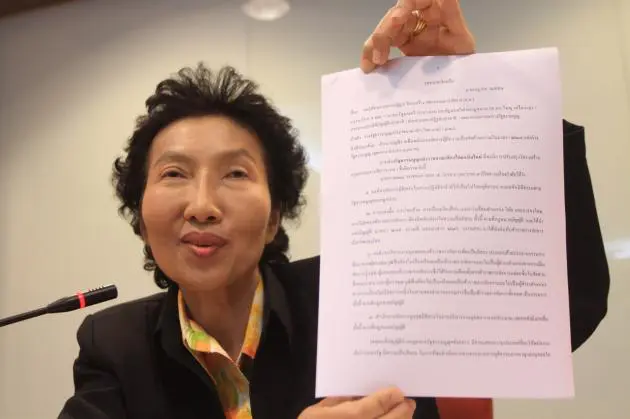
Chaninya Chaisuwan, deputy director-general of the Department of Administrative Litigation, announced that the prosecutors had joined forces to oppose Article 228.
After the conference, she submitted an open letter with the signatures of 500 prosecutors to Borwornsak Uwanno, chairman of the Constitution Drafting Committee, Wissanu Krea-ngam, a deputy prime minister, Thienchay Kiranandana, chairman of the National Reform Council, and Pornpetch Wichitcholchai, president of the National Legislative Assembly.
Chaninya said the prosecutors objected to the move to allow outsiders – who were not prosecutors, or had never served as prosecutors, and were not political officer holders or never served as attorney general – to chair the Public Prosecutor Commission (PPC).
She said political interference could come into play because the draft stipulated that at least one-third of the PPC members were outsiders who were not prosecutors, or had never served as prosecutors and were not political officer holders.
Chaninya said the PPC consisted of 15 members. One-third of their number could mean from five or up to ten or more members who were outsiders.
“This would allow the political sector to interfere in the prosecutors’ affairs such as transfers and, appointments of prosecutors – including an appointment of the Attorney General who makes decision on indictments of many cases, including cases outside the state and decisions on disciplinary punishment against prosecutors,’’ she said.
She dismissed claims that bringing outsiders into the PPC was to provide checks and balances in the agency. She said the country had the National Anti-Corruption Commission to carry out this role and the Attorney General had never faced suits in regard to prosecution work.
“Prosecutors are part of the justice system and having independence is crucial to ensuring neutrality and justice. They should not have to live in fear,’’ she said.
She said the group also opposed a requirement that the Attorney General must provide reasons for a judgment on indictment and allow stakeholders access to such detail and information. And in cases where public interest is at stake, members of the public must also be allowed to access the information.
“This may benefit defendants and their lawyers because they can look at writs and the Attorney General’s order freely. Details about witnesses would be revealed and witnesses might not be fully protected,’’ she said.
She said Attorney General Trakul Winitnaiyapak had submitted letters with details of his objections to related agencies twice on May 17.
She said Trakul suggested a person suitable as chairman of the PPC be a deputy attorney general because he or she would have an understanding of personnel management in the field. Prosecutors should elect the chairman of the PPC.
Chaninya said she understood that the charter drafters wanted to ensure transparency but they might not understand that cases can be adversely affected and the safety of witnesses put at risk.
