
Prayut asks for donations to support universal healthcare scheme


Play
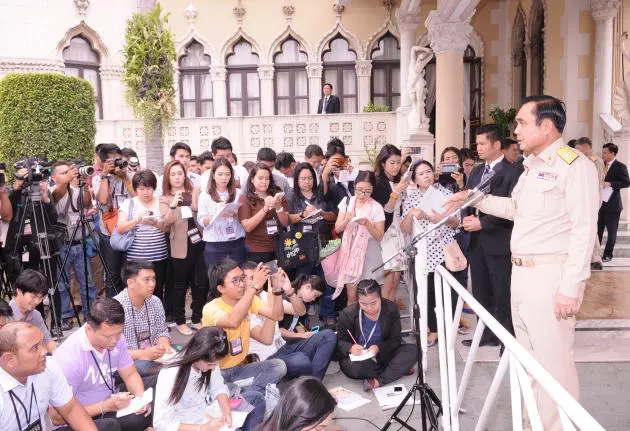
Prime Minister General Prayut Chan-ocha hopes Thais will donate their money in support of the universal healthcare scheme, according to Public Health Minister Dr Rajata Rajatanavin.
“We are now exploring the guideline to make such donations tax deductible,” Rajata said at a meeting of the National Heath Security Office (NHSO) board.
NHSO manages the universal healthcare scheme, which covers 49 million Thais. As the scheme offers most kinds of medical treatment to people for free, it now needs a budget of about Bt120 billion.
Rajata told the meeting that while Prayut was concerned about the scheme’s growing budget, he insisted that he had no policy to end it.
“The prime minister has now assigned the Public Health Ministry to explore solutions that will strengthen the sustainability of the scheme. We need to find a way on how to attract the flow of money from other sources, not just from the government,” Rajata said.
He said he set up a committee to work on the guidelines of the mobilisation of resources for the universal healthcare scheme’s sustainability.
Chairing the committee is Ammar Siamwalla, an expert health economist. Committee members include representatives from the Budget Bureau, the Comptroller General’s Department, the Social Security Office, the NHSO, the Health Systems Research Institute, and various other relevant agencies.
Also, Rajata said hospitals would now be able to cover their electricity and repair costs using money from the universal healthcare scheme.
“A hospital can use the budget earmarked for depreciation to repair the hospital’s infrastructure, for example,” Rajata said.
He said hospitals could spend the per-head subsidy on the expenses of running the facilities, as that would affect neither the fund’s objective nor the beneficiaries.
He said the committee on legal interpretation to clarify the management of NHSO, the committee on examination of depreciation spending, and the committee on inspection of benefits from medicine and medical equipment purchasing concluded that hospitals are free to use the NHSO per-head subsidy without breaching the fund objective.
For more than a decade, the NHSO has strictly managed the scheme and its fund, with participating hospitals hardly having any say on how to manage the budget.
Lately, the NHSO’s two-time secretary-general Winai Sawasdivorn was transferred out of his post. He had previously been at odds with Dr Narong Sahametapat, who has been moved to the Office of the Prime Minister, though he still retains his post as permanent secretary for Public Health, over the management of the universal healthcare scheme as well as its fund.
Yesterday, it was announced that Dr Prateep Thanakijcharoen would serve as the acting NHSO secretary-general.
Commenting on allowing fund spending, Dr Athaporn Limpanyalerd, an NHSO spokesman, said hospitals would benefit from the latest interpretation of the use of the universal healthcare scheme’s flat-rate subsidy.
Athaporn also said patients would not be negatively affected by this decision. On the contrary, they will have a chance to receive better medical care, as the hospitals could manage their operations better.
“A hospital can use the budget earmarked for depreciation to repair the hospital’s infrastructure, for example,” Rajata said.
He said hospitals could spend the per-head subsidy on the expenses of running the facilities, as that would affect neither the fund’s objective nor the beneficiaries.
He said the committee on legal interpretation to clarify the management of NHSO, the committee on examination of depreciation spending, and the committee on inspection of benefits from medicine and medical equipment purchasing concluded that hospitals are free to use the NHSO per-head subsidy without breaching the fund objective.
For more than a decade, the NHSO has strictly managed the scheme and its fund, with participating hospitals hardly having any say on how to manage the budget.
Lately, the NHSO’s two-time secretary-general Winai Sawasdivorn was transferred out of his post. He had previously been at odds with Dr Narong Sahametapat, who has been moved to the Office of the Prime Minister, though he still retains his post as permanent secretary for Public Health, over the management of the universal healthcare scheme as well as its fund.
Yesterday, it was announced that Dr Prateep Thanakijcharoen would serve as the acting NHSO secretary-general.
Commenting on allowing fund spending, Dr Athaporn Limpanyalerd, an NHSO spokesman, said hospitals would benefit from the latest interpretation of the use of the universal healthcare scheme’s flat-rate subsidy.
Athaporn also said patients would not be negatively affected by this decision. On the contrary, they will have a chance to receive better medical care, as the hospitals could manage their operations better.
