
Cybersecurity key reason behind single gateway: PM


Play
PROS AND CONS OF CONTROVERSIAL INTERNET PLAN STILL UNDER STUDY, PRAYUT SAYS
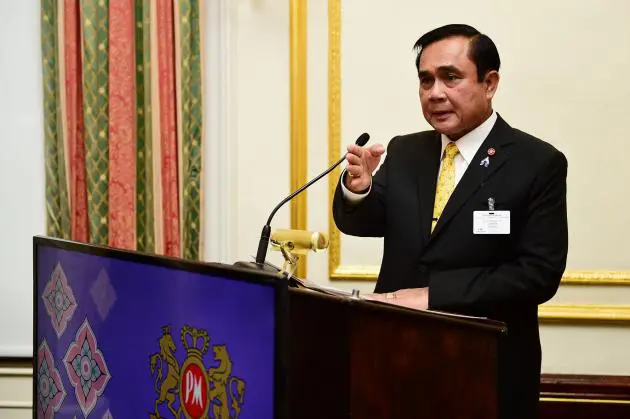
THE GOVERNMENT will study the pros and cons of using a single international gateway for the Internet, which is one of the tools to boost the country’s cybersecurity, Prime Minister Prayut Chan-o-cha said yesterday.
In his first public response to criticism over the planned single gateway, Prayut denied his Cabinet had given the green light for the plan. “We’re still studying the good and bad points of such a plan and will consult with other countries, including those in Asean,” he said.
However, a document shows that the Cabinet’s Secretariat had asked the Information and Communications Technology Ministry on August 27 to report on the progress in implementing the single-gateway plan to the prime minister, citing an August 4 Cabinet resolution.
Prayut yesterday said the public should not panic, as the government would not violate their rights, adding that no action has been taken to implement the single-gateway plan yet as there was still consultation going on among the government agencies concerned.
However, the prime minister said cybersecurity was crucial to national security and implementation of the “digital economy”, in which business and financial data must be secured, and the usage of a single Internet gateway was one of the tools to ensure cybersecurity.
Other countries have also conducted feasibility studies on the pros and cons of single Internet gateways, he claimed.
Prayut said cybercrimes were now common, as evidenced by the large number of hackers and cyberattacks, so the public should not just focus on the issue of rights.
The prime minister said more and more people were connected with the cyberworld and hence the government had to find ways to deal with violations of rights and laws and see if the use of a single Internet gateway could solve such problems while balancing the public’s right to privacy and freedom of expression.
According to the Institute of Economics and Peace’s global terrorism index, Thailand is ranked among the top 10 out of 162 countries surveyed. A source said cyberspace was often used to carry out terrorist attacks in various countries, so it was necessary for Thailand to boost cybersecurity to avoid such incidents.
However, critics have said only a few countries such as China use a single Internet gateway to control the flow of data from outside the country.
In addition, a single gateway would lead to bottlenecks and slow down Internet speed if the country’s bandwidth is not significantly expanded to accommodate the traffic, they say. This would hurt the government’s policy to promote the digital economy, as e-commerce and other digital activities would be impeded.
Meanwhile, Defence Minister Prawit Wongsuwan, who is in charge of national security, said the government did not want to create conflict in society as there had been opposition to the single-gateway plan, which resulted in the websites of several government agencies being paralysed by the distributed denial of service (DDoS) method on Wednesday evening.
Among the affected websites were those of the ICT Ministry, which was hit by more than 100,000 users, even though the daily average was only about 6,000.
Maj-General Ritti Indarawud, head of the Army’s cybercentre, said there were a number of ways to combat website attacks that used the DDoS method such as by installing computer servers behind the firewall or inside the demiltarised zone, expanding the bandwidth, boosting the CPU or RAM, and creating standby websites.
Anusorn Eamsa-ad, the Pheu Thai Party’s acting deputy spokesman, said the government should drop the single-gateway plan because of strong opposition.
However, Government Spokesman Maj-General Sansern Kaewkamnerd said the public should not be misled and that the single-gateway plan was still under study.
