
CDC an independent body, insists Meechai


Play
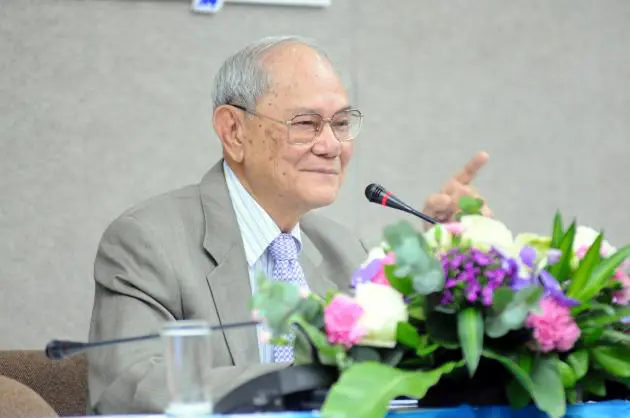
THE Constitution Drafting Commis-sion is independent and not obliged to draft a charter exactly as told - including the National Council for Peace and Order (NCPO)'s suggestion on the mechanisms to drive the country through a crisis, said drafter chief M
He made the comment in order to clarify any possible doubts aroused by the NCPO’s 10 leaked suggestions on the charter draft. Among the suggestions were “mechanisms to break deadlocks during critical times”.
Meechai argued that the suggestion was not exactly the National Strategic Reform and Reconciliation Committee (NSRRC) – one of the main reasons for which the last draft was shot down.
Meechai said it was CDC’s job to come up with measures to deal with crises. “For some crises, we have already introduced some countermeasures under the Constitution Court and other relevant agencies. It depends on what the crisis is,” he said.
He said the NCPO’s deadlocks suggestion was in fact a question for the CDC to find an answer. “What do we do if the country was to face a dead-end crisis?” he said.
However, he said the CDC was yet to deal with the matter. Meechai stressed that the CDC was working to make every agency perform in an integrated way so when a critical moment came, they could resolve it.
He refused to say whether a novel agency would be created or if it would be NSRRC-like. He said the junta’s suggestions carried the same value as any suggestion, adding that drafters would examine all the suggestions to see if they were suitable. This did not mean drafters put every suggestion in the draft.
Asked if not strictly following the junta’s proposal would get the panel into trouble, Meechai said he did not think so. He could explain CDC decisions to the NCPO. He maintained the CDC was working for the public interest and would not write the charter to serve only the powers that be.
The National Council for Peace and Order has submitted a 10-point list of suggestions on the draft charter, signed by its chief and Prime Minister Prayut Chan-o-cha, to Meecha Ruchuphan, chairman of the Constitution Drafting Commission (CDC). The 10 suggestions are as follows:
1. The draft must incorporate all important content, be clear and easy to understand, not ambiguous or prone
to misinterpretation.
2. The charter draft must not be too long and should stipulate only important and necessary administration issues. A charter that has too many details will be complicated to interpret, so leave the details to the legislative branch. The charter should not be so short that it lacks important content on mechanisms to deal with crises.
3. The charter draft should include procedures to allow it to be amended for flexibility, to reflect the changing times and to protect it from the use of force, especially in the form of a coup, and from being amended or cancelled.
4. The charter draft should incorporate all important principles of political and administrative systems and comprehensive checking systems on political office holders. It should have mechanisms to prevent principles being distorted with extra bureaucratic power that lead to political crises.
5. The charter must truly empower the people not only before but also after elections.
6. Political crises and conflicts can take place anytime, so the country may be hit by a political impasse. A charter should have mechanisms to address political impasses, especially legislative, executive and judicial vacuums to ensure the continuity of the state administration and guarantee amnesty to the military for using military force.
7. Policies on national security must include upholding the Royal institution, independence and sovereignty. The use of military force with the honest intention to protect national security against international and domestic threats is not subject to civil, criminal or administrative actions.
8. Bureaucrats and state officials, especially military officials, are entitled to the same rights and liberties as civilians. They should not be deprived of rights and liberties, including the right and liberty to political expression.
9. The term for prime minister should be set at four years and the prime minister should be allowed no more than two consecutively terms in office to prevent a political monopoly or political dictatorship, in line with the principles of prime ministers in developed, democratic countries.
10. Corruption must be eradicated and combated. Corrupt people must be punished drastically and severely. Anti-corruption must be a value that is stipulated in the charter to create awareness for the people and bureaucrats.
