
Fearing for his life, Paween seeks asylum


Play
Former police officer who probed human trafficking cases flees to Australia
A FORMER high-ranking police officer who headed a human-trafficking investigation that led to the arrests of many state officials is seeking political asylum in Australia, he disclosed yesterday.
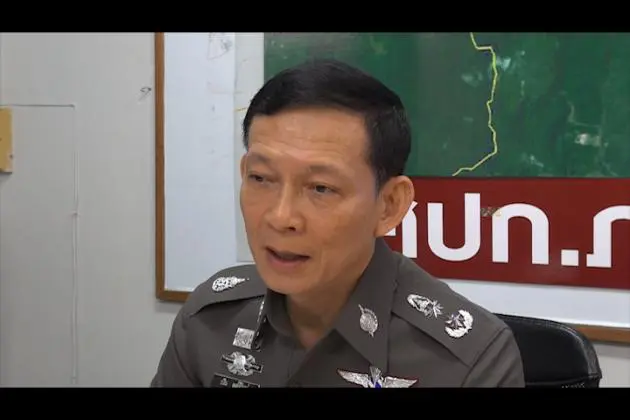
Police Maj-General Paween Pongsirin said he was seeking asylum because he felt unsafe in Thailand and that he got no protection from his supervisors.
“I can’t stay in Thailand. It’s dangerous. If I remained in the police force, I would be in danger. I sought help from the supervisors but there was no help, no protection, no mercy and no compassion,” he told The Nation.
“Even after I resigned from the service, nobody seemed to care. So I decided to bring my family to Australia immediately after the national police chief approved my resignation,” he said.
Paween, 57, arrived in Melbourne a few days ago on a tourist visa.
He resigned last month after he was transferred against his will to the insurgency-plagued southern border region. He told the Australian media that the traffickers he was pursuing were influential in that region and some senior police in the area were involved with the trade.
He opted to quit rather than take up a new post, after allegedly receiving death threats.
“I worked in the trafficking area to help people in trouble. But now it is me who is in trouble. I believe there should be some safe place for me – somewhere on this Earth to help me,” he was quoted as saying by The Guardian.
Paween said he was seeking asylum in Australia because “I have friends and people who assist me there”.
He had told his superiors that he feared for his life if he was sent there but his protests were ignored. “I can’t work in the deep South. There are people who will seek to get even with me,” he said.
In May, Paween was appointed head of the police team investigating a human-trafficking ring active in the South, after many shallow graves and bodies of suspected Rohingya immigrants from Myanmar and Bangladesh were found in the border area with Malaysia.
The investigation led to the arrests of more than 90 people, including local businesspeople, politicians, administrators and senior military officers who were charged with human trafficking. They included Manas Kongpan, a powerful Army general in the South who is accused of being a linchpin, using his local influence to funnel migrants through the region. He denies the charges.
Paween’s unit was disbanded, and the investigation was declared complete in early October.
He said the trafficking investigation was pulled too soon. Speaking before he left the country and visibly shaken, Paween said he was ordered to stop the investigation prematurely and that many more officials were likely involved in the trade.
Speaking to the Australian Broadcasting Corporation in Melbourne in comments broadcast yesterday, he said he felt “deeply sad” about the situation.
“There are some good soldiers, but in the police and the military, there are some very bad ones involved in running the human trafficking,” Paween said. “I feel deeply sad. It is so unfair that people who did these things will not be punished.”
He remains a witness in the trial of the officials charged in connection with the alleged trafficking of migrants. However, he said yesterday that he had no plans of returning to Thailand to testify to the court in the case.
Amy Smith, executive director of Fortify Rights, said yesterday that the outlook was not promising for Thailand regarding its battle against human trafficking.
“This trial is a test of Thailand’s commitment to end human trafficking, and the prognosis isn’t looking good,” Smith said. “Paween and other investigators should be supported to combat human trafficking in Thailand, not be forced into hiding.”
