
Protesters lay siege to Trump camp


Analysts cite social divisions as many deny president-elect is fit for high office
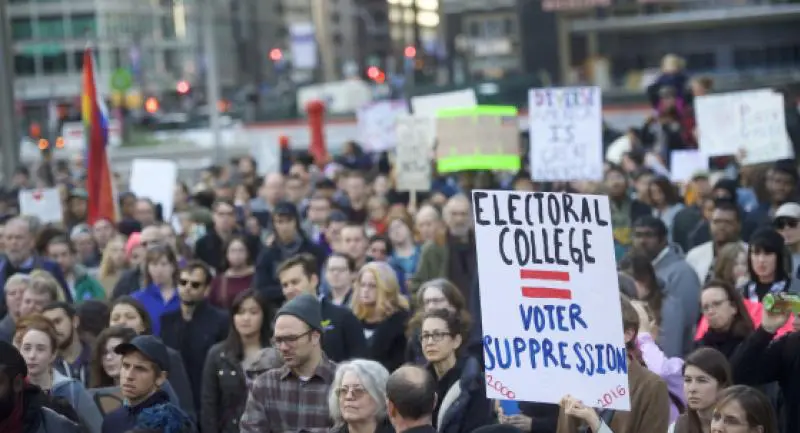
President-elect Donald Trump huddled with advisers inside his Manhattan residence on Saturday, plotting his next moves as thousands of demonstrators besieged Trump Tower and marched through other US cities in a fourth day of protests.
The demonstrations have become daily affairs following Trump’s upset defeat of rival Hillary Clinton, who blamed FBI director James Comey for her loss during a conference call to campaign donors.
While Trump appeared to be making some headway in forming a new administration, Americans feel their social division is deepening.
Political science professor Joseph White of Case Western Reserve University said: “We knew that the country was really divided, at least in a lot of ways, before. The election didn’t really tell us anything we didn’t know about that – just that the votes, for various reasons, ended up splitting slightly differently than they did in the last election.”
He said the polarisation in politics that spread into society has been growing for years, according to The Straits Times.
“What’s new is the legitimisation of a kind of overt hostility, Trump-style, and the sense that it is OK to say and do things that weren’t OK to say and do before,” said White. “And obviously, the potential objects of that are Mexicans, blacks, Jews and maybe Asians.”
Trump’s campaign manager Kellyanne Conway told reporters his appointment of a White House chief of staff was “imminent” and that Republican National Committee chairman Reince Priebus was among the candidates for the key post.
Trump has sought to strike a conciliatory tone since his election sent a shock wave around the world, announcing on Friday he no longer intended to completely scrap Barack Obama’s signature healthcare law, Obamacare.
“This will prove to be a great time in the lives of ALL Americans. We will unite and we will win, win, win!” he tweeted on Saturday.
Meanwhile, a swelling crowd of more than 5,000 people marched toward Trump Tower in Manhattan amid cries of “Trump is NOT my president”.
In Los Angeles, as many as 10,000 people turned out for a march in the city’s downtown area after a night of protests that ended in several hundred arrests. Thousands more marched peacefully in Chicago.
In another early sign that Trump’s election could polarise Americans more, protester Alexandria Duzy-Venick, 45, said she was not willing to forgive and forget his derogatory remarks about women, Mexicans, Muslims and others.
She has joined efforts to keep the president-elect out of office. “Our goal now is to contact the electors and get their votes overturned on December 19,” she said. “We want to get this egomaniac out of office.”
December 19 is when electoral college electors vote for the president.
In under 24 hours, more than 2 million people had signed an online petition asking the electoral college to elect Clinton as she won the popular vote. The college has never overturned a presidential result.
Of particular concern to Clinton supporters are Trump’s vows to end Obamacare, deport illegal aliens and appoint a Supreme Court justice who could overturn its 1973 Roe versus Wade ruling that legalised abortion.
Trump told The Wall Street Journal he may maintain some of the healthcare programme’s more popular elements, such as a ban on insurance companies denying coverage because of so-called pre-existing health conditions.
This marked one of several moves by Trump and his advisers away from his more sweeping campaign positions.
Asked by The Journal whether he would, as threatened, name a special prosecutor to investigate Clinton over her use of a private email server as secretary of state, Trump deflected, saying his priorities were “healthcare, jobs, border control, tax reform”.
Trump surrogate Newt Gingrich also cast doubt on whether Trump would make Mexico fund his proposed border wall – another rallying cry. “He’ll spend a lot of time controlling the border. He may not spend very much time trying to get Mexico to pay for it, but it was a great campaign device,” Gingrich was reported as saying by The Washington Post.
