
KPMG optimistic about future of nation's emerging market


Play
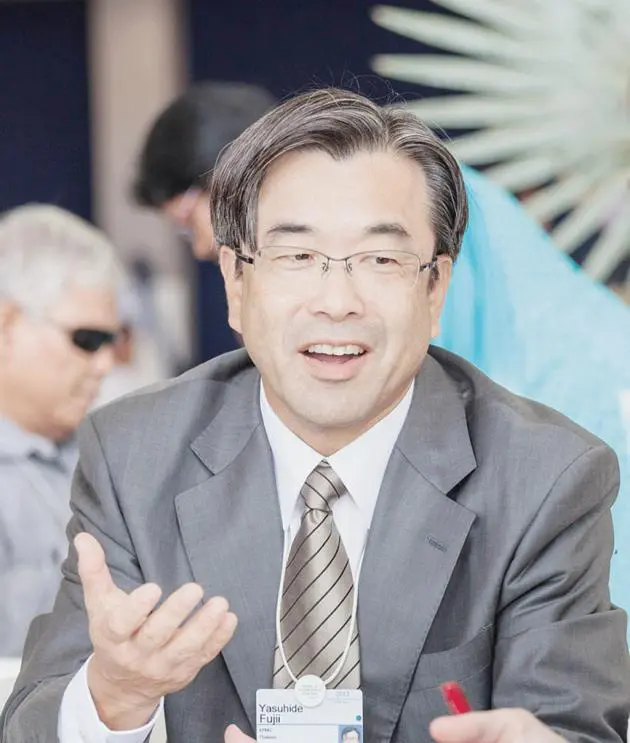
KPMG, a global network of professional firms providing audit, tax and advisory services, is optimistic about the future of Myanmar's booming market, said Yasuhide Fujii, KPMG's managing partner for Myanmar.
“We believe Myanmar is one of the most emerging markets in Southeast Asia. As the country has a lot of potential, I am sure the market will become more competitive than ever before,” Fujii said in an exclusive interview with Myanmar Eleven on Tuesday evening.
Fujii said that KPMG is really satisfied with the progress in business after the opening of its Myanmar office in 2012.
KPMG is the first of the Big Four professional services organisations to have a presence in the country, which is widely seen to be the “next economic frontier” in Asia.
Although tax and advisory services to companies doing business in the country have been initially offered in the Myanmar office, KPMG has planned to provide auditing services to growing businesses through the local office.
“Actually we are waiting for the new regulations for accounting firms so that we can deliver the audit services, especially for businesses and companies. We will have a stock exchange market here in the future. We hope to become the auditor of these companies,” said Fujii.
Talking about the challenges KPMG is facing when providing services in the Southeast Asian country, Fujii pointed out the shortage of skilled labour.
“It is true that if you want to employ such an experienced Myanmar staff, it is almost impossible. So we are trying to recruit fresh graduates, and trying to give them the training, for example sending the staff to Bangkok or Singapore office to have the experience in the real field for the job, and sending them back to Myanmar to be ready to serve our clients. It may take two or three years. But I think it is necessary,” said Fujii.
Commenting on the current state of Myanmar’s auditing condition, Fuji appreciated the effort of the nation’s Certified Public Accountant (CPA).
“They are trying to improve their auditing capability. It may take time but they are also improving themselves to catch up with developed countries.”
With the recent autonomy of the Central Bank, Fujii sees the banking industry as one of the blooming areas in the newly-opened country.
On the possibility of allowing some foreign banks to open their branches in Myanmar, Fujii said, “We believe it is a good, positive process. But we are not sure what kinds of scope of activities will be allowed to do for such branches. I understand that limited number of foreign banks will be given, most probably wholesale lending for foreign investors, and trade banks because we have learnt such activities have been done in other countries. For example, Thailand allows foreign banks to open a branch, but (allows to open) only one branch.”
Fujii added that foreign banks are likely to gain profit from corporate lending and trade financing through their branches in Myanmar whereas opening many branches will be costly for some local banks which may not be competent with foreign banks in terms of capital and technical know-how.
“Different banks have different aims for the development. Some banks want to wait (to enter Myanmar). But some Japanese banks want to come earlier because they know that some of large Japanese firms have already invested in Thilawa SEZ. They want to win the licence earlier than others.”
KPMG’s Myanmar head believes that Myanmar needs to improve infrastructure as soon as possible to attract more foreign investment.
“I think we should have some kind of the legal framework to utilise more efficiently such as private funding. They can utilise the private investment to build up the power plant. This might be a contract between the government and the investor. I will give you an example with the power plant. After building a power plant, the power itself should be sold to the government. We need to have such an agreement. At the moment, we do not have any legal framework.”
Fujii’s view was echoed by Tanate Kasemsarn, partner (advisory) at KPMG in Thailand.
“Myanmar needs to build its infrastructure. I would suggest investing in infrastructure can be formed by Public-Private Partnership between the government and the private sector,” said Tanate Kasemsarn.
He added that the Myanmar government needs to enact the laws to support the investments in the form of Public-Private Partnership.
KPMG’s Myanmar office has access to full service capabilities through KPMG in Thailand and more than 1200 professionals with support from KPMG firms in Japan and in Singapore. At the moment, there are 35 staff in the local office, most of who are Myanmar nationals.
