
Myanmar continues to attract strong foreign investment


Play
Myanmar has continued experiencing an increase in the foreign direct investment (FDI), as it attracted US$2 billion in the first quarter of this year, according to the data from the Myanmar Investment Commission (MIC).
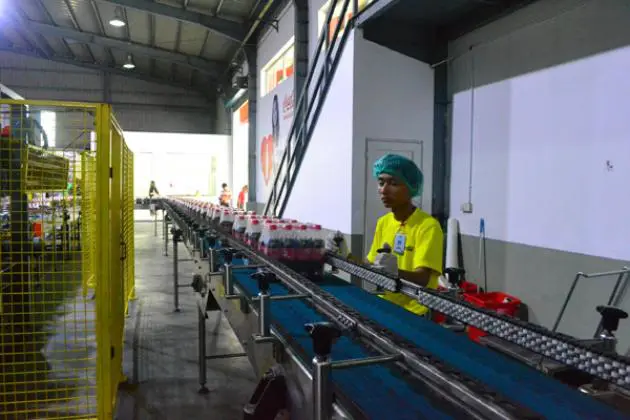
Out of the total, $300 million was going to the commodity manufacturing sector, in light of increasing domestic demand. These include the investment in garments, foodstuff, value-added rubber products, beverage and agricultural equipment.
At the end of last year, combined foreign investment to the country had amounted to more than $44 billion.
Most of the investment has been channelled to the energy, oil and gas exploration and production, commodity production, mining, hotel and tourism, transportation and telecommunications, housing, livestock and fishery, agriculture and construction sectors.
During January and March of this year, the transportation and telecom sectors saw $1.1 billion in investment.
The country just recently awarded the long-awaited telecom licences to two foreign investors – Norway’s Telenor and Kuwait’s Ooredoo. Telenor reportedly plans to invest $1 billion to roll out its commercial second- and third-generation mobile service in Myanmar this year.
There was record interest in the licence-award process, with more than 91 companies expressing interest in participating. Following the announcement last June of the successful applicants, Telenor entered into consultation with the authorities to finalise details of the policy framework.
Meanwhile, the energy sector will remain attractive to foreign investors. Myanmar is now sitting on some 7.8 trillion cubic feet of proven natural gas reserves. The Ministry of Energy also revealed that the probable and possible reserves could reach 0.42 trillion cubic feet onshore and 10.24 trillion cubic feet offshore.
The ministry’s recent bidding of offshore oil and gas blocks drew interest from 68 companies from across the world. Thirty firms eventually submitted proposals and 20 blocks were awarded late March. This would generate $226.1 million to the ministry as a “signature bonus” from the firms once exploration begins on the 10 shallow water and 10 deep water blocks. Of total, $91 million will come from shallow water exploration blocks and $ 135 million from deep water exploration blocks.
Among the winners, Chevron and Total are two major Western companies which established their interests in the country during the sanction period. In the latest auction, Royal Dutch Shell and BG Group won the most awards. Other big names include Norway’s Statoil, and more investment is expected.
Currently 34 countries are investing in Myanmar, with China ranking first and followed by Thailand.
Nearly 42 per cent of foreign investment has been channelled to Myanmar’s lucrative energy sector. In contrast, the construction sector receives the least.
The Myanmar Investment Commission, which strives to create job opportunities for local citizens, supervises foreign investment projects mandated by Foreign Investment Law and Citizenship Investment Law.
