
Foreign investors urged to be prudent, patient and creative
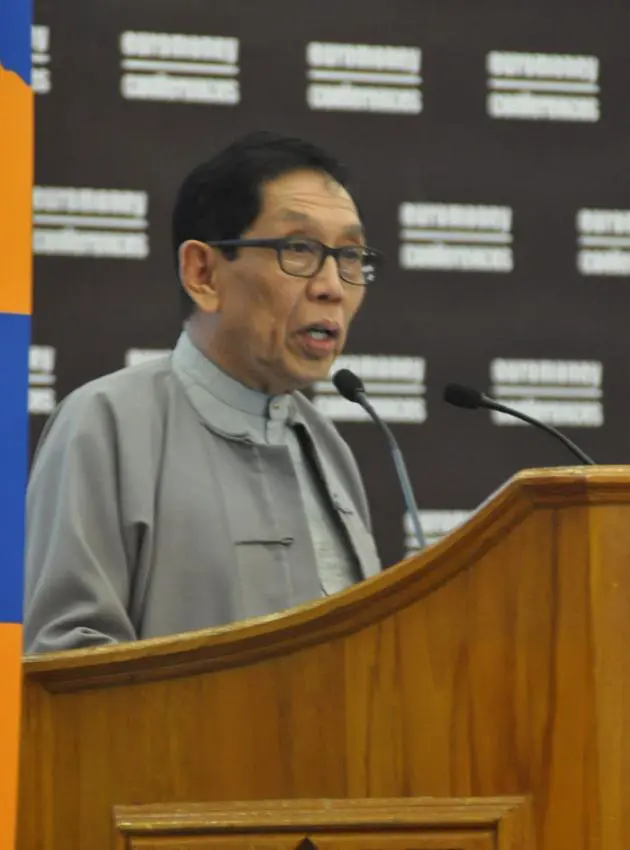


Presidential adviser underscores the need for risk-assessment strategies in what remains a 'frontier economy'
A presidential adviser is urging foreign investors to be very prudent in Myanmar; calling on them to consider long-term goals in what he says remains a frontier economy
“You [investors] need to be very careful. Please have Plan B, Plan C, and Plan D in place. You should not keep your eyes shut. Please also look at political risk and insurance for large investments,” Professor Aung Tun Thet said.
“Please look at the reality on the ground. Please be familiar with legislative and regulatory restrictions,” he added.
Speaking at a conference at the Yangon office of the Union of Myanmar Federation of Chambers of Commerce and Industry last week, Aung Tun Thet stressed that risk-management strategies were necessary to ensure a successful entry, as well as long-term growth.
“Now we have a frontier economy, which also has risks and challenges. I will be very honest in terms of the challenges we face. We need to face these challenges. We have to enhance our connectivity,” he said.
The government is trying to promote a business-enabling environment to ensure macroeconomic and financial stability, and ensure the manufacturing and services sectors become internationally competitive, he added.
Aung Tun Thet echoed comments made the week before at the Myanmar Global Investment Forum in Nay Pyi Taw, when he pointed to infrastructure challenges, policy risks, and regulatory conditions as the major challenges to the nation’s growth.
“We have financial, legal and regulatory systems that are very slow and not responsive. The lack of infrastructure is very, very prominent. But hopefully in the next few months, we will have 4G [telecom networks] thanks to the telecommunications revolution. Transport and legislative reforms are underway,” he said.
Power in focus
Aung Tun Thet acknowledged that “everyone complains about the lack of power”, but urged foreign investors to focus on how to meet this challenge. He called for foreign investment in the sector. Foreign investment can bridge gaps in the nation’s economy and provide opportunities for long-term sustainable growth, he added.
“We believe that foreign investors add value in many sectors – financial, institutional, agriculture, environment, power, electricity generation, telecommunications, even hospitality. Tourism will be a big sector for us. Special economic zones will also bring excellent opportunities for foreign investors,” he said.
“Please think of the opportunities, size, population, resources, and demand. We have immediate demand for products and services from a wide spectrum of industries. Please look at short-term opportunities where you can provide immediate solutions, but please keep the bigger picture in mind. Please adopt an entrepreneurs’ approach. Please create certain measures for your investment,” he said. Short-term objectives should be combined with long-term strategies to ensure success in the market, he advised.
Aung Tun Thet also urged foreign investors to learn the rules and regulations, to be aware of the up-to-date government policies, and to exercise due diligence. He suggested investing in the extractive resources, such as natural gas, timber, mining, power generation, agriculture and fisheries, and labour-intensive manufacturing, and services sector.
Think ahead
“I would like to urge potential investors to think ahead. Please do not look only at the immediate future. Please do not look at one week, one month, and one year. Instead, please think of 10 years or 20 years. Please also think again and reflect of what you might provide to us in Myanmar. Finally, please think across and look at other sectors,” he added.
Aung Tun Thet said that infrastructure challenges, including electricity shortages, could be overcome within a few years.
“Because of the challenges, we are now looking for more innovations, more creativity. We are upgrading the national grid system. We are now allowing regional governments and even those at the township level, to start looking at power generation and distribution. Many steps are now being taken by local authorities to buy what is now called off-grid [power],” he said, noting that it would take some time for the national grid to cover the entire country.
“In the mean time, we will need to look at creating approaches for power generation. Many foreign firms are even helping us to come up with creative and innovative solution. For example, France’s Schenider Electric is helping us with power generation while other companies are looking at solar, wind, etc. It does give us opportunity to leapfrog. We will not have to rely only on the national grid system. But we will make sure that power supply is provided for those who need it.”
