
Kyat hits new low


Play
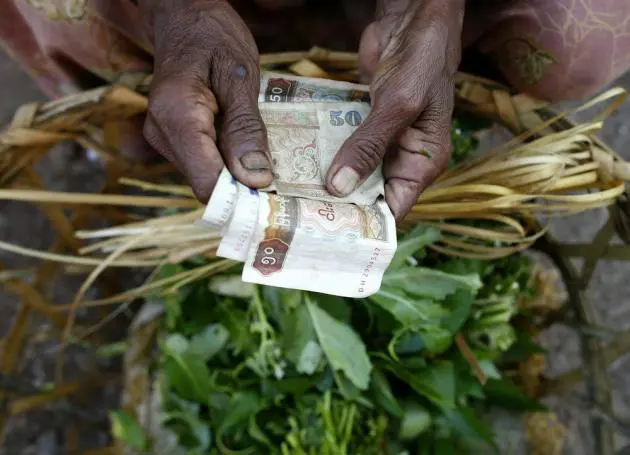
The kyat yesterday spiked up to 1,029 per US dollar, a new low since the official exchange rate was allowed some flexibility in April 2012 by the government of Thein Sein.
It touched 1,016 on November 10 and stayed at the level until Friday. The downward trend started in September, suggesting persistently high demand for the greenback.
The greenback first rose above Ks 1,000 on October 27, the first time since the managed float system was deployed in April 2012.
The black market rate has already surpassed 1,030 per dollar.
The kyat has continued weakening amid growing demand for the US currency for imports. The demand for dollars was being driven by the country's rapid consumption, especially of manufactured goods. The trade deficit was around US$3 billion dollars for the first half of the current fiscal year to the end of September, on exports of $6 billion and imports of $9 billion.
Market expert Dr Maung Maung Soe noted that when the Foreign Investment Law was enacted in November 2012, there were concerns that the dollar may fall due to massive inflows of investment. Yet, the value remained under 900 kyats in 2013.
“It (the recent spike) is a golden time for exporters. But on the other hand, they are worried about the fluctuation of the dollar value,” said market expert Dr Maung Maung Soe.
Aside from high demand to cover imports, he anticipated that there was currency speculation by some cronies.
“In the long term, the cronies might hurt themselves because of speculation, as prices are likely to hike. The only hope is macroeconomic policy. The Central Bank of Myanmar urges dollar users to sell their greenbacks. But this can’t resolve the situation in whole.”
Some local economists and banking experts agree that the central bank is not well-positioned to control the fluctuation.
Than Lwin, a senior advisor from Kanbawza Bank, noted that an issue here is that only 40 per cent of money circulated in the economy is passing through the banking system.
“Only 40 per cent is now circulated in the banking system. It would be easier if up to 80 per cent is,” he said.
San Thein, a banking expert weighed in, saying, “The central bank finds it hard to stabilise the exchange rate. It reportedly has a mere $4 billion in reserve money. Will it be enough to handle the situation? I think not.”
