
Singapore does that da:ns
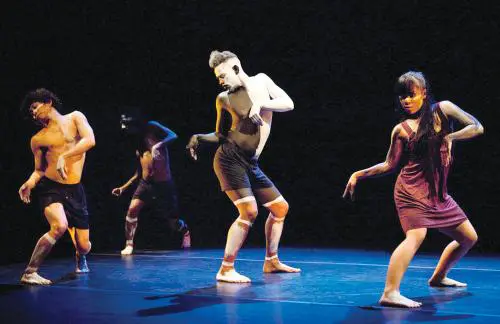


Maybe Jecko Siompo is right. Maybe hip-hop did come from Papua
Jecko Siompo’s “We Came from the East”, created with German dramatists Jochen Roller and Norman Arkyuwen, is an exhilarating hour-long feast for the ears and ears, the choreography rooted in the culture of his native Papua and different styles of hip-hop.
Presented at Singapore’s da:ns festival as part of the “Shift” series, it also featured Siompo’s ingenious selection of background music and sounds, including the dancers’ screams and shouts.
It was a riveting follow-up to “Betamax to DVD”, which I saw twice in recent years in Indonesia, a completely unique work of unpredictable, raw, roof-raising energy. I also attended Siompo’s workshop last year on what he called the Kangaroo Dance.
In “We Came from the East”, 10 performers from his company JeckoS-DANCE worked their way gradually up from the floor, imitating the contorted movements of various animals.
They ended up wearing the colourful jackets of hip-hop performers – and laughing. It reminded me of what Siompo said in his workshop: “Papua people like laughing, so if you miss a dance step it’s okay – just laugh.”
Two German dancers were in the cast, unable to fully blend in but, after all, in some scenes they were portraying “outsiders”.
It suggested that you might be able to master any dance technique, but not necessarily the culture of its origin.
“We Came from the East” – co-produced by institutions in Germany and Indonesia – drew different reactions when it was staged in those countries, Siompo says.
“Some viewers are interested in this mix between traditional Papua dance and modern hip-hop.
Some old-school hip-hop fans are excited to see something they’ve never seen before.
They accept what my great-grandmother said, that hip-hop was born in Papua.
“But I also get some enemies who don’t believe it.”
I don’t really care where hip-hop was born, but I agree with Siompo’s assessment: “The spirit of traditional dance came from the environment. In ancient times, before cavemen went out on a hunt, they would dance like the animal they were stalking.”
That belief leaves Siompo unconcerned at the suggestion that European dance promoters are exploiting him and his art in presenting his dancers as “exotic” creatures from Southeast Asia.
Now that he’s mastered and propagated the style he’s come to call Animal Pop, Siompo’s next step is developing it further, with stronger subject matter to stave off audience fatigue.
Taiwan’s Cloud Gate Dance Company would be a good example. Lin Hwai Min’s choreography is derived from tai chi, but he keeps coming up with fresh subject matter to make their productions quite different from one another.
