
The massive job ahead


Play
Having mustered volunteers for great flood, JP Morgan now ponders the great recovery
The staff of JP Morgan put a tremendous effort into flood relief in Bangkok, and so satisfying were the results that the financial-services firm is considering further contributions to the recovery process.
As well as donating money to the Thai Red Cross, JP Morgan encouraged employees and their families to volunteer for relief missions.
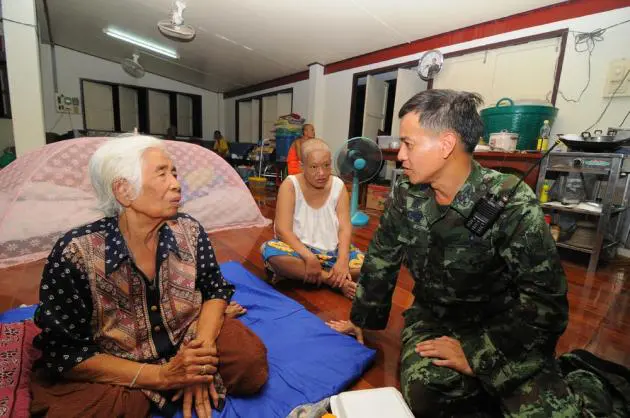
Beginning early last month, they and Nation Group representatives together delivered supplies directly to people in inundated Don Muang and Bang Plat districts with the help of the Royal Thai Army’s 11th Infantry and 1st Artillery regiments.
They took boats, floating toilets, survival kits, food and drinking water.
More than 20 JP Morgan staff members – managers as well as rank-and-file employees – made three trips to deliver essentials to people at Don Muang and Daowaduengsaram temples, Bang Kruay Tessaban, the Bang Or Mosque and the relief shelters at Wat Ruak School, Wat Pleng and Wat Chatkaew Chongkolni.
“Most foreign banks based in Thailand donated money to the Red Cross or the government to support the relief efforts,” says ML Chayotid Kridakon, chief executive of JP Morgan Chase Bank and JP Morgan Securities (Thailand).
“With this flooding the worst in decades, JP Morgan management and employees realised the government’s efforts were insufficient and decided we should help.”
Chayotid says the extent of the disaster left him “depressed”.
“I thought it could be avoided,” he says.
“Now we face some big questions. How does the government plan to tackle any outbreaks of disease in the flood-stricken areas? Will we have to endure another flood crisis this bad? How can the government prepare for such a large volume of water in the future?”
Chayotid believes the government must promptly establish short-term plans for the next monsoon, just half a year away. Water-drainage policies must be clear and effective, and a means to keep citizens informed with accurate and up-to-date information must be in place.
In the longer term, he remains dubious that the government will be able to overcome Thailand’s floodway problems. Infrastructure and privately owned buildings now block many outlets for floodwater flowing to the Gulf.
Colonel ML Kulchart Diskul, commander of the 1st Artillery Regiment, known as the King’s Guards, reports that Dusit, Bang Sue, Phra Nakhon and Samphanthawong districts were all in bad shape during their supply missions, but Bang Plat was the worst. It was completely submerged, he says.
Her Majesty the Queen assigned his regiment to deliver 6,000 boxed meals a day to 23 temples and communities, as well as placing military vehicles at the disposal of flood victims.
The troops’ biggest problem was poor integration among government agencies, Kulchart says. Ideally, he adds, the district offices and the Interior Ministry would play the key roles, with the military providing support.
Dokmai Promviroj and her two children literally ran from their home near Wat Pleng at 1am the night the floodwater inundated the community within a few hours. They lived in the temple compound while their single-storey house remained underwater for more than a month.
“The water flowed in so quickly that I couldn’t save anything,” she says. “The television set, refrigerator, clothes and lots of other things were damaged. I don’t know how I’m going to fix the damage.”
