
LADIES WITH THE MIGHT


Play
The differences and similarities resound in new films about Margaret Thatcher and Aung San Suu Kyi
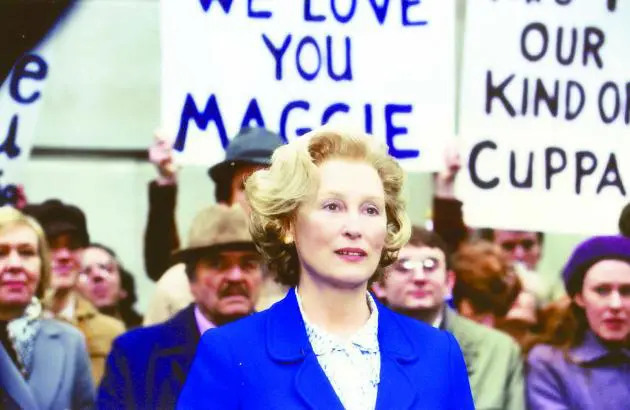
Women have never had it easy in politics, but there have been striking successes. Consider two very different female politicians – Margaret Thatcher and Aung San Suu Kyi. Both are the subjects of new feature films, Thatcher in “The Iron Lady” and Suu Kyi in “The Lady”.
The two share something in common with all women politicians: Once the day’s political duties are completed, they must attend to their roles as mothers and wives.
In “The Iron Lady”, a young woman from a small market town in England smashes through gender and class barriers to be heard in a male-dominated world. The subject of “The Lady” infuriates the Burmese generals by daring to challenge their power.
Thatcher’s political career began in 1950 when she was just 24. She not only lost a string of elections, but also faced the snobbery and sexism of males in her own party. Once a seat was secured in the House of Common, her manner of speech prompted a male MP to cry out, “The lady doth screech too much!”
Within three decades, Thatcher was Britain’s first female prime minister, and she retained the post for 11 years, winning three elections. Having endured 43 years of political battles, Thatcher is now 87, ailing but widely revered.
Thatcher left politics in 1990, the same year Suu Kyi’s National League for Democracy won an election by a landslide, only to be pushed aside by a junta unwilling to cede power.
Suu Kyi, then 43, had decided two years earlier to help found the NLD in the hope of pursuing democracy. Cheated in the election, she spent 15 of the next 20 years under house arrest, barred from politics on the grounds that she was married to foreigner, Briton Michael Aris.
“You are free to choose, Madam: your husband and children or your country,” one of the generals tells her in a scene in the new movie. She declined to leave Burma to see her husband in England, even after she learned he was dying.
The film ends with Suu Kyi greeting monks at the front gate of her home – it’s 2007 and the doomed “Saffron Revolution” is about to begin.
Suu Kyi was finally released from house arrest in November 2010. Burma seemed to have undergone an ideological sea change.
“There is no doubt,” says Soe Aung of the Forum for Democracy in Burma, “that Daw Aung San Suu Kyi is the best known and most influential political figure in Burma, if not Southeast Asia or even Asia. I am very proud of her relentless efforts to bring about genuine democracy and national reconciliation in our country.”
The activist has seen the movie and praises the director and screenwriters for adhering to fact. And he singles out Michelle Yeoh for her “excellent” portrayal of Suu Kyi, including a speech given in Burmese.
“I’m not sure ‘The Lady’ will make any profit at the box office,” Soe Aung says, “but I’m glad to see the courage of the producers to pull it together as a Hollywood movie.”
“It wasn’t so much a question of mimicking her by adopting her hairdo, her gestures or her beautiful English accent. It was more about capturing her soul, and understanding what made her leave everything ... in order to embody hope for millions of people in Burma.”
MICHELLE YEOH ON PLAYING SUU KYI
“I do think it’s something to do with sex. I do think it’s a deep unease about women being in power, and even though I think I’m taller than most men, it’s the littler agenda.”
MERYL STREEP ON PLAYING THATCHER, AS QUOTED BY THE DAILY MAIL
