
Is death really punishment?


Convincing Thailand to stop executing drug dealers might be another mission for the gods of reconciliation
Roads to Death: Four Case Studies Leading to Capital Punishment in Thai Criminal Justice
Published by the Union for Civil Liberty, 2007
Reviewed by Paul Dorsey
It’s hard to believe that “Roads to Death” – a modest review in 100 pages of four criminal cases that landed five people on death row in Thailand – can even exist in the toxic environment cultivated by the likes of Chalerm Yoobamrung, our bellicose deputy prime minister.
And yet here it is, resolutely still making the rounds five years after its publication, with its quiet appeal for justice of a different order than the one to which Thailand is just as resolutely committed. The non-governmental organisation wants the death penalty abolished here, as is the case in most of the world’s countries.
Danthong Breen, chairman of the Union for Civil Liberty, edited the slim volume compiled by researchers Pitak Kedhom and Phairoj Pholphet and recently gave a presentation on the subject at the Foreign Correspondents Club. The death penalty is back in the news thanks to Chalerm’s declarations of war on drug pushers.
Chalerm last month promised a legislative amendment that would see drug dealers executed 15 days after their final appeal is rejected. He doesn’t want convicted criminals to have time to “mingle” behind bars and concoct worse atrocities.
“I won’t listen to the National Human Rights Commission or NGOs because I am [only] answerable to the public,” he said. No Thai government, including those led by the Democrats, has sought to ban capital punishment because opinion polls invariably find a majority of citizens convinced that it’s necessary.
The citizens of eight of the 10 Southeast Asian nations agree with them. So do most citizens of China, the United States, India and, in recent years, Canada too, which abolished the death penalty long ago. More than 60 per cent of Canadians now want it back.
That disturbing loss of ground in the battle for universal human rights is nevertheless an anomaly in the global trend toward magnanimity (and cheaper life imprisonment). Something like 140 countries have stopped executing criminals or do so only in extraordinary circumstances, and the number is growing.
And yet the death penalty does not emerge as the primary issue in “Roads to Death”, despite its abolishment being the researchers’ chief recommendation.
Instead, the book spends more time criticising the investigative and judicial processes. The flaws include faulty arrest warrants, failure to apprise suspects of their rights, drawn-out detainment before charges are laid and between trials, lack of a full quorum of judges, inadequate representation by court-appointed lawyers and the 24/7 shackling of convicted prisoners pending appeal.
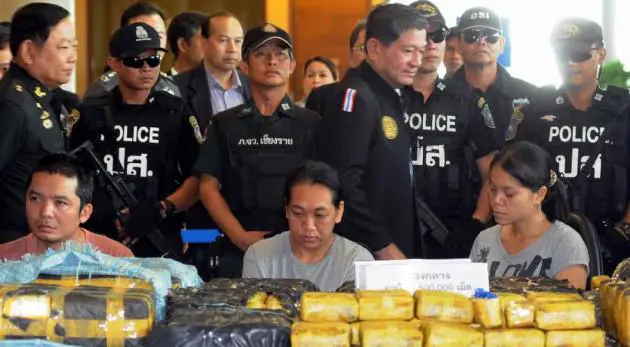
When assessed against international standards of justice, the shortcomings enumerated in each case become gaping fissures into which the prosecution should have vanished. Also condemned is the police ritual of presenting suspects at press conferences, flaunting the existing constitutional right to presumption of innocence before trial.
Oddly, the prisoners in all four of the book’s case studies (allegedly or not, two murderers and three drug dealers) appear to be straightforwardly guilty.
The authors point out, however, that in two of the cases, the rights of the accused were trampled. The result in appeal court should have been mistrial if the defence lawyers had been properly trained and keen enough. In the other cases, cracks in the evidence should have been enough to save them from the menace of lethal injection.
What about the evidence, though? The researchers duly reported the court’s sole reliance on the testimony of an eight-year-old witness in one case. But – as noted by one of several foreign legal experts invited by Danthong to comment – they failed to indicate whether police looked for fingerprints in another case or examined the suspect’s shirt for gunshot residue in a third.
The reader is momentarily puzzled before remembering that this discussion is about lacks in the application of justice, not guilt or innocence.
“Roads to Death” is a thin volume of slender arguments that cannot have done much to sway Thai public opinion and stands little chance against Chalerm’s resurgent “drug war” bombast. But it’s an important, earnest book, encapsulating both the scale of the task facing reformers and the human toll of official carelessness.
“HRDefender”, who maintains DeathPenaltyThailand.blogspot.com, wrote prior to the UN Human Rights Council’s Universal Peer Review of Thailand last October that “an informant” at the Justice Ministry had said legislation for discarding the death penalty was being prepared. “Meanwhile the death row of Bang Kwang prison is alive with rumour that shackling will be abolished.”
The Peer Review came and went with little stir. Nothing has changed. Another October is ahead, another October 10, the World Day for Abolition of the Death Penalty.
Get the book
Union for Civil Liberty chairman Danthong Breen has copies of “Roads to Death” available on request via [email protected]. The book will be reprinted if there is enough reader interest.
