
For pastry, just see Pichai
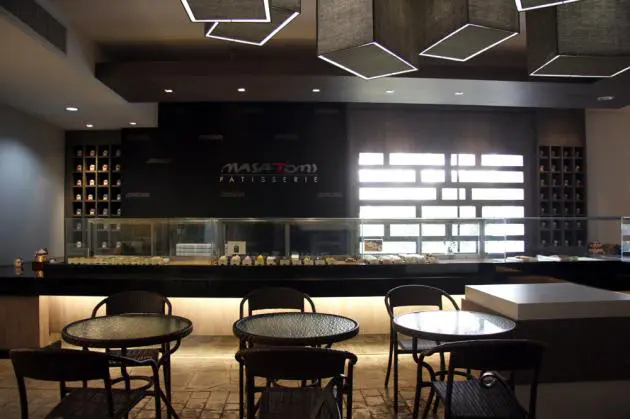


The man loves desserts so much that he had to change careers. Witness the dedication at Masatomi
The hint is in its name. Patisserie Masatomi is a sanctuary of delectably smooth sweets created by Pichai Rungnoppakunsi that melt on the tongue like Japanese desserts, while at the same time adapting French culinary techniques.
In humble surroundings on the third floor of the Portico mall, this patisserie gets its name from the “masa” in Pichai’s Japanese name Masaru and “tomi” – his nickname Tommy. And the number 2 sits above the “t” to include his business partner, Thomas Van Blaroom, who everyone calls Tommy. So it’s two tommies.
Pichai studied in Japan for five years before returning home 20 years ago. He worked in mundane marketing jobs until he turned 50 and then decided he’d had enough. A connoisseur of desserts, he decided he hadn’t had enough of them, so took early retirement and opened his own pastry shop.
That was six months ago. Pichai still hasn’t had enough, not by a long shot.
With minimalist decor predominated by black and white, Patisserie Masatomi displays tantalising treats behind glass like jewellery for the palate. You can try them on, of course – there are 20 seats where you can chat with friends while sampling the goodies.
Pichai was serious about his second career that he took the full course in classic French pastry science at Le Cordon Bleu Dusit Culinary School. “French pasty,” he explains, “is the basis for all the rest, including Japanese sweets. Before you twist an idea, you should have a firm foundation.
“I try to employ Japanese decorative aesthetics and styles. Japanese cakes aren’t too sweet, but rather soft and light and refreshing, so they easily suit Asian tastes, whereas Western desserts are rich and creamy.”
He praises the Japanese for the way they assimilated and transformed French pastry into the national culinary repertoire.
“Take the Mont Blanc, for example. The classic French recipe piles chestnut puree on top of meringue and finishes with whipped cream. The Japanese use local ingredients but maintain a similar texture, and the results are purple-sweet potato, pumpkin and red bean paste!”
Like clothing, fashions come and go in pastry decoration, Pichai says. In place of the customary pillow of chestnut cream topped with nutty chestnut puree, the modern Mont Blanc stands tall with thin stabs piled high – like the French mountain it’s named for.
His Bt90 Mont Blanc features layers of different components, from crunchy sweet dough to mousse to milk sponge to cream chantilly.
Macaroons have long been popular in Europe, but they only just caught on in Thailand two years ago. Pichai’s macaroons are both colourful and fantastic in taste. The exterior is crispy ground-almond paste and there are 14 chewy fillings to choose among, with the price ranging from Bt35 to Bt45.
For a mix of sweet and tangy, you can fill your macaroon with yuzu, raspberry curd, or a striking dash of real cassis fruit. For more Japanese and French touches, opt for green tea, chestnut, cheese butter cream and Ispahan infused with pink rose and lychee.
Then there’s White Choc Lavender filling, made from actual flower petals, and Samui, a concoction of coconut sugar and coconut cream.
Masatomi’s trademark offering is Mochi cake (Bt135) that’s sweet, sticky and chewy, with a little surprise inside – a filling of strawberry, green tea, red bean or strawberry chocolate. The latest flavours welcoming summer are lychee and mango. The light, tangy lychee goes well with the soft cake, and the sweetness of mango nam dok mai comes through, while the mousse is made from another variety called mahachanok, famed for its pleasant aroma.
To celebrate the season of cherry blossoms, a new mouth-watering addition is sakura cake (Bt150), which combines sakura sponge cake, sakura mochi, pastry cream, fresh strawberries and sakura cream made with sakura flowers.
Other scrumptious choices are strawberry shortcake (Bt120), baked cheesecake with strawberry coulis (Bt90), Alhambra chocolate cake topped with strawberry and raspberry jelly (Bt100) and tiramisu (Bt120).
Japanese desserts should go with hot teas like peppermint or Darjeeling that don’t overwhelm the taste – Earl Grey and Ceylon are too strong. “Japanese sweets are light and soft, so coffee isn’t recommended,” says Pichai, “but for tiramisu, you can go with espresso.”
HERE YOU GO
<< Patisserie Masatomi is on the third floor of the Portico Langsuan and open daily from 11 to 8. Call (02) 652 1977.
<< There’s a takeaway branch on the fifth floor of the Emporium.
