
How to find comic relief
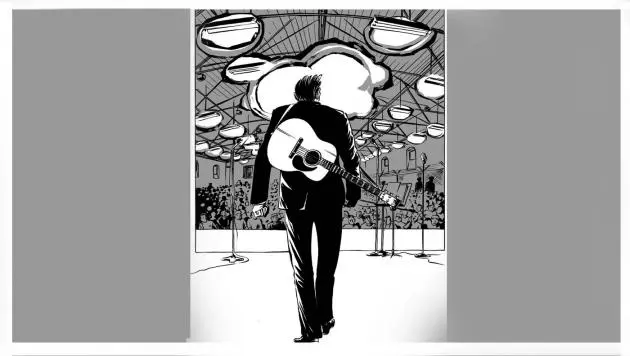


Bangkok glimpses Germany's top cartoonists and their world of influences
Germany isn’t the first country that springs to mind when you think of great sources of humour – or comic strips – but the world is full of surprises, so get ready to laugh – or at least a giggle – at the exhibition “Comics, Manga & Co”. It’s at the Bangkok Art and Culture Centre all this month, helping commemorate 150 years of Thai-German relations.
You won’t find extreme Punch magazine-style pillorying of politicians among the German illustrations – they’re apparently too reserved for that – but fans of Japanese manga will be interested in what’s on offer.
Comic artist Line Hoven was at the show’s opening, saying Japan’s cartoons grabbed the attention of young illustrators there in the 1990s, producing two successive generations of German mangaka, as the artists are known in Japan. They don’t translate Japanese comic books directly, though, and borrow only fitfully from the oriental style to illustrate their own stories.
Most of the artwork on display is “German” in its manner of depiction and storytelling, culled from magazines and newspapers and poking fun at current events and people in the news, mainly in Germany.
The art comes from 13 artists representing the two generations that have created a new look to the genre in Germany. The avant-garde art of northern Europe paved the way for an independent culture of German comics, featuring new aesthetic and narrative techniques.
Some of the leaders in the field – like Anke Feuchtenberger, Henning Wagenbreth and Martin tom Dieck – are now professors at art and design schools, urging young aspirants to experiment with different modes. “These people are increasingly being seen overseas not as comic artists but artists,” says Hoven.
German comic art owes much to Switzerland’s Rodolphe Topffer, whose sequential picture stories in the 1830s fascinated Goethe and many others. One of the form’s true pioneers, Topffer’s “literature in prints” and “drawn novels” were encouraged by Goethe and gave rise to pictorial broadsheets, the satirical weekly magazines Kladderadatsch and Simplicissimus – and ultimately the modern comic strip.
Further influence was gleaned subsequently from French and American comics, continuing into the 1990s, but artists in the former East Germany added their own aesthetic qualities. While utilising traditional graphic and printing techniques, they incorporated street art and even computer graphics.
The Bangkok exhibition includes autobiographical, surrealist, historical and fantastical narratives, both factual reportage and literary adaptations, all created on a wide variety of surfaces, from computer screens to scratchboards.
The subject matter is often of only remote interest here but it’s all easy enough to decipher. One depicts a West German native wondering if he could cross to the other side disguised as an exiled East German singer, or as a former East German head of state – or as a banana.
It’s that kind of fun. Another cartoon has a cat and dog vacationing on the moon, only to realise they’re not alone. In the next panel a giant worm pops out of a hole to greet them. There’s even a strip about how boring it is to live with your mother.
You can see the illustrated tale of a German journalist who risked doubling as a spy for Stalin and as an employee of the German embassy in Tokyo. It’s confusing, but it’s a true story.
In a much more recent comic, a stalker invades a woman’s privacy via an online social network and begins harassing her. Equally concerning are depictions of injustice in East Germany and of man’s abuse of nature.
One of Hoven’s pieces on view explores the history of her German-American family over three generations. Her American mother went to Germany as an exchange student, met her future husband and had to deal with difficult family pasts.
Another Hoven comic portrays a young university student who works part-time as a stripper and gets involved with a tattooed patron. It’s very dark in the bar and she wears a mask, so neither of them realises that they are, by day, well acquainted as student and teacher.
The exhibition is like that, amusing and startling by turns – a slice of life in Germany and its small but active cartooning community. You might not find yourself laughing out loud, but you’ll be better informed about the perspectives shaping Europe’s biggest economy.
How it’s done
“Comics, Manga & Co”, organised by the Goethe Institut, continues until June 30 at the Bangkok Art and Culture Centre. Learn more at www.Goethe.de/Comics.
The institute has just launched the comics blog “Nine Cities – Nine Stories”, which pools art talent from Germany and Southeast Asia to collectively create a story through April next year.
Thailand’s Songsin Tiewsomboon is contributing. Have a look at http://blog.Goethe.de/CityTales/.
