
STAYING YOUNGER AND HEALTHIER THROUGH DIET


Play
Thailand's most updated English news website, newspaper english, breaking news : The Nation
An increasing number of people are reaching out to anti-ageing therapies today but surprisingly few understand what the term really means. Many are under the impression that anti-ageing is about beauty, reducing sagging features and getting rid of wrinkles. In fact, anti ageing is the branch of science whose concept revolves around the process of slowing down age and this begins at the cellular level. Prevention of the ageing process is actually the prevention of disease.
The latest findings from the Institute of Population and Social Research show that Thai men aged 68 years and Thai women aged 75 years can extend their longevity if they reduce certain risk behaviours and follow an anti-ageing programme.
The widely accepted free radical theory of ageing states that organisms age because cells accumulate free radical damage over time.
Free radicals are molecules that are unstable as they lack electrons. They attack other molecules to “steal” electrons to regain stability. When the free radicals get the electrons from the cells, they cause damage to the proteins, cell membrane and the DNA. Free radicals damage other molecules in the body, creating a “domino effect” and causing the health to deteriorate. Sources of free radicals generated outside the body include sunlight, air pollution, cigarette smoke, contaminants in food, heavy metals and grilled food. Free radicals are also created inside our body, particularly when we burn food, so the more we eat, the more free radicals are created.
We can reduce free radicals in our bodies by eating food that is low in calories such as vegetables and reducing foods that are high starch and fat. Foods with a low glycemic index, such as apples, unpolished rice and fresh vegetables, should also be favoured as they release glucose more slowly and steadily. High blood sugar levels increase free radicals. Sugar binds to the protein in our skin, resulting in the skin losing collagen and elasticity and becoming vulnerable to wrinkles.
We also need to increase antioxidants, as these can provide free radicals with the electrons they need, rendering them harmless and reducing destruction to the surrounding cells.
The production of such natural antioxidants as gluthathione peroxidase, super oxide dismutase and catalase decreases with age and while antioxidants are obtained from food, people still need much higher doses. This is especially true of smokers who live in an environment that is filled with air pollution, those who regularly eat deep-fried and grilled food, as well as those with chronic illness and suffering from stress.
People who are susceptible to high levels of free radicals in their body or those who are heath conscious can take a test to check their free radical and antioxidant levels. They can consult anti-ageing specialists and undergo a blood examination to evaluate their body’s efficiency to fight against free radicals and to determine the damage caused to the body by free radicals. This will enable the specialists to provide appropriate care and prescribe correct antioxidant supplements.
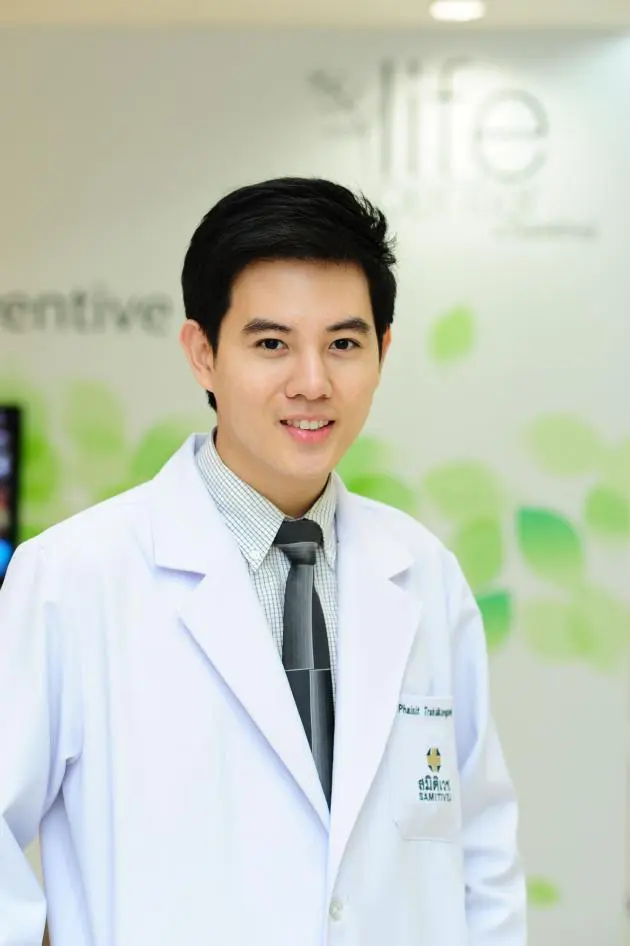
Dr Phaisit Trakulkongsmut
is an Anti-ageing and Regenerative Specialist
Samitivej Sukhumvit Hospital.
