
Wide angle in the deep South


Play
The Nation's Charoon Thongnual captures images of peace disrupted - and peace restored
Photographer Charoon Thongnual – The Nation’s point man in the turbulent deep South – walks over hot coals to document the death, injury and bitterness, but he’s a southerner too, and he also portrays the region’s inherent beauty and warmth.
Hailing from Songkhla’s Thepha district, Charoon volunteered to be based in the South to cover events in Pattani, Yala and Narathiwat. Upon learning about an explosion, shooting or attack, he hustles to the scene in his pickup truck to see what the security officials have on their hands.
“I made my decision to come here, so I have to do my best,” says Charoon, 45. “I was given trust and an opportunity, so I have to work to my fullest ability. Every time I go to work I know it’s risky, but it’s not only me who’s at risk. The soldiers, the police and a lot of other officials are working under far greater pressure than I have.”
So every day Charoon makes sure he packs carefulness along with his camera and communication equipment.
As of July 15, the three southern provinces had witnessed 13,085 violent incidents, dating back to 2004, when the current insurrection began. Nearly 5,500 people have been killed and almost 10,000 injured.
Three-quarters of those people were ordinary citizens – neither militants nor law enforcers, merely collateral damage in a firefight that has no end in sight.
Charoon doesn’t like to hang around the scenes of violence longer than he has to. On principle he speaks to witnesses and officials quickly to find out what happened and gets the shots he needs just as fast.
The haste doesn’t show up in the final photo. Charoon’s pictures are invariably full of emotion, the human angle always present. It’s as though he’s incorporated a symbolic message in each one, expressing something about the local lifestyle and mindset.
Unsurprisingly, Charoon has received many awards and earned a measure of fame. He owes his success to being able to bridge the gulf of suspicion that keeps strangers at arm’s length in the lower South. He gains people’s trust, from passers-by to fussy officials to religious leaders. He’s sacrificed a lot of time studying the region and its inhabitants.
And he’s consistent in his ethics and professionalism.
“We are the mass media and we have a role to play,” he says. “The media provide the truth, whether it’s as a news story or a photograph.”
Interestingly, for a man who doesn’t hang around unnecessarily, Charoon spends his free time roaming the “red areas” – the hotspots – to see what else there is that needs photographing.
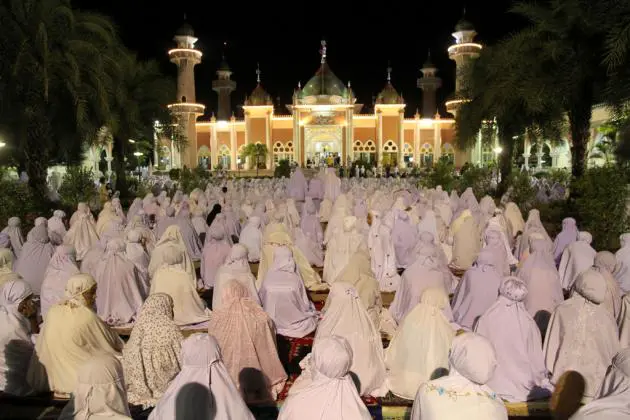
These would-be “war zones”, he wants the world to know, are actually nice places to live. Adults go to their jobs every day, children hit the books, and all good folks pursue their religious faith. In fact, the region maintains an abiding faith in goodness.
“I have a chance to take photos here, so I’m going to spend all the time I have taking photos and helping preserve a way of life,” Charoon says.
“For me, photographs aren’t just a way of reporting events – they’re also an historical record of the area at the time the events happened.”
In his words
Nearly 200 of Charoon’s photographs appear in the 2010 photo book “Heaven & Earth: Hope and Despair in Thailand’s Deep South”. It also features his commentary on the region’s life and culture, and several anecdotes from his first six years on the beat.
“One day in 2006 my reporter friends and I went to cover an insurgent ambush of soldiers,” he writes. “At the same time, a group of villagers were rallying to oust security officers from Yala’s Bannang Sata district.
“Back-up forces hadn’t yet reached the scene. We got there first. We were stunned. Spikes had been placed all over the road. We also saw a suspicious box, as well as tyres freshly set on fire to block the officers.
“The reporters decided to get out of our pickup truck, not forgetting to bring our cameras. We tried to send a signal to the insurgents who we guessed were hiding in the forest along the road that we were journalists. We removed the spikes from the road and kept our eyes open all the time.”
They got through another tense day, “finally”.
“We’d gained more confidence that local journalists weren’t yet targeted. On the other hand, we’re sometimes used as tools to disseminate the work of the insurgents.”
Just glimpses of the violence, he calls his tales.
“We always planned ahead how to get into the areas. Once an incident takes place, we plan how to travel, which routes to take in and out, how we can get the pictures and the news as clearly and as completely as the limited time and the situation allow. The most important thing is to get back safely.”
TV tags along
_ Charoon will be profiled on Modernine TV’s “Khon Kon Khon” today at noon.
