
Musicals - of all, by all and for all
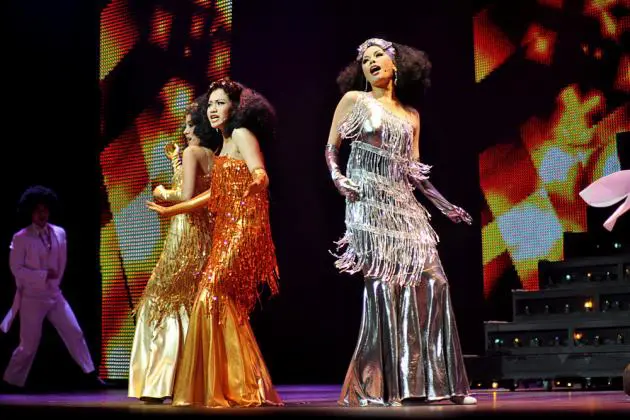


2012 was a record year for song-and-dance extravaganzas on the Thai stage, but there were also plenty of other, worthier productions
If you were to count the number of grand-scale musical plays staged in Thailand this year, you’d be surprised to find that, for the first time, you wouldn’t have enough fingers.
Less than a year after much of Thailand suffered from severe flooding, the baht flowed freely into this form of popular entertainment from a radio station famed for indie music festivals and a movie production company known for urban teen flicks. Even Nation Multimedia got into the act with “Reya: The Musical”.
It seems that everybody feels that they can stage a musical. There’s also an assumption that audiences love stage musicals, tickets to which cost little more than those of concerts, so why not cash in and take some market share from well-established companies like Dreambox and Scenario? It’s reached the point that whenever I tell my non-theatregoer friends that I’m going to a theatre, they always assume that I’m going to watch a musical.
An advantage here is that Thai audiences no longer feel intimidated by the theatre – it’s no longer a high-brow cultural event.
With musical theatre such a trend, it seems safe to predict that it will, in a year or two, become like the Thai branches of a certain over-hyped plain American doughnut – how long are the queues there now?
With such profusion, there is little innovation. Almost all musicals are on a grand scale and either adapted from well-known novels or developed from popular songbooks. They mostly feature superstars, who travelled to fame on the reality TV route, in the lead roles and choruses featuring more seasoned though less well known stage performers. On the plus side, these stage performers as well as musicians and composers, have more job opportunities. On the minus, many superstars try performing in musicals for the first time, completely forgetting that one needs to be able to act, sing and dance exceptionally well in order to be accepted as a true musical theatre performer.
This year, Dreambox earned much critical acclaim for the Thai translation of “Dreamgirls”. Scenario broke the century mark for the number of performances with “Si Phaendin” then followed up with the critically panned “Rak Chab Chai”, which was later released in cinemas. It also showed us what a Broadway musical looked like two decades ago with a Thai translation of “Miss Saigon”.
Index Creative Village’s second attempt at a stage musical was “Mae Bia” and it fared better than the first. Both audience and critics concurred that Fat Radio’s “Rak Ha Hok Sao” deserved the Razzie Award.
While corporations queued up to sponsor these spectacles, they overlooked the small-scale theatre productions, which need support but are now accustomed to struggling.
The fact that the 10th Bangkok Theatre Festival in February, moved from November last year, was less memorable than before doesn’t mean that the year-round works by small theatre companies are less exciting. DemoCrazy Theatre Studio and Blue Box Studio, both seating less than 70, are the most popular of these yet the general public is barely aware of their existence. New Theatre Society and B-Floor are still the most prolific. The former scored high with adaptations – early on with “The Shadow Box” and most recently “Othello”. The latter took its productions of “Oxygen” and “Taste of Curry” to the Big Apple.
In contemporary dance, Pichet Klunchun Dance Company, while still travelling overseas frequently, was prolific back home. Also productive was the 18 Monkeys Dance Theatre. Up and coming choreographers and dancers on whom the spotlight shone more brightly included Vidura Amranand, Bo Kittipon and Thanapol Virulhakul.
Badly damaged by last year’s flooding, Patravadi Theatre is now focusing on its school and playhouse in Hua Hin.
The Bangkok Art and Culture Centre has refurbished its studio on the fourth floor to better fit stage performances for its first performance festival. The work, though, is evidently in progress and expected to be completed next year.
Meanwhile, Chulalongkorn University’s Sodsai Pantoomkomol Centre for Dramatic Arts, now almost two years old, continued to gain in popularity thanks to the convenient location, flexible configuration and international works presented there.
Thanks to foreign cultural institutions and embassies, the number of international dance and theatre works in Bangkok and beyond rose significantly over the year. And these are in addition to the grand scale works seen in Bangkok’s 14th International Festival of Dance and Music, which seems to have settled on a somewhat predictable format.
The ever-unpredictable La Fete French-Thai cultural festival left long-lasting memories with interdisciplinary contemporary performances like “Cinematique” and “Stereoptik”.
The Embassy of Israel showed how creative minds can turn simple objects into engaging stories in the triple-bill performance of object theatre “A Chair and a Table”.
The Japan Foundation proved that arts and sciences are always interconnected in the human-android theatre “Sayonara”
And the British Council demonstrated flair too by bringing Tim Crouch’s “An Oak Tree”, the Light Surgeons’ “LDN-Redux” and Protein Dance’s “LOL (Lots of Love)” to Bangkok.
So on behalf of the daily newspaper with the most complete coverage of dance and theatre in Thailand, thank you very much for your support for another year. Happy New Year and see you again in the theatre in 2013.
The unforgettable threesome
Here are the three works from 2012, which I would like to watch again, and again. In alphabetical order, they are:
“BANG LAMERD” BY B-FLOOR THEATRE
Unlike the royalist musicals “Siam Mission” and “Si Phaendin”, this solo performance, on the opposite end of the political pendulum, questions and leaves space for thought, the way contemporary arts do in a democratic country.
“GANESH” BY THE PICHET KLUNCHUN DANCE THEATRE
With classical, modern and contemporary performances in three parts all in one evening, “Ganesh” raised many questions on the state of Thai arts and culture today. Had the culture minister watched it, he might have changed his mind about merging his ministry with that of tourism.
“THERAPY (AFTER THE FLOOD)” BY THE COLLECTIVE EXPERIENCE |AND THE ARTS CONTAINER
Theatre actors portrayed characters in this semi-improvisational work with art, drama and dance therapists. Each performance was different from the next as their therapy progressed. It’s a kind of contemporary performance that I usually get to see only when I have my passport in my pocket.
