
Businesses boom as runners zoom


Play
The elderly and middle-aged pound Tokyo's pavements in the latest health fad
Businesses are finding ways to cash in on a running boom that is in full swing, especially among the middle-aged and elderly.
Promotions such as at hotels around the Imperial Palace in Tokyo and in downtown Osaka allowing late checkout to accommodate morning runs have proved popular, and the number of tour packages available to domestic and overseas marathons has doubled at one company.
But not everyone is getting a runner’s high, as pedestrians have complained of problems such as being bumped into by runners. One Tokyo local authority is gearing up for a runner-related etiquette campaign.
“I can get a run in without being rushed and have time for a relaxing shower,” says a male guest who booked a runner lodging plan at the Keio Presso Inn Kudanshita near the Imperial Palace in Chiyoda Ward, Tokyo.
Last October, the hotel introduced a noon checkout plan, two hours later than usual to accommodate runners, and provided a map showing local rest areas and scenic spots. Busy months see about 60 guests choosing the plan, a sixfold increase from when it started.
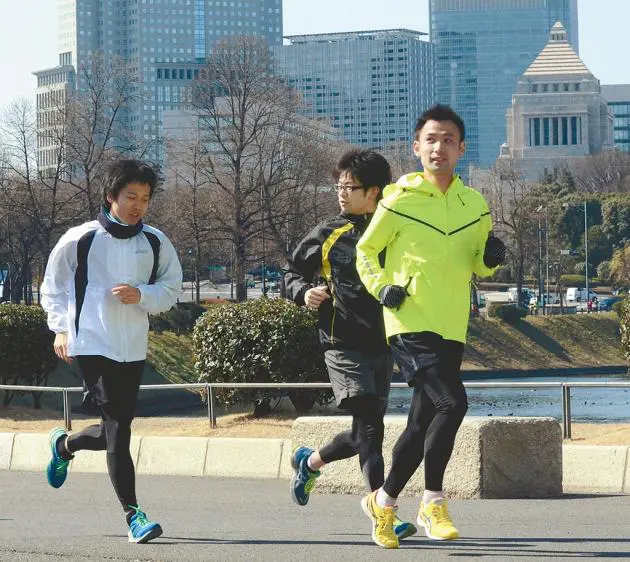
The number of runners around the Imperial Palace, dubbed “a mecca for runners” due to its safety, central location and scenic landmarks, hits about 4,000 on weekday evenings, according to the Chiyoda Ward Office and other sources, and can reach about 8,300 on Sundays and holidays. There are at least 10 hotels in the area, dubbed “Ranhote” (a portmanteau of “run” and “hotel”), that offer lodging plans aimed at joggers and runners.
The Hotel Granvia Osaka in Kita Ward, Osaka, which is located close to the Osaka Marathon course, rents running clothes and shoes. The hotel says about 10 guests use the service per month.
However, relations between the speedsters and the ambulatory populace have not been perfectly harmonious. Chiyoda Ward has received nearly 100 complaints about runners in the last two years.
The ward has launched the Imperial Palace vicinity regional committee to address problems such as littering and runners who careen around at high speeds, frequently bumping into pedestrians.
After listening to the views of both residents and runners, the ward is planning an etiquette campaign by the end of this month, such as running only in a counterclockwise direction and giving right-of-way to pedestrians – which the ward hopes runners will observe.
The ward wants to print the etiquette standards on T-shirts and have people run while wearing them. “Some rules might need to be put in place to avoid accidents,” says a ward official in charge of the campaign.
According to sports journalist Akemi Masuda, who herself was a popular marathon runner: “As the running population increases, problems will probably crop up. Runners need to learn to coexist with pedestrians and cyclists.”
