
Spraying truth to power


Play
Indonesia's street art reveals untold stories of political consciousness
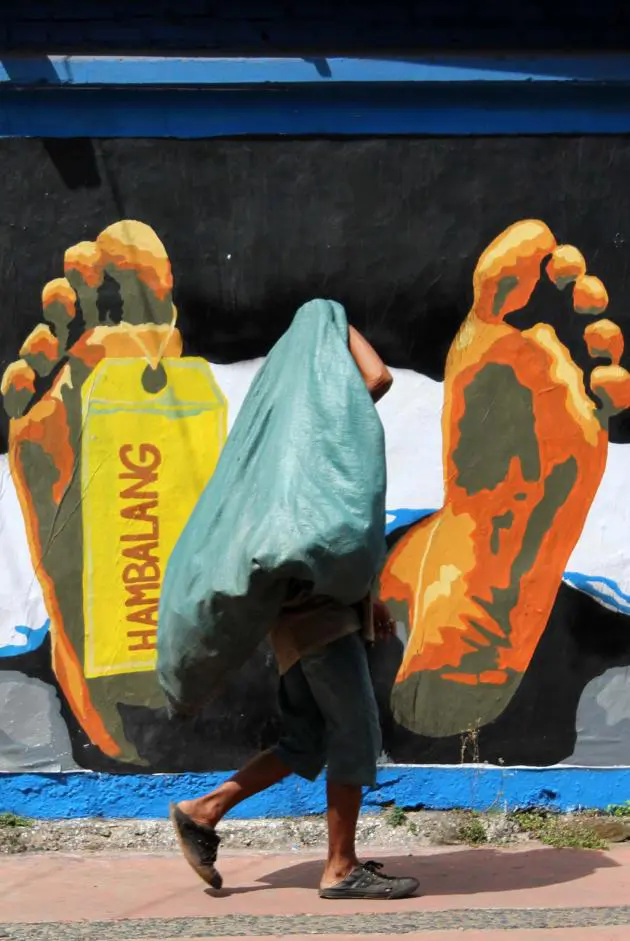
Against the rosy picture that the Indonesian government and optimists have painted about the country, the walls on its streets tell a different story – one of a struggle for freedom of speech, ongoing campaigns against corruption and the encouragement of religious tolerance.
Imagery has always held ubiquitous power and influence. From Picasso’s “Guernica” and the propaganda mills of the World War II to the Parisian posters of May 1968, a mere image can mobilise a movement and spread a sentiment.
In Indonesia, these images are found on urban walls and public spaces rather than posters of paintings. Their power, however, has been just as widespread and long lasting.
This influence will be digitally archived by the Indonesian Street Art Database (ISAD); a project determined to see the historical messages of street art remain in public consciousness.
The director of ISAD, Andi Rharharha is a renowned street artist famous for his political stance again corruption and his tagline “SAVE KPK”. In 2011 he launched the ISAD with a collection of like-minded artists and the support of the street art community.
“Indonesian street art can be traced back to 1945 when it served as propaganda for Indonesian independence. We are still finding new evidence of how important street art was throughout this period,” said Rharharha.
Rhararha and ISAD are convinced that visual histories of their streets will help Indonesians understand the development of their political thought and cultural consciousness.
ISAD has now recorded over 2,000 pieces of street art across the country.
With the independence era long over, street art continues to serve as a vehicle for political communication beyond the traditional media or government control.
For Rharharha, “the unique aspect about street art in Indonesia has always been its influence”.
Travelling around Jakarta today, a trained eye will notice messages protesting official corruption, poverty, inequality, and most recently, religious intolerance and sectarianism.
Yet in a city renowned for public protests and large rallies, street art plays a supplementary role by encouraging political and social consciousness.
“The public is certainly aware of the existence of street art, especially those that have a social message or protest against the government,” said Adi Dharma, a street artist and former hip-hop producer known as Stereoflow.
The most vivid example of this influence was the Berbeda dan Merdeka 100% (Different and Free 100%) movement that began in West Java on February 13, 2011. In protest of a series of religious killings, the movement spread to over 20 Indonesian cities in just one day.
The message of interfaith tolerance and human rights was carried from one side of Indonesia to the other by graffiti, stickers, and stencils.
“Berbeda dan Merdeka 100% showed just how influential street art can be in Indonesian culture,” said Rharharha.
“Indonesian street art first spoke for our independence as a nation. The movement has now grown to incorporate the fun side of popular culture and express the character of a growing city”, said Riksa Afiaty, the programme director at ISAD and street artist.
But in Jakarta, the ability of public spaces to tell the stories of their people is increasingly under threat from consumerism.
“Many of the billboards have become a form of visual pollution in this city. Public space should not be sold to the owners of capital. Street art is about reclaiming these spaces,” said Rharharha.
