
River of no return


A new exhibition reflects on the plight of the Laotian villagers living alongside the construction works on the Xayaburi Dam
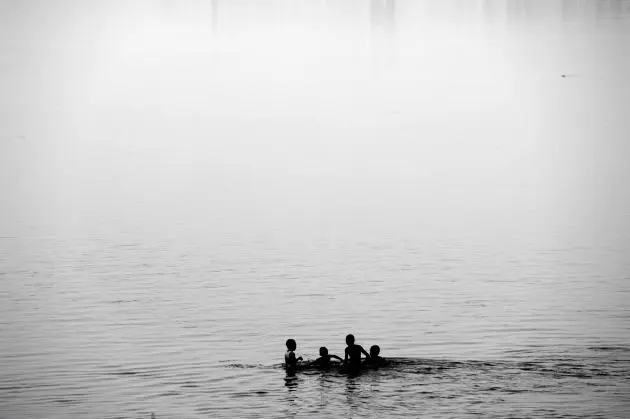
The black-and-white photograph shows four Laotian kids having fun swimming in the Mekong River. The youngster on the far left, the one in an undershirt, is laughing. The second on the left shows off his funny swimming strokes, while the other two watch their friend quietly. The image is so clear you can almost hear the children laughing.
Yet the photo is also making an eloquent appeal. Life has been kind and full of fun for Lao children until up recently. Now it’s about to come to a wretched end with the arrival of the Xayaburi Dam.
“I kept the children in the bottom of the frame, leaving the rest of space for the empty Mekong surface,” says independent photographer Sayan Chuenudomsavad of his composition choice, as he takes me through his modest exhibition. “I want to tell viewers what the Mekong really is.”
The mighty Mekong is big, empty and isolated in its way. The Mekong might tell many great stories, but it’s very hard to take a photograph,” adds the photographer, who has been shooting along the river for a whole year.
The black-and-white image of the swimming children is among the highlights of Foto+United Photography Gallery’s new exhibition “The Point of No Return”.
Educated at Chiang Mai University, Sayan is an independent photojournalist. His works often appeal to the viewers who are interested in those innocent folk facing the challenge of climate change, development and urbanisation.
“The Point of No Return”, a part of Sayan’s long-term project on Mekong photography, tells the story of the Lao people who are affected by the Xayaburi Dam.
Despite years of protest, the hydroelectric dam is currently under construction on the Lower Mekong River. The idea beyond the 32.6-metre-high and 820-metre-long wall of dam is clear. Laos wants to make money from hydroelectric power, as more than 95 per cent of the dam’s electricity will go to Thailand. That fortune, however, will come with a cost: a life changing, even threatening biological disaster.
The dam could block critical fish migration routes for between 23 to 100 species, according to International River, including the iconic Mekong Giant Catfish. It will also destroy the river’s complex ecosystems that serve as important fish habitats.
Sayan’s photos capture the changes in life along the Mekong’s banks following the commencement of construction works last year.
The arrival of heavy machinery and trucks, the resettlement and the demise of cultural identity are of major concern to the local villagers. However, they cannot do anything but follow the government’s orders.
“There’s no space to complain in Laos,” he says.
“The Point of No Return” exhibition is a social documentary, one that speaks out on behalf of the voiceless, underprivileged Laotians who are suffering as a result of the government’s project. It’s also artistic, the black-and-white photos both beautiful and morose.
Trouble in black and white
“The Point of No Return” is on show at Foto+United Photography Gallery until April 30. The gallery is at 519 Phra Sumen Road, Bangkok, a short walk from Phan Fah Bridge.
