
The Intelligence of Love


Play
Mental health experts stress parents should focus more on developing their child's EQ than IQ
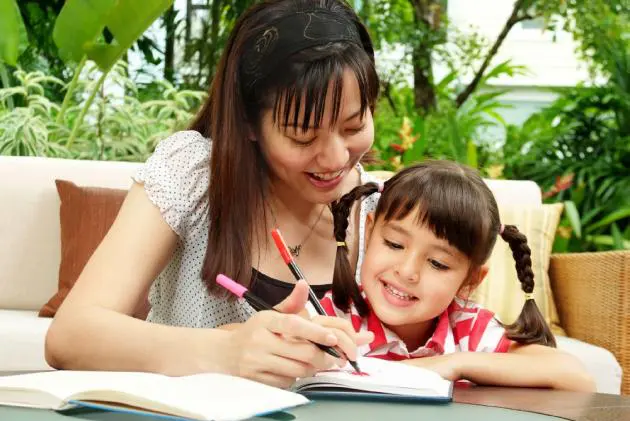
Despite irrefutable evidence that success at school rarely translates into success in later life, many Thai parents are pushing their offspring, some as young as three, into taking extra academic lessons when they could be having fun playing or spending quality time with mum and dad.
Yet research shows that too much development in one area when a child is very young may affect emotional and social skill development, which is crucial to making children happy and intelligent.
Dr Amporn Benchapolpitak of the Rajanukul Institute, Department of Mental Health, notes that Thai society has become so competitive that many parents are paranoid about their children’s brain development and worry that they are not capable of teaching their kids to become successful.
“Pre-schoolers and primary school children today receive too much pressure to learn. This make them more stressed,” says Amporn. “Some even become aggressive that the parents have to seek psychiatrists’ advice. When children do not have enough time to play and to do activities with their parents, they feel that they don’t have enough love.
When they grow up, they are usually selfish self-centred and do not know how to love others. They will probably lack social skills and emotional security, as well as problem-solving skills. These problems would grow with them in the future.”
Amporn stresses that children cannot grow into complete adults through study alone. “Love from their mothers, however, will give them emotional security and teach them how to love, what’s rights and wrong.
Mothers know best what’s good for their children. Playing with kids is the best time for mothers to naturally teach the young ones while having fun. Mothers can teach the kids general knowledge, problem solving, and punctuality through simple games, such as jigsaws and matching game. Basic science and the rule of gravity can be learned by playing paper plane, while creativity, morals, fair play and ethics can absorbed through story telling. In addition, they can teach language skills through music and singing, and maths, communication and social manners through role-play. Allowing kids to try many things, make decisions, and learn about success and failure will give them good immunity. They will learn to accept failure and get up again. They will learn to love others too.”
Children aged three years up are naturally learning by imitating others. They embrace the characteristics and behaviours and make them their own. Being close to their parents is therefore vital. In addition, children of this age are developing their own selves. They want to learn, try and help. With sufficient support, they will grow up with security. If they are forced to do things they hate, they will feel lost and lose self-confidence.
“Parents must not let the trends spoil their relationships with their children. They can start by creating a balance between study and play. Parents can seek advice from experienced people or experts in children’s development as well as through online communities. Raising children needs a lot of patience and love.
“Mothers should listen to their hearts and perhaps seek a little help and advice to raise happy and successful children who will grow up to be assets to society,” Amporn concludes.
