
Unsung hero of the waves


Play
Sir Edward Pellew leaps from Lord Nelson's shadow in a thrilling tale of seafaring that corrects one of history's dire oversights
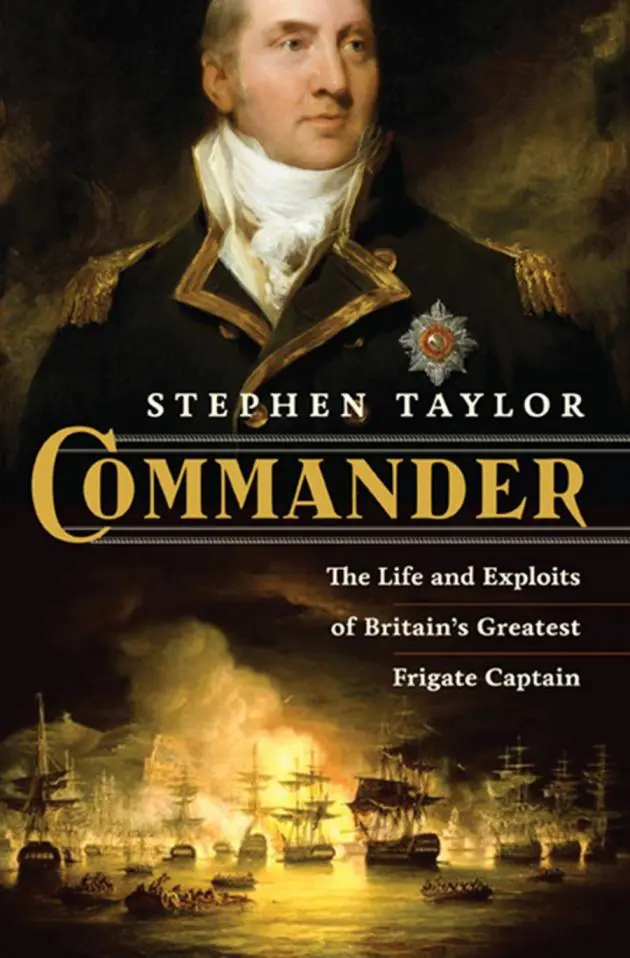
People around the world have heard of Lord Nelson, the great English sea captain who demolished Napoleon’s fleet with thunderclaps of bravado. He’s the one standing atop the soaring pedestal in London. Few people, even in Britain, have heard of Sir Edward Pellew. He’s the one whose name is so obscure that there’s evidently no point even mentioning it on the cover of this biography.
And yet, in the decade before Nelson’s rise to prominence, Pellew’s name was draped in glory in the pages of the London Times on no fewer than 37 occasions. Stephen Taylor, a more recent Times correspondent, does history a great favour in rescuing Pellew from obscurity. He was the subject of two previous biographies, the first a hagiography just after his death, the last in the 1930s, unhelpfully long ago.
Otherwise, those who recognise the name today might think he’s a fictional character, since that’s him at the side of Horatio Hornblower in TV dramatisations of CS Forester’s fanciful books, and he pops up in the novels of CC Humphreys and Patrick O’Brien. Jamaicans perhaps know Pellew Island and Australians the Sir Edward Pellew Group of Islands, but few would know the man after whom they’re named.
Taylor mentions the fictional books more than once, but seems as keen to extract Pellew from their muddling clutches as he is to place his subject in a context of honour and glory far removed from the shadowy truths that Admiral Nelson’s lasting fame masked. While giving Nelson all due credit for his epoch-turning triumphs, Taylor seethes at how he eclipsed all his worthy contemporaries.
Circumstances beyond Pellew’s control kept him away from the action at Copenhagen, Trafalgar and the mouth of the Nile, where Nelson placed his stamp on history, and Pellew was forever after mortified at having “missed out”. He had already amassed an enviable stock of fame by then, though, and his final battle, in North Africa, was as daring and dramatic a victory as anything Nelson struck.
Pellew’s exploits took him from the St Lawrence River and battle against the American rebels on Lake Champlain to challenging the French navy along its own coast. In his favourite ship, the frigate HMS Indefatigable, he took on the immense and far more heavily armed Droit de l’Hommes, and smashed it to pieces.
Often quicker up a mast to repair rigging than much younger crew members, Pellew was far more than a master of sailing. He knew how to make the best use of his armaments, relying on the smaller-bore carronades as much as the big guns to inflict vicious damage on the enemy. And he was always sympathetic to his men, having risen from low beginnings himself. His crews were among the most loyal and the best trained in the navy.
Taylor captures all the action in stirring prose, as in this passage when another Pellew ship, the captured French man-of-war Impetueux, sets off for its next engagement.
“The Channel Fleet sailed in a mighty show on 1 April 1799 – like great cathedrals in steady, majestic progress: five three-deckers and 12 two-deckers, Impetueux among them. They were bound for Brest and, with a scent of battle in the sea air and a hum in the rigging once more, Pellew’s spirits soared. ‘We are ready for Citizen Bonaparte whenever he likes,’ he wrote [to a friend]. ‘We shall lick them Hellishly.’”
Pellew was next posted as Commander in Chief in the Far East, where French dominance had still to be crushed. Its raiders tormented British trading ships out of India and China. Taylor evokes the heat and the monsoon wonderfully as Pellew, based at Penang for some of the time, struggles to cope with political developments far and near. He was appalled by the indolence and greed of his military colleagues stationed there, the rising empire’s proto-colonialists.
It was British determination to end slavery that brought Pellew his greatest triumph. By now Baron Exmouth, he was assigned to negotiate with North African rulers and end their practice of hauling European sailors into a captivity of hard labour. Tunis and Tripoli abided by Britain’s wishes, but Algiers would not.
So Pellew parked his fleet at the mouth of a harbour ringed with 600 heavy cannon, anchored in such a way as to steady the ships when they fired their 300 guns, and took his position atop the high rear deck of his flagship, Queen Charlotte, fully exposed in his admiral’s uniform. He waited for the “Algerines” to shoot first, and then Hell’s maw opened.
When the British withdrew half a day later, they were badly mangled and had spent virtually all of their ammunition. Pellew’s coat was riddled with holes, but he was exhilarated. Invincible Algiers lay in ruins. It soon acceded to a treaty and forswore the capture of Christian slaves. “Well,” he said to an observer on deck, “what think you now?”
Commander: The Life and Exploits of Britain’s Greatest Frigate Captain
By Stephen Taylor
Published by Faber and Faber, 2013
Available at Asia Books, Bt450
