
Indonesia touts its 'creative cities'
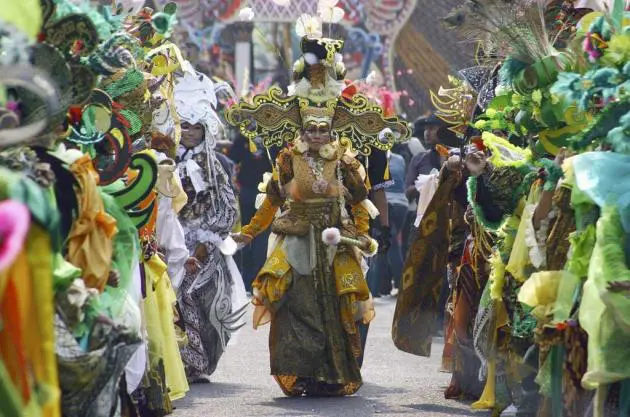


Indonesia's Tourism and Creative Economy Ministry expects that having four cities designated "creative cities" by the United Nations Educational, Scientific and Cultural Organisation (Unesco) would boost tourism here
The ministry has filed a proposal with Unesco to include Bandung in West Java, Pekalongan and Surakarta in Central Java and Yogyakarta on its list of creative cities, joining the ranks of Montreal, Canada, and Nagoya, Japan.
Minister Mari Elka Pangestu has said the status could be used as a promotional tool to help introduce the cities to the world as well as to encourage them to develop their “creative industries”.
“We are teaming up with respective city governments to complete all the requirements,” she said. “We hope the Unesco team will make the announcement this year so that we can launch these ‘creative city’ programmes next year.”
Mari said she was upbeat that Unesco will grant the status because all four cities have their own unique identities and are already well known for their batik, fashion, craft and arts.
Creative cities recognised by Unesco in the scheme introduced in 2004 must have specialisation in craft and folk art, design, film, gastronomy, literature, media arts or music. If the four Indonesian cities meet all requirements, they will join 34 other locales in sharing ideas and best practices.
Mari said the registration was also aimed at boosting creative industries such as fashion, art, film, music and architecture.
“We expect the designation will help the cities boost their creative industries, which in turn contributes to our creative economy. This kind of economy creates multiple added values compared to any other economy,” she said.
Mari said creative industry made significant contributions to the economy. Last year it contributed 7.7 per cent to the total national Gross Domestic Product and provided 6.8 per cent of the jobs in the country.
Artists have supported the government’s plan to approach Unesco.
Tubagus Fiki Satari, chairman of the Bandung Creative City Forum, said his group is conducting a massive campaign to introduce the concept.
“I think it’s all about a collective agreement,” he said. “We also need to build the sense of a creative city in the minds of every person here, before others judge us as is.”
Fiki also expects “serious” financial support from the government for various creative industries and art performances.
Meanwhile Maria “Ria” Tri Sulistyani, a founder and director of Papermoon Puppet art collective in Yogyakarta, said that, with or without the Unesco designation, the government needs to support the local art scene.
“As artists, the designation is not our goal. We expect there will be more support from the government once the designation is granted, so that it will be sustainable.”
Ria said foreign donors finance most art performances and the government supports only a few.
