
The danger in recognition
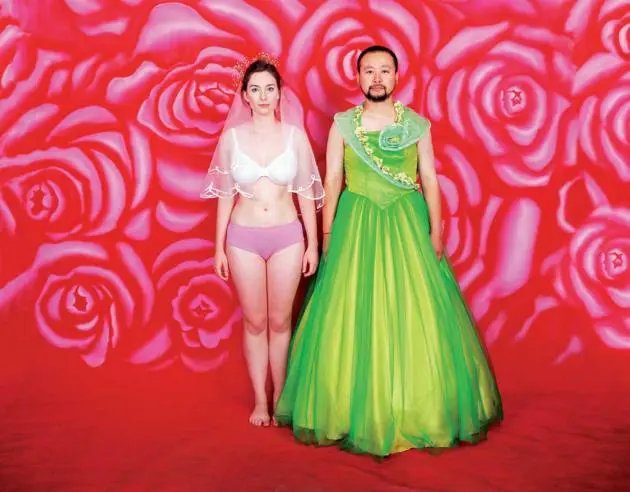


Contemporary artists in China have found popularity overseas, but not at home. And a bubble might soon burst
Chinese contemporary art seems to be entering its springtime. Overseas buyers – both individuals and institutions – have taken a keen interest in recent years, with work being snapped up and shipped abroad. And major Chinese cities too appear to have embraced it, with areas such as Beijing’s 798 Art Zone providing a space for today’s artists to be inspired and create.
But Cang Xin, one of China’s most controversial art figures, is not so certain that a golden summer awaits. “High auction prices don’t represent a boom in contemporary Chinese art because they’re part of a bubble,” says the 46-year-old.
He was among the first contemporary artists to use space in 798, but he decided to leave because it had become “too commercial”.
Cang says the bubble he sees in the foreign market has been stimulated by China’s years of reform and opening up. “People from overseas are still curious about the real China, which they probably can’t find on the news, television or in literature. Contemporary art, unlike mainstream culture, reflects a piece of China they are interested in.”
Cang’s serial work, “Identity Exchange” (2004), dealt with the rapid changes in Chinese society brought about by economic reform. He collected photographs of himself wearing other people’s clothes from all walks of life. Capturing profession, social status and identity at a particular time in China’s development, it was popular with overseas audiences.
Cang’s other work, which includes performance art, paintings, sculptures, installations, videos and photography, has also grabbed the attention of collectors abroad. The Red Mansion Foundation in London, the Partner for Art Foundation in New York and the Czech Prague International Museum all display his art.
Many examples show a respect for nature. There are also influences of shamanism and Cang’s experience of travel to the northern territories in Australia, where he says he once witnessed local people playing music that drove off flies “like magic”.
Cang makes it clear the path of a contemporary artist in China can be tough. He was born in Inner Mongolia and moved to Hebei province with his parents when he was five. He moved to Beijing to pursue his dream of being an artist in 1992, settling in a village close to the city where many people lived by scavenging in rubbish dumps for things to sell.
“We could hardly afford to eat and were always looking for somewhere to scrounge a meal,” he says. “I was working at a photo agency, so I had a little regular income each month. We all borrowed money from each other and helped each other out.”
Living conditions have improved for Cang and most other contemporary artists, but public indifference continues to be an issue. While traditional art is welcomed, contemporary art is usually shunned, he says.
Edward Sanderson, a British curator and writer based in Beijing who is writing a book about Cang, has learned much about the misunderstandings Cang’s work has created.
“His series titled ‘Communication’ is a collection of photographs of him licking different things – photos, a snake, even the Great Wall. This is beyond our common-sense understanding, because culture teaches us not to put something unclean in our mouths,” says Sanderson.
“Things like this become a stereotype and we can easily dismiss it due to misunderstandings. But artists have their reasons and they want to push us to think. This is the charm of contemporary art.”
Sanderson says patience is key, noting that contemporary art in China is a mere 30 years old and needs more exposure here. “The understanding of contemporary art needs theoretical grounding,” agrees Gu Zhenqing, an independent exhibition planner, “which means education in school and university should focus on more categories of different art.”
Cang isn’t annoyed by misunderstandings. Instead he takes it as an opportunity to explain his art. When a language barrier made this difficult abroad, he used body language and invited people to become a part of his performance art.
While contemporary artists still face struggles, there is no doubt that times are better. Cang no longer scrounges for food, but enjoys a large workshop in Beijing with several assistants. He is currently working on a giant piece of artwork with a Buddhist theme.
While the government has supported contemporary art by funding spaces such as 798, Cang believes this is the wrong direction.
“The way to support us is to leave us alone,” he says. “Governments should be tolerant of artistic expression. Targeting problems is the nature of contemporary art – because we are always thinking critically.”
