
Hanoi artists enliven a lost factory
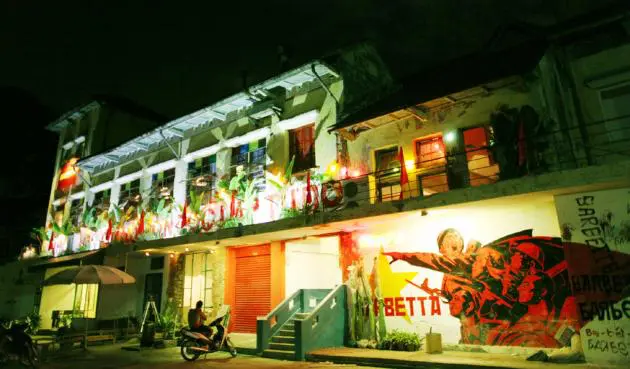


An abandoned plant becomes an appealing refuge for creative types - while it lasts
Holding a brush in his hand, Phuong Vu Manh wipes the sweat from his brow before completing the final strokes of his painting. Rays of sunlight shine on the canvas from holes in the roof – holes left over from the original air ventilation system of this old pharmaceuticals plant.
The walls are pockmarked with the remnants of shelves and production lines. The louvered windows give the room an impressive 1960s feel.
Manh is a fairly new renter at Zone 9, which is Hanoi’s new art district. It’s still being renovated. Building materials are scattered here and there, even beside the polished windows of established fashion shops and cafes.
Zone 9 is at 9 Tran Thanh Tong Street, deep inside the gate of an abandoned pharmaceuticals plant facing colonial-era Pasteur Park. It includes five buildings dating to the 1960s in various architectural styles with influences from France, Russia and China.
Zone 9 is next to the Ministry of Defence funeral house and visitors can sometimes hear announcements from the ceremonies going on there.
Before becoming “famous among art lovers”, only a small part of the area was used – for washing and parking – while most of the complex awaited a construction plan frozen since the economic downturn. Late last year a few artists found the place.
“A friend introduced me to the place, which I found spacious, reasonably priced and suitable for me to create,” Manh says. “It’s not too far from my home and I can gather a lot of my artist friends here.”
The five blocks now have yoga, photo and painting studios, dancing classes, several clothing stores, bars, cafes, restaurants and even private homes. Several families have renovated the fifth floor of Block A as a place to live.
“We have a three-year lease, but they can take the place back anytime by giving just two months’ advance notice,” says a tenant who prefers to remain anonymous. “That’s why we make use of as much of the original architecture as possible, to save money.”
Remnants of old steel pipes from the plant have been turned into flower pots and existing pre-cast concrete bars have become desks, kitchen tables and bathroom shelves.
Wild plants growing on the roof now look more decorative. Each rough cement corner of the building, thanks to the skills of the renters, who are also painters, has flowers in bloom.
“It’s very cool here even during summer nights because of all the big trees,” Manh says. “It’s an ideal place to stay in the middle of this small but crowded city.”
It’s easy to explain why artists were among the first to move in. They’re creative, so they can turn a ruin into an attractive place to live and work.
“This place is ideal for many purposes, not only running a cafe,” says writer Nguyen Quy Duc, owner of the Tadioto on the second floor of Block A and one of the first tenants. “The place can even host stage and fashion shows. This can be a place for artists, architects and writers to come and chat. And it’s great if they also attract other art lovers from the city.”
Photographer Jundat plans to open a photo studio, but doesn’t intend to do business here. Instead, he has a lot of ideas for young art lovers. “I’ll organise training courses, small concerts and fashion shows that will be completely different from the official shows,” he says. “Young viewers will have more of a chance to get closer to the performing arts, and from a different angle.”
“There seems to be no borders between the shops, cafes, studios and restaurants,” says student Nguyen Phuong Linh, a frequent visitor. “People can just wander from shop to studio. There’s no crowding to worry about.
“Parents can bring their children for a painting class and then go shopping or visit the cafes and libraries.”
Architect Tran Vu Hai, who runs Bar Barbetta in Block B, a lively place at night, says the environment is quite favourable for business.
“This is the first unique, artful environment in Hanoi,” he says. “I hope it will develop into a centre for the arts and entertainment beyond the three-year time limit.”
