
Strangers bearing life


Australia's Immigration Museum celebrates diversity - even as the issue clouds the imminent election
Occupying Melbourne’s Old Customs House, the Immigration Museum is impressive both inside and out. The exterior boasts striking columns and doors dating to 1876, everything lovingly restored in 1998. The Customs House was a grand structure with purpose. The fine design sent a clear message – that Melbourne was a thriving metropolis.
Today it’s one of Melbourne’s four “most inspiring spaces” on a state-organised, self-guided walking tour.
The refurbishing in 1998 transformed it into a thought-provoking museum on immigration in a country that celebrates its cultural diversity. Visitors enjoy a creative, vibrant cultural experience that does indeed inspire as well as educate and enrich. They’re reminded how every gesture in daily life means something, even when no words are spoken, and conveys whether we are friendly or not.
Local resident Sherene Hassan was among the people interviewed about their personal feelings in 2010 for a project called “Identity: Yours, Mine, Ours”. “Is it helpful to separate human beings into races based on any single combination of physical features?” the participants were asked.
“When I look in the mirror I don’t see what other people see,” she replied. “I’m just Sherene. But when I meet people for the first time, they look at me differently – and then the questions begin.”
Immigrants account for a quarter of Australia’s population, and every one of those people has a story to share about struggling to fit in and feel like they belonged. Their tales are often heartrending, the accompanying images and other memorabilia quite moving.
“As a ‘white’ Australian I have a mixture of embarr assment and pride at how we’ve managed to evolve over all those years of white history,” a visitor from neighbouring New South Wales tells the curators. “It’s important to acknowledge everyone’s contribution, and you’ve managed this exceptionally well.”
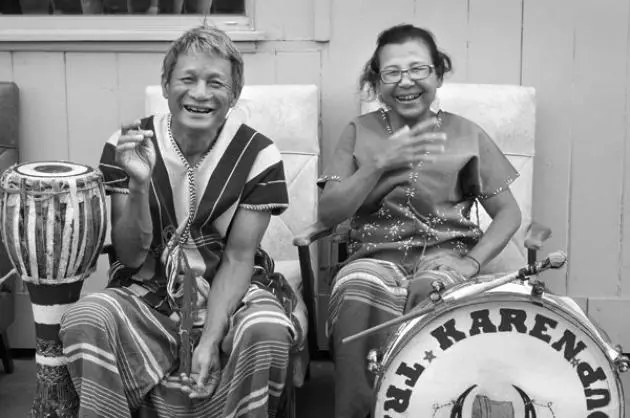
The museum hosts six long-term exhibitions and up to three others temporarily at any given time, drawing more than 130,000 visitors a year. One of the temporary shows, continuing through January, is an impressive photo display called “Seeking Refuge in Nhill”. It examines a community of Karen immigrants living in that small town in Victoria State’s semi-arid Wimmera region.
More than 140,000 refugees from the Thai-Myanmar border, many of them Karen, were resettled there by the UNHCR. Over the last four years the Karen community has come to thrive amid a friendly welcome.
Nhill currently has around 120 Karen citizens. What’s on view here are interviews conducted with them by members of the Nhill municipal council and Wimmera Development Association, accompanied by photos by Melissa Powel. Together they document the former refugees in their new lives and relationships.
New comers welcome
The Immigration Museum is open daily from 10 to 5 except for Good Friday and Christmas.
Admission is A$10 |(free for youngsters from three to 16).
Find out more under |“Immigration Museum” at http://MuseumVictoria.com.au.
