
Crushing coral beneath your wheels


Play
Adventure cycling on Papua New Guinea's Boluminski Highway opens up a land of sleepy beaches and village pig roasts
New Ireland is on fire. Black smoke from a thousand burning pits spirals up past the plane windows toward the heavy clouds hanging over Papua New Guinea’s fourth-largest island. Home to 140,000 people and 22 languages, 8,650-square-kilometre New Ireland is the sort of place where barefoot locals cook over open flames and burn their trash.
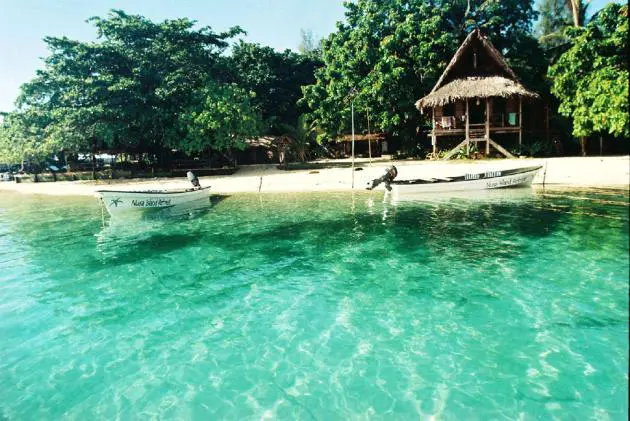
In contrast to PNG’s capital, Port Moresby, a sprawling city of machete-wielding raskol gangs and barbed wire-wrapped luxury hotels, this territory is a tropical escape from the complications of modernity. Though best known for the white sand beaches, dive-able second world war wrecks, and big-wave surfing scene that await travellers winging in on Air Niugini flights from the capital, this hard-to-reach spot is becoming a biking destination thanks to the 260-kilometre Boluminski Highway, a crushed-coral and pavement passage through the encroaching jungle.
A little more than 100 cyclists make an annual pilgrimage to the island to tackle the five-day ride through New Ireland’s lush hinterlands. These in-the-know pedallers head to John Knox’s guesthouse, Noxie’s Place, in the port town of Kavieng to rent an 18-speed bike and join forces with Knox’s Bilas Peles Tours. With well-informed guides and a much-needed SAG (Support And Grub) wagon, this low-key outfitter has been leading cyclists along the island’s eastern coast since the early ’90s (while developing an expertise in tribal politics evidenced by cyclists receiving invitations to village pig roasts).
Despite Bilas Peles’ first-rate guide service, this road – the crowning achievement of a Prussian colonial officer who made villages care-take sections of the roadway – is not for luxury lovers. Participants pedal up to 80km a day beneath a blazing equatorial sun, take bucket showers and eat a startling quantity of mud crabs and creamed sweet potatoes. There are no spas along the route. Instead, cyclists visit with Cathy Hiob of Laraibina, who offers tinned mackerel to massive freshwater eels, and Ben Sisia, who carves intricate masks and totems for Malagan ceremonies and festivals.
One of the trip’s major highlight is the tradition sing-sing in Langania village the night before the final push to Namatani, New Ireland’s second city (the term is a bit generous give then burg’s population of 1,300) and the highway’s terminus. Cyclists tuck into plates of fresh crayfish and down South Pacific Export, Papua New Guinea’s major domestic brew. No one has taken a shower in days, but the warmth of the fire is welcome and the urge to leave the primordial island has been reduced to ashes.
No pig? No problem
Employing local guides is a good idea unless you’re willing to offer each village gifts in the forms of, for example, a bounty of colouring books and a sacrificial pig. Bilas Peles’ multi-day unguided tours start at US$888 (Bt27,600) for two, but we highly recommend paying the extra money for a little local expertise.
Visit www.NewIrelandtourism.org.pg
