
A hi-tech mouse for Shanghai
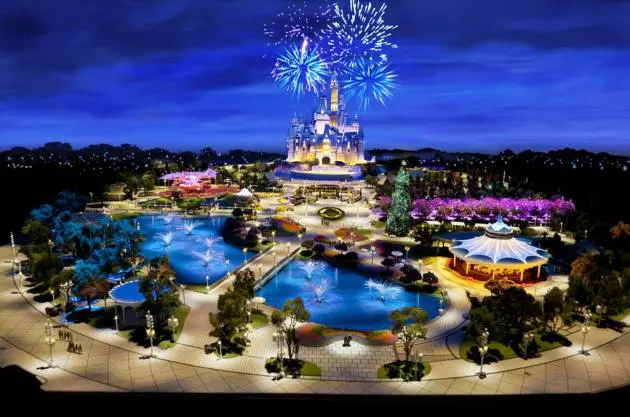


Disney chooses China for its most technologically advanced resort, set to open in 2015
At first glance it has the look of a cutting-edge, hi-tech exhibition. There’s a digital showroom that positions viewers into a 3D experience, an electronic wristband that can be used as your admission pass, and a talking robot that looks like a fortune-teller.
These exhibits were just a part of the Walt Disney Imagineering open house at the Disney D23 Expo in August. It took consumers behind the scenes to experience the company’s many franchises through a mix of traditional storytelling and new technologies.
The exhibit for D23, the official Disney fan club, was the third biannual event held at the Anaheim Convention centre in Southern California. Fans arrived from 48 states and 21 countries and formed long queues or waited anxiously in their tents to get a ticket.
But the fans who will have to wait even longer to interact with Disney’s new technological gadgets and exhibits might be from China. Many of the firm’s technologies on display at the D23 Expo might make their way to the Disney resort in Shanghai when it opens in 2015.
During his frequent trips to China, Bob Iger, chairman and CEO of the Walt Disney Co, reiterated that he will give Chinese customers a resort that is “authentically Disney and distinctly Chinese”.
The Shanghai park will be distinctive because “every single thing we put in the Shanghai park will have been rethought, re-imagined, or even re-engineered to respond and make sure that we tailor everything for our Chinese audience”, he said. “It is going to be the best of Disney, but designed specifically for the people of China.”
The Shanghai resort will be Disney’s most technologically advanced, said Tom Staggs, chairman of Walt Disney Parks and Resorts. “Because we built it from scratch, it will be the most technologically advanced park. We invented a number of new ride systems for the park. Some of them will be very obvious. Some of them will be part of the magic.”
Staggs said the resort will largely be based on the tendencies of its customers. For example, at Walt Disney World Resort in Florida, people stay for at least a week. In Tokyo people tend to stay for one or two days, he said.
The company will initially consider how visitors will use the resort and its technology and then implement updates later in response to that customer usage. “We want to make sure we leverage technology to the greatest extent possible to make it as easy and fun and convenient and, at the same time, as personalised for each of our guests as possible,” Staggs said.
But the process of creating the Shanghai Disney Resort, the first Disney resort in a developing market, created foreseeable challenges for the resort’s designers and operators.
One of them is a lack of familiarity in China with Disney franchises. While most Western consumers grew up with Disney movies, stories, music or television shows, the majority of Chinese people can only name a couple of Disney characters, such as Donald Duck or Mickey Mouse.
That is slowly changing, said Zenia Mucha, executive vice president and chief communications officer of the Walt Disney Co. An increasing numbers of mainland Chinese have visited the Disney parks around the world.
Disney also recognises the importance of great food to Chinese consumers. Mike Crawford, general manager of Shanghai Disney Resort, said the resort is conducting food tastings to understand the Chinese palette. “It’s not so much about the choice between Western versus Chinese cuisine. Rather, because of the different cuisines available in China, we are going to have varieties of flavours.”
Yang Yansong, associate professor of the Chinese Tourism Academy, said Disney serves as a great venue for families who have found it inconvenient to travel to Tokyo or Hong Kong.
Yang added that the company’s advanced level of service will also raise the bar in tourism in Shanghai.
While some have worried that the geographical proximity between Hong Kong Disneyland and the Shanghai Disney Resort may offset the number of potential visitors, Staggs said the size of the potential audience is large enough that business will be maximised at both sites.
“The best thing to do for Hong Kong is to make Shanghai successful and vice versa,” he said. “The more Hong Kong is successful, the better it is for Shanghai.”
The Disney properties in Hong Kong and Shanghai will not affect the volume of visitors to the Tokyo resort, Staggs said, because more than 90 per cent of visitors to the Japanese site are domestic travellers.
Staggs said they will continue to develop Walt Disney Parks and Resorts.
The company has many new attractions that were recently launched or are in the works, including New Fantasyland in Florida, which opened last year; a new attraction in Paris that will open next summer and is based on the Disney/Pixar film “Ratatouille”; three new theme lands to Hong Kong Disneyland; and the anticipated debut of Star Tours: The Adventures Continue at Tokyo Disneyland, which is a 3D attraction inspired by the Star Wars movies.
Staggs said the company’s biggest news will be the opening of the Shanghai resort. He said Disney will continue to expand their properties in Hong Kong and in Shanghai after its opening at the end of 2015.
