
Escape pod for a burning world


Play
Journalist-author Alan Weisman delivers a message so compelling it will change the way we see the future
What if we suddenly vanished? How would Mother Nature behave with human beings gone?
Insects would take over our houses, rotting them down to nothing. Without warming greenhouse gases, sheets of ice would unfurl across continents, bringing another ice age.
These nightmare scenarios were explored in frightening detail by American journalist Alan Weisman in his 2007 best-seller “The World Without Us”.
His latest thought experiment gnaws even deeper at the bone of human fears: What will the world be like when there are too many of us and too little of everything else – water, air, food?
The quest for an answer took Weisman to more than 20 countries in two years and conjured up a nightmare future we cannot avoid unless we turn and face it square on. Ecologists, hydrologists, geographers and agronomists – as well as the usual cast of engineers, economists and politicians – must all be harnessed in the battle against ecological collapse.
But the answer lies too in the groundswell of public opinion that Weisman is helping to whip up with his eye-opening journey in “Countdown: Our Last, Best Hope For a Future On Earth”.
His first stop is Jerusalem, perhaps fitting for a book forecasting catastrophe on a biblical scale. And already the clouds are gathering: Weisman witnesses ultra-Orthodox Jews’ long-term tactic to overwhelm Palestinian territorial claims by literally “out-birthing” them. The Palestinian effort to keep up with their neighbours’ double-digit population growth is doomed by the cramped and squalid living conditions Israelis have forced upon them.
The opening chapter reveals a weary Earth groaning under the weight of tribalism and the author’s bete noir: human population growth. If we don’t control our spread voluntarily, he reminds us, nature will do it for us brutally via famine, drought, climate chaos, crashing ecosystems, opportunistic diseases and wars over dwindling resources.
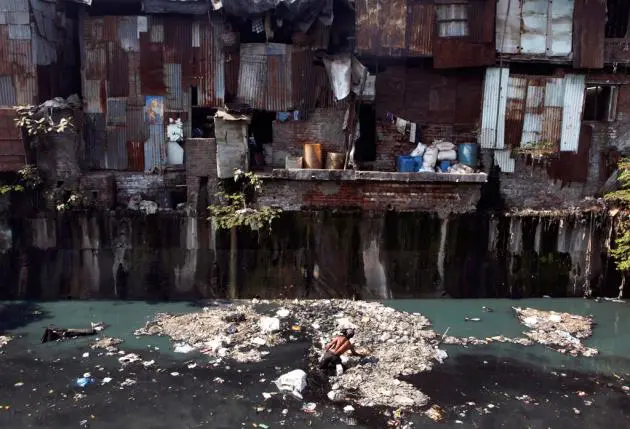
This meta-crisis, whose urgency trumps all economic, political, cultural and religious differences, is frighteningly real. Weisman trudges through valleys only to see parched orchards and cracked river beds; into forests where butterfly species vital to human existence are threatened; and into the slums of Mumbai – a taste of things to come in a world with a population pushing 10 billion. Hunger, deprivation, pollution, destitution, prostitution, abuse ... the list of woes is long. And the culprits, the book makes clear, are you and I – humankind.
But wait. The power in these pages lies not in the endless problems they force us to confront, but in the religions, politics, economics, science and culture that are the weapons of our destruction but also our only tools to redemption.
Here, Weisman uses his training as a journalist to excellent effect, asking common-sense questions and translating the answers to make them easily graspable for ordinary readers. Without sounding at all polemical, he interrogates history, ideology, nationality, tribalism, belief and finance, shedding light like a storyteller on the many strands of humankind’s saga. He makes Ponzi finance, for example, as easy as ABC, and his recounting of Iran’s convoluted history, from the Shah to Ahmadinejad, is inspiring in its simple lucidity.
The subject, daunting in its scale and complexity, is rendered readable in smart turns of phrases and striking passages that resound long after setting the book down.
Take Yoshio Takeya, a young Japanese man who opts for a reclusive life far from the city and a bowl-cut hair to seal his ascetic aura. Crisply rendered for the reader in print, we then turn the page to find Takeya pictured opposite: the two images jibe to near perfection. And how poignantly beautiful Iran becomes when we see it through Weisman’s words. And how melancholically alluring is India’s Dharavi, the world’s largest slum, when we get to peer beyond the stereotype of a dumpsite that most writers would describe.
The power of Weisman’s words drive home his awful message: that humankind’s presence is wreaking havoc on the planet, the only home we have. This book is both marvellous and frightening, and it will change the way most readers see our existence and our future.
The question I asked at the end was: “What future will be there for our kids?”
“Countdown” has a bleak answer, but we must face it to change it.
Countdown: Our Last, Best Hope For a Future On Earth
By Alan Weisman
Published by Little, Brown
Available at Amazon.com, $16.22
Reviewed by Abby Wong
