
Asia, be prepared


Play
An increasing number of devastating typhoons, floods and other natural disasters occur in the region every year. Shouldn't we be more ready for them?
Alexander Pope’s “The Dunciad” written in the early 18th century follows the progress of the goddess Dulness as her minions bring destruction, decay and bestiality to the land.
Dulness was obviously in full cry over the predominantly Catholic Philippines a fortnight ago. How else can one make sense of the malevolent power that laid waste to several provinces in this Southeast Asian nation, and brought looting and violence in its aftermath. At last count, the projected death toll was nudging 5,000.
And yet it is not a surprise.
About 250 million people worldwide are affected by natural disasters every year. Developing countries account for 99 per cent of the deaths and 90 per cent of the economic losses, according to estimates by the World Economic Forum in Geneva.
Asia should pay heed because the worst natural disasters of the past 100 years have been mostly in this region, with some exceptions such as the 2010 earthquake that flattened Haiti’s capital.
In this part of the world, disasters tend to strike late in the year when the seas are angry and the monsoon waxes and wanes. The 2004 tsunami struck in December, the 2005 Kashmir earthquake that killed 75,000 was in October.
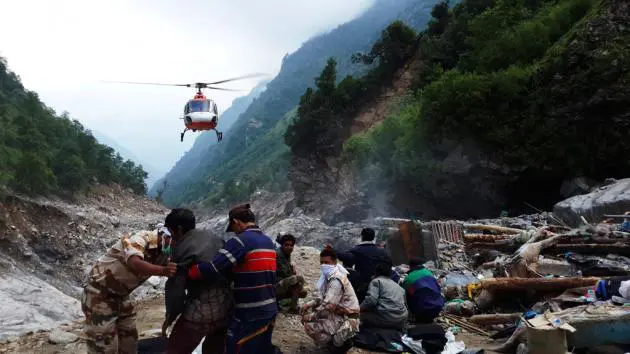
This year, Asia has had two major weather-related catastrophes – the multi-day cloudburst in June over the northern Indian hill state of Uttarakhand that killed more than 5,000 and now, Super Typhoon Haiyan in the Philippines.
What is interesting is that disasters caused by flooding and cyclones have risen dramatically, while others, such as volcanoes and earthquakes, have held fairly steady. Clearly, climate change and environmental degradation are increasingly the cause. What is more, the intensity of these strikes will only grow.
This is why global relief organisations such as the International Committee of the Red Cross (ICRC) and Medecins Sans Frontieres (MSF) have been boosting their presence in Asia lately.
The pity is that we endure calamities even as science has progressed enough to provide us the means to anticipate a good many of them.
Last month, when Cyclone Phailin hit the Indian coastline along the Bay of Bengal, the country got rare praise because, for once, its disaster management teams had worked efficiently.
District officials persuaded nearly a million people to move far inland, even against their will. The death toll, fewer than 20, was tiny by Indian standards and a far cry from October 1999, when a similar Category 5 cyclone hit the same area. That time, 15,000 perished.
With Haiyan, which swept in at what some say were record speeds, perhaps the most careful arrangements may have been inadequate.
Even so, both preparedness and response could have been better. After all, the Philippines is not unfamiliar with tropical storms, typically receiving as many as 20 during the season.
While funds are flowing into Philippines for the humanitarian efforts, it is important to remember that the longer-term after-effects, and trauma, are still to come.
The worst perhaps is the dependency syndrome that follows sudden, large injections of aid. In several coastal communities after the 2004 Indian Ocean tsunami, fishermen were refusing to put out to sea for months because they wanted the government to replace even boats that could be repaired. Meanwhile, they lived – and drank – off the supplies the world sent them.
Perhaps it is time to consider an Asia-wide multilateral relief body, with regional centres, that can move quickly.
Charitable giving for emergencies also needs to be a regular process rather than episodic. That way there is a ready bank of aid to tap.
Both are easier said than done, however.
It needs the rawness of tragedy to loosen pockets. And Asia is riven with so many political rivalries and conflicting claims over land and water that many governments are unable to swallow their pride and request help.
But as the disasters come, these attitudes will have to change.
The seas are blue only for tourists. Those who live by the water know another story.
