
Hygiene class for Indian food hawkers
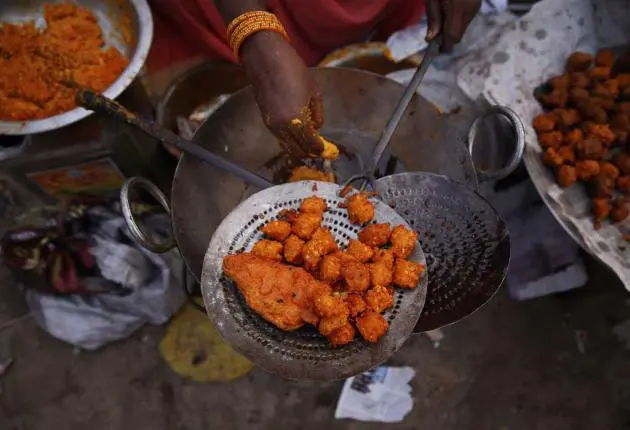


"Don't pick your nose, don't ream your ears, don't smoke while cooking, don't spit in the sink!"
The millions of food vendors peddling tasty morsels from roadside stalls and rickshaws across India have long been an emblem of the country’s boisterous, chaotic spirit.
But now officials have a stern message for these often-unregulated roadside chefs: Wash your hands after using the toilet. Don’t sneeze into the food. And, above all, please don’t pick your nose.
“A lot of street-food guys are not very scrupulous,” says Tejinder Singh, 48, who serves up spicy black lentils known as daal makhani from a stand in New Delhi. “We’re not sons of gods. We have a lot to learn.”
Singh was among about 500 vendors who took part in an October training seminar on the basics of food safety and hygiene, an attempt to curtail the infamous “Delhi belly” that has struck down many an adventurous snacker in India.
Arranged by India’s Food Safety and Standards Authority and the National Association of Street Vendors of India, the seminar offered a primer on safe drinking water and disposable gloves, along with a list of food-handling do’s and don’ts.
No 1 on the forbidden list was “Don’t pick your nose.” Also banned are cleaning one’s ears, smoking while handling food and spitting into the wash basin or sink.
The goal of the programme is to create “safe zones” in popular areas, but is it really possible to sanitise street food in India, where suspending any fastidious concern for hygiene has always been part of the deal?
Many Indians already have ways of finding the freshest and most succulent chaat, the small plates of savoury snacks sold on the streets. Dharm Singh, an 18-year-old high school student in New Delhi, says he only goes to places recommended by others and where there are no flies on the food.
He also pays attention to where the vendors wash their utensils. He learned that lesson the hard way, through a brutal stomach infection he contracted by eating chole bhature, a dish of spicy chickpeas, from a vendor who used dirty dishes.
“He washes his utensils right next to the sewer!” says Singh as he tucks into a plate of lentils, cucumbers and warm roti bread. “I was sick for a week.”
