
The changing face of Myanmar


Play
Two veteran writers and a French academic have released new books that provide deep and welcome insights on the path ahead
It is perhaps no surprise that books on Myanmar continue to emerge, given the dramatic changes that have occurred there over the past couple of years.
Thierry Falise and Nic Dunlop, foreign photojournalists who have been based in Bangkok for many years, put out photo books in recent years that were top class.
And recently, two more books – both good, but very different in style – were released by writers based in Thailand for many years.
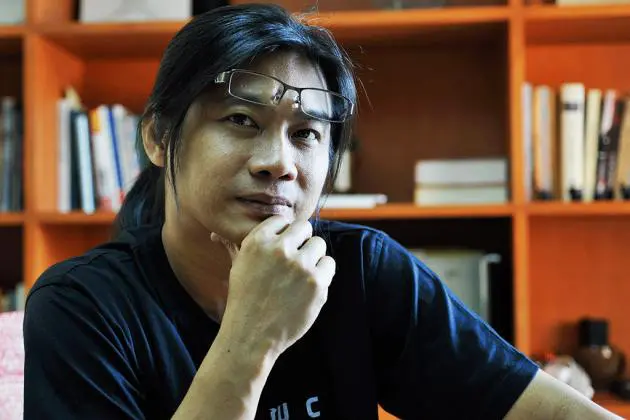
“The Face of Resistance” by Aung Zaw is the more modest of the two, and probably more suited to the average reader with limited knowledge about Myanmar (or Burma). It gives an excellent round-up of the dramatic changes that have occurred over recent years, and has some very positive features.
The first is that Aung Zaw, the founder of Irrawaddy magazine and website, has a deep insight into his homeland despite many years living in exile and being unable to return until the “thaw” overseen by President Thein Sein. There is a simple clarity to his observations and remarks about the junta and the military’s motives for opening up to the world in the way they have.
Aung Zaw tells about his return to Yangon and encounters with some of the real heroes of the democracy movement. We all know about Suu Kyi’s personal journey, but his short profiles of the brave men and women who stood tall in the shadows, while the spotlight shone largely on Daw Suu, was for me the highlight of this book. These are folk who have lived inspirational lives and the world should know of extraordinary courage and grace. Two examples:
_ The journalist Win Tin, right-hand man of Suu Kyi who spent 19 years behind bars – over 7,000 nights in Insein Prison prior to his release in February 2008 – who the author said was admired as much as The Lady by many young activists. US Congressman Bill Richardson was permitted to visit the famous prisoner in 1994. Asked if he had a message to pass to Suu Kyi, Win Tin just replied: “Stay the course”.
_ Min Ko Naing from the 88 Generation Students, jailed for 15 years, severely tortured and kept in isolation for the bulk of that time before he was freed in late 2004. He and the student network launched a peaceful campaign to free political prisoners, then multi-faith prayer gatherings at Buddhist, Christian, Hindu and Muslim places of worship. But his decision to join a protest about rising fuel prices saw Min Ko Naing jailed for a further five years in early 2007. He was eventually released in January 2012. Aung Zaw said: “He and his comrades can be the face of Burma’s future. Their spirit of resistance is unbreakable.”
The comedian Zarganar and many people and interest groups are also covered, along with the key issue of reconciliation with the country’s diverse ethnic groups.
“Soldiers and Diplomacy in Burma” by Renaud Egreteau and Larry Jagan is a much bigger and far more detailed publication. Four times the size, it’s aimed at a totally different market – scholars, diplomats and readers who need or want to seriously extend the depth of their knowledge about the country.
Renaud Egreteau is a French academic based in Hong Kong, while Larry Jagan is a British writer who’s lived in Bangkok for more than a decade. He previously worked for the BBC and has been a frequent contributor to our rival paper the Post. The thrust of their 560-page tome is that Burma – they use the old name – is a Praetorian state. This term comes from the Praetorian Guard, an elite military unit during Roman times that made “blunt and regular intrusions into the political field”, claiming for itself the role of saviour or guardian of the nation in a bid for legitimacy and political influence.
The key theme is that the military will continue to be the most significant force in Myanmar for a considerable period, and that its obsession with security is also likely to be the dominant factor in the country’s foreign relations for the foreseeable future.
“Soldiers and Diplomacy” covers the country’s experience as a British colony and the painful legacy from that period. It then details events since the massacres in 1988 and Burma’s relations with every country it has a significant relationship with, as well as the dozen or so different agencies within the United Nations that have been working in Yangon with different levels of success.
This is a hefty book with probably too much detail – including a 44-page bibliography – for most people. Yet for academics, diplomats or NGO workers posted to Yangon it contains a veritable gold mine of useful information.
Egreteau and Jagan seem to have combined well – they have significant knowledge of the affairs in Burma, which are complex and sometimes shrouded in secrecy, but they cover a considerable terrain in great detail (with reams of footnotes). The book is also well written and quite easy to read, so it will probably be a reference manual used for many years.
Soldiers and Diplomacy in Burma
By Renaud Egreteau and Larry Jagan
Published by National University of Singapore Press
Available at good
bookshops, Bt1,128
The Face of Resistance
By Aung Zaw
Published by Silkworm Books/Mekong Press
Available at good
bookshops, Bt525
