
Digging deep in the goldmines of our throwaway culture


Play
"Junkyard Planet" jack-hammers myths and misconceptions to uncover startling truths about the global recycling business
Adam Minter grew up with junk. He lived and breathed the scrap industry, literally. It had this smell – “tangy like metal and thin like wire” is how he describes it. Every morning his father would take an inventory: copper shavings, tubing, wire or aluminium cans, leftovers bought from factories, the local plumber or anyone looking to get rid of their trash for a buck. It would be sold to the highest bidder, often based overseas.
For a while, Minter helped run the family business, before wandering off the beaten path to become a journalist and ending up in China. And that was when all the pieces began falling into place. It was on a freelance assignment in Foshan, Guangdong Province, that Minter first caught a glimpse of the bigger picture. Some women were stripping insulation off wire cables just like the ones his family sold to China.
Except this time, they were in China. That’s when it clicked.
Minter had always known junk had value, but it was in 2002 that he began to appreciate how it was fuelling economies, becoming part of the fabric of development for emerging markets such as China and India.
In 2012, over half the copper China produced came not from mines, but from junk. In other words, it processed a whopping 2.75 million tonnes of scrap copper, 70 per cent of which was imported, mostly from the United States. The story of the world’s scrap – recycled copper wire, dirty rags, plastics, etc – is more fascinating than you think.
And Minter has spent the last 10 years piecing it together. He reckons he has visited more than 150 recycling facilities, scattered across a couple of dozen countries.
“It’s the stuff people think is very black and white ... it’s always more complicated than that ... and that’s what the scrap industry is for me,” says Minter.
He’s visited e-waste recycling facilities in Penang, steel processing factories in Thailand and various other sites in his effort to connect the dots.
But what’s interesting is that wherever he goes in the world, it’s always the same. Take India, for example: “India is far less developed than China at this point. But the things I’m seeing ... in India right now, are the things I saw going on in China 10 years ago.
“And it’s the same with Brazil, I’ve been there a few times in the last three or four years, and the same sorts of processes are being used in the industry over there too.”
The recycling industry is something that has evolved organically – when you’re poor and have access to cheap labour, you do things a certain way. And when you’re developed and wages are high, that’s when mechanisation tends to happen.
In his book, Minter describes the Houston Material Recovery Centre, a giant sorting facility that uses infrared sensors to machine-gun plastic bottles off speeding conveyors.
China is moving in that direction. Manual skilled labour used to cost about US$100 (Bt3,250) a month; now the same Chinese scrapyard worker makes $800-900 a month.
While it’s true that the recycling industry isn’t pretty, Minter says media coverage of developing countries as dumped-on victims is false.
“People are not being dumped on. They’re not even being exploited.
“In fact, if anybody is being exploited it’s the Americans and Europeans foolish enough to sell this stuff to the Chinese and Indians, who then turn it into new products and sell [it] back to them!”
He gets a kick out of environmentalists coming along and saying that we really need a recycling industry.
That’s because in his view, the industry has been massive for decades, and it’s not driven by green warriors preaching about recycling.
That’s not to say household recycling isn’t a good thing – it’s just that good intentions don’t turn old beer cans into new ones.
No, this billion-dollar industry exists for one thing, and one thing only: money.
“The only reason why there is a recycling bin is because somebody wants to make something new out of it,” he says. And as the prices of commodities and raw materials rise further, so too will the recycling industry grow.
One of the biggest challenges in the industry is the cost of extracting recyclable materials. At the moment, companies like Apple design for the consumer, not for ease of disassembly further down the line.
But Minter believes that as more manufacturers consider retaining some of that value from their waste by recycling their own products, they will eventually have that “light bulb moment” and design products that are easier to take apart.
This may not have happened yet, but the recycling industry is evolving. It is not as clean and green as most consumers might like to think, but as Minter says, the worst recycling is still better than the best mining, drilling and logging.
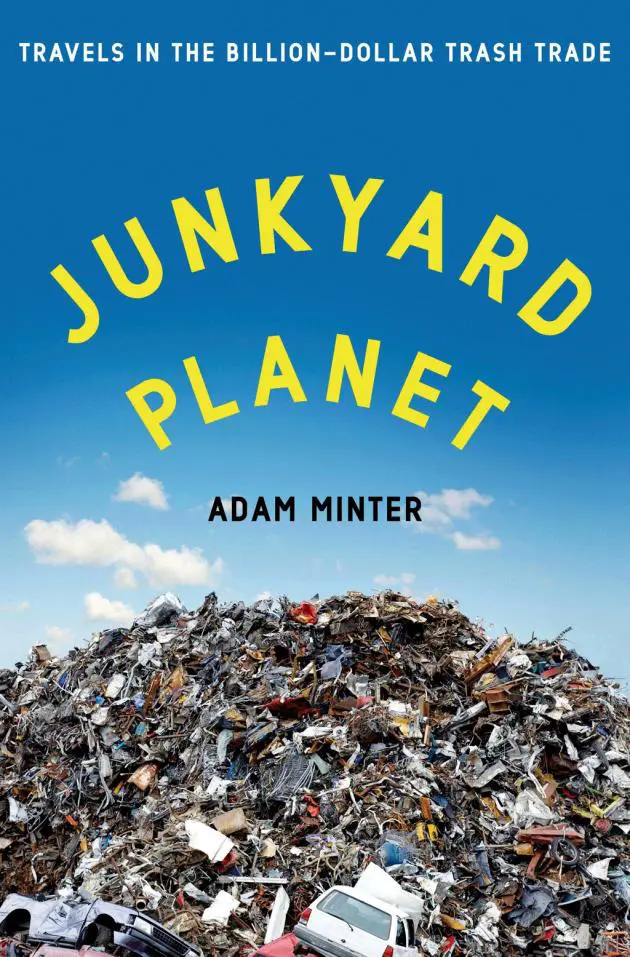
Junkyard Planet: Travels in the Billion Dollar Trash Trade
By Adam Minter
Published by Bloomsbury
Available at major bookshops, Bt555
