
All in the Asean Family


Play
WISE KWAI THE NATION SALAYA, NAKHON PATHOM
Sorrowful relationships as well as family ties and a longing for a place called home are among the common threads that bind the Asean Competition entries in the fourth Salaya International Documentary Film Festival, which opened over the weekend at the Thai Film Archive.
The most powerful entries in the lineup of seven films from six countries had a strong sense of history, bolstered by archival film clips.
Footage from 1960s Burmese romantic dramas illustrate a dysfunctional marriage in “Behind the Screen” by Aung Nwai Htway while a smiling Pol Pot chillingly greets his comrades in “Red Wedding” by Lida Chan and Guillaume Suon. Family photos and newspaper clippings bring back the memories in “To Singapore, with Love”, Tan Pin Pin’s look at political exiles.
More family photos and the warm-fuzzy filters of Instagram are tenderly evoked in Sivaroj Kongsakul’s “Homemade”, in which a Bangkok schoolteacher recalls all the places she’s lived but doesn’t yet have her own home.
Painful memories of the Vietnam War are felt in “Mrs Bua’s Carpet” by Duong Mong Thu while romantic yearnings burst forth from the Philippines in “Jazz in Love” by Baby Ruth Villarama. And a young Isaan woman is pragmatic about her future in “Pretty Woman Walking Down the Street” by Wichanon Somumjarn.
In “Behind the Screen”, the Yangon Film School’s Aung tearfully tells what it was like to grow up in a broken home with famous film-actor parents – Burmese Academy Award-winning actress Kyi Kyi Htway and actor Aung Thein. Cast in the 1960s romance “Sweet Sixteen”, the couple were married in a ceremony that was actually used in one of their films, blurring the lines between “the real and the celluoid wedding”. But their sparkliing onscreen chemistry belied the tempestuous situation at home, with an alcoholic father who was abusive and a starlet mother who threw herself into acting, both as a means of escape and as a way to support her children.
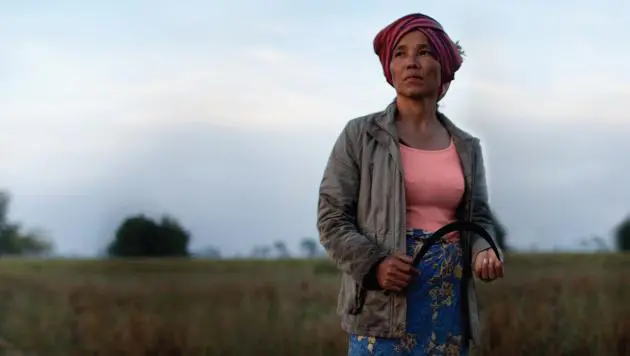
“Red Wedding” exposes a cruel legacy of the 1975-79 Khmer Rouge era, in which some 250,000 women were forced into marriages as part of Pol Pot’s scheme to rebuild Cambodia according to his twisted vision of an agrarian utopia.
At the centre is a rice farmer, Sochan. At age 16 she was married to a stranger. He then raped her, presumably under orders from watchful Khmer Rouge cadre, who made sure the couple “got along”. Setting aside her sickle to become a sleuth, Sochan sets out to systematically determine which of her neighbours ordered the marriage all those years ago. Evidence gathered and fingers pointed, Sochan mails her testimony to the international tribunal in Phnom Penh.
Justice won’t come easy in a land where former members of the Khmer Rouge are still in power, but the truth comes out in “Red Wedding”. It is produced by Cambodian auteur Rithy Panh, whose Oscar-nominated drama “The Missing Picture” also looks back at the Khmer Rouge era and is also screening as part of Salaya Doc.
Old war wounds are also opened in “Mrs Bua’s Carpet”, which warmly captures a tidy, close-knit community in Danang, where neighbours fret over an elderly resident who has epileptic seizures. Turns out that sweet Mrs Bua, a single mother and grandmother, was in the Viet Cong, and was captured by the “cruel Americans”. Her seizures are the scar of the torture she endured during her captivity.
Cagey ageing communists turn up in “To Singapore, with Love”, featuring interviews with political exiles, some of whom haven’t been home for 50 years. Among them are Malay freedom fighters who helped establish the island republic’s independence. Their communist leanings put them on the wrong side when Singapore became a country. They continued their fight in the jungles along the Thai border. Other exiles are ardent activists from the 1970s who were jailed for their leftist views. Their only chance for freedom was to leave the country they love.
Yearnings for home also come in “Homemade”, in which a charming Bangkok schoolteacher recounts losing her life savings to a shady real-estate developer, depriving her of a chance to put down roots for her family. It’s a story that resonates for director Sivaroj, whose own childhood with a schoolteacher mother was recounted in his 2010 dramatic feature “Eternity”. Searching for a way to help the woman, Sivaroj takes his camera to Chaeng Wattana. There, the chances for justice evaporate in the cavernous confines of the starkly dystopian Government Complex. Such cases are common, he’s told by faceless bureaucrats at the Office of the Consumer Protection Board, and it seems all a deep-pocketed fraudster has to do is wait 10 years for the statute of limitations to run out. Meanwhile, ordinary folks, like teacher Koy, are left to scrape by.
There’s hope for the future in the other Thai entry, Wichanon’s “Pretty Woman Walking Down the Street”. The short film follows a young woman named Gig who works in Bangkok as a “pretty”. A product-presenting job in Khon Kaen gives the northeastern native a chance to visit her parents in Amnat Charoen. Changing out of her revealing sparkly outfit and toning down her makeup, the former high-school drum majorette is perhaps even more stunning as she dons a straw hat and long-sleeved shirt for a walk into the family rice paddy. Her father beams with pride about his dutiful daughter, who sends money home. He has no problem with her job, which some in conservative Thai society frown upon. But dad says it’s an honest living and harms no one. And hard-working Gig is realistic about her career. She hopes her good looks will keep her employed until she’s earned enough to open her own Isaan restaurant, perhaps with her tomboy “boyfriend” by her side. But like the Singaporean exiles and that schoolteacher, Gig yearns for home. “Bangkok is a place I have to stay, but back home in Isaan is where I live,” she says as she returns to the city.
Cross-cultural connections are made and severed in “Jazz in Love”, a bittersweet look at the relationship between young Filipino Ernesto “Jazz” Tigaldo Jr and an older German military man he met on Facebook. Coming to the Philippines for the first time, the German Theo squires Jazz around on a romance-filled visit to nature sites. The idyllic visions fade as Theo goes with Jazz to his hometown in rural Davao. There, an auntie bends Theo’s ear, spilling family secrets and the truth of how Ernesto Sr feels about the choices his son has made. Slowly, a look of “what-have-I-got-myself-into” comes over the German’s face.
DOCS IN BANGKOK
- The Salaya International Documentary Film Festival comes to the Bangkok Art and Culture Centre today, opening at 4.30pm with “At Berkeley” by Frederick Wiseman.
- The Asean Competition entries screen at 5.30pm from tomorrow until Friday in the BACC’s fifth-floor auditorium. There’s also a roundtable discussion (in English), “The Future of Asean Documentary”, from 2 to 5pm on Friday in room 501 at the BACC.
- Screenings at the Thai Film Archive run until Saturday. “Doc Day” is on Sunday at the BACC, with screenings starting at 10.30am.
- For more details, see www.Facebook/SalayaDoc.
