
Make time


Play
When I was a student in the 1980s, the future seemed so peachy. The conventional wisdom was that my generation would be the first not to work more than 40 hours a week. Indeed, we'd be only doing half of that - if we were unlucky. In the 21st century, co
It turns out that computers became our masters. We became slaves to the machines. And, for a variety of reasons, we’re working longer hours than ever.
“Overwhelmed” author Brigid Schulte cites stats that reveal today’s working parents in the prime of their lives in the United States work about an additional month per year, as tabulated by hours, than their toiling parents at the same age.
I want to hug Schulte – an award-winning Washington Post journalist – for highlighting the most pernicious disorder of our era.
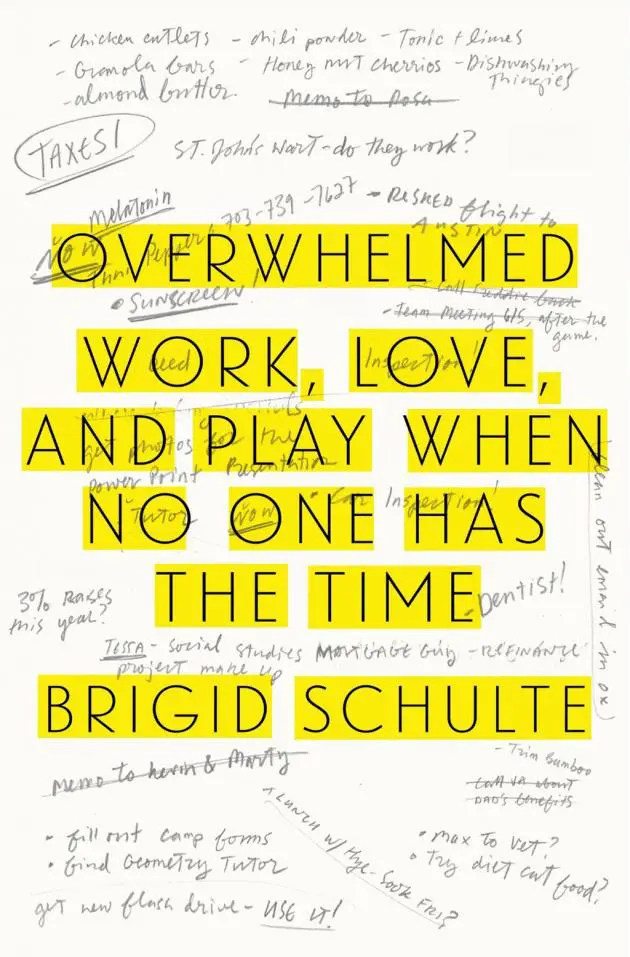
“Overwhelmed: Work, Love And Play When No One Has The Time” is a fastidiously researched – yet jargon-free – study of how top-down policies and societal pressures have shredded our leisure time into useless bits of time fragments, dehumanising us and damaging the health of countless millions.
Part pop-psychology, part self-help guide, the book is on the side of the “scattered, fragmented, exhausted” soul who chooses not to be a workaholic, and seeks a more satisfying work-life balance.
Its author talks to sociologists and scientists around the globe to illustrate how serious and widespread the situation is. Among many surveys, she cites one of workers with families in which 90 per cent report moderate to high levels of “role overload”, or trying to do too many things at once.
The depressing picture sprawls across socio-economic boundaries. While poorer parents are overwhelmed trying to cobble together several part-time jobs to make the rent, affluent families are working insane hours, with a knock-on effect on their children’s mental health.
One of the most shocking statements in the book is: “The US is the only advanced economy that doesn’t guarantee workers paid time off,” Schulte notes. “Nearly one-quarter of all American workers get no paid vacation.” Although this is an America-centric observation, it contains an important point. “Presenteeism” is today’s virtue.
Schulte chides employers for believing that there is a direct correlation between time spent at one’s desk and productivity yield.
This is a fallacy. Voluminous research has proved that most people can only do eight to nine hours of quality work a day. After those productive hours, the company is paying the worker for “recreational browsing”.
So, what is the answer? Schulte makes it simple. It’s up to you to decide if you want – or sufficiently value – “busier than thou” bragging rights. There are only 24 hours in a day, 16, if you include enough sleep – and sufficient sleep is a major prerequisite of sound physical and mental health. Prioritise what is important to you.
As obvious as the solution might be, the lead-up to this conclusion is well worth reading through and ruminating over.
Overwhelmed: Work, Love, And Play When No One Has The Time
By Brigid Schulte
Published by Bloomsbury
Available at good bookshops, Bt566
Reviewed by Nick Walker
