
Rich pageant of royal cuisine


Play
MR Narisa Chakrabongse shares a life's memories and the recipes of the Chakrabongse Villas
THE STORY OF Thai food, as told in the lavishly illustrated cookbook “Riverside Recipes”, differs from the familiar canon, whose long shadow extends to the old kingdoms of Sukhothai and Ayutthaya. It alludes to the two former capitals of Siam, of course, but it also considers Russia and England too – somewhat perplexingly given that India, China and Portugal are the countries usually credited for influencing our culinary heritage.
But editor MR Narisa Chakrabongse of River Books explains such lesser-known facets of Thai food with great clarity.
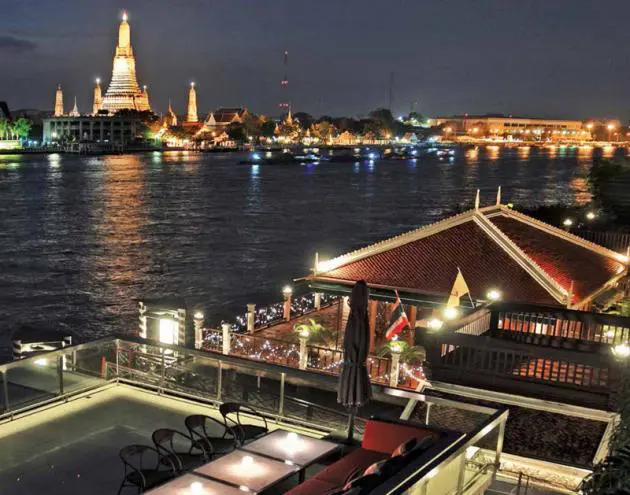
The cookbook presents classic Thai dishes for breakfast, lunch and dinner with easy-to-follow recipes, plus a few innovations from the menu of the Chakrabongse Villas, the charming boutique hotel aside the Chao Phya River near the Pak Khlong Talad market.
Recognised for its superb dining experience – with magnificent views of the river and the majestic Temple of Dawn in the background – the villas serve primarily central Thai dishes, using healthy, fresh ingredients such as low-sodium fish sauce and soy sauce, organic and hand-milled rice. You’ll find no pork on the menu.
Diners admire the air of a lost gentility along with food that’s top-notch in quality and style, ideal for special occasions. I’ve visited a few times for media functions and always found it a haven of serenity in the bustle of Bangkok.
Alas I’ve never met Narisa, but I’m well aware of her colourful past. Despite the noble mom rajawongse title MR Narisa looks more farang than Thai. Her father, Prince Chula Chakrabongse, was half-Thai, half-Russian, and her mother, Elisabeth Hunter, was English.
“Riverside Recipes” relates her first encounter with Thai food – the kind that was served in the palaces of Bangkok some 40 years ago.
The villas were like a second home for the Chakrabongses, who live mainly overseas. Built in 1908, Chakrabongse House, as it was formerly called, was the home of Prince Chakrabongse, the second son of King Rama V and Queen Saowabha. He was Narisa’s grandfather, and the residence passed down to her father and now her.
Narisa lived almost exclusively in England until returning to Thailand in 1984 in her late 20s. On occasional trips to Bangkok she always found herself grappling with aspects of Thai culture, including the food. She first tasted it on a school stay in the 1960s, a seven-year-old sampling of “unfamiliar” kaeng leung – the yellow curry made with bamboo shoots. It was a struggle to finish, she writes, but she loved the sweet coconut cream and the desserts that followed, like jelly and “golden thread”.
Living at the “villas” back then, she remembers only the fried rice and kai sateh, the grilled chicken on skewers. She’d wolf down 30 skewers on her own. But there were many grand, cosmopolitan dinners at the palaces in the 1970s.
At the Sukhothai Palace, Queen Rambhai Barni, widow of King Prajadhipok (Rama VII), usually had an English-style meal served first and then Thai food. Her late husband, Siam’s last absolute monarch, had attended Eton College and Woolwich Military Academy in England, and after his abdication in 1935, lived out his life there.
The kitchen at Paruskawan Palace, where Narisa’s grandfather lived, once had both a Thai and a Russian chef, the latter’s food reminding Prince Chakrabongse of his years at the Winter Palace in Saint Petersburg. King Rama V had left him in the care of Tsar Nicholas II and he attended the Corps des Pages, graduating top of the class and becoming a cornet in the Hussars regiment. He even took a Russian wife.
Somehow such extraordinary tales still don’t draw the book’s focus away from the charms of classical Thai food. “Riverside Recipes” will certainly appeal to readers new to our food culture. The beautifully illustrated appendices on various ingredients and a do-it-yourself section with tips on making red curry paste and other items are of great use to all.
It’s a safe bet, too, that the book will soon have you hungering for a luxurious meal at the Chakrabongse Villas.
>>“Riverside Recipes: Thai Cooking at Chakrabongse Villas” is edited by MR Narisa Chakrabongse and published by River Books. It’s in shops for Bt995.
